An international study has revealed that Malawi continues to perform poorly in attracting Foreign Direct Investment (FDI) despite more than three decades of multiparty democracy and political liberalisation.
The findings are contained in a ResearchGate study by Zambian economist Tryson Yangailo, who argues that Malawi’s low FDI inflows are primarily linked to weak institutions, inconsistent policy implementation, and limited economic resilience, all of which continually undermine investor confidence.
According to the findings, in 2024 alone, neighbouring Mozambique recorded the highest FDI inflows among the countries reviewed at 11.63 percent of its Gross Domestic Product (GDP).
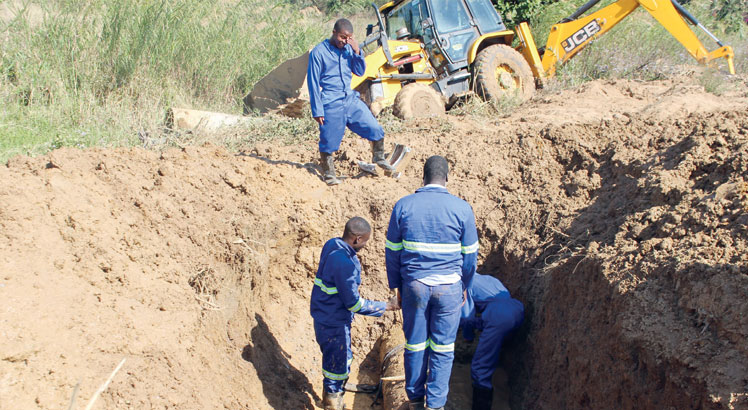
on service delivery. | Nation
By comparison, Malawi attracted only $220 million, or 0.16 percent of its GDP, highlighting the country’s continued struggle to compete for regional foreign capital.
Regional figures show that in 2024 Mozambique attracted about $3.55 billion in FDI inflows, followed by South Africa with $2.47 billion, Tanzania with $1.72 billion, Zambia with $1.24 billion, and Zimbabwe with $597 million.
Malawi’s 2024 Annual Economic Report, published in 2025, shows that the country faces persistent challenges in attracting sustainable capital, with FDI inflows exhibiting significant volatility over the years.
The findings suggest that no political regime type is inherently superior. Rather, development outcomes are shaped by institutional capacity, policy coherence, and inclusive governance,” notes the report.
Data from the United Nations Conference on Trade and Development (Unctad) indicates that Malawi faces stiff competition from neighbouring countries in attracting foreign capital.
To break this cycle, the World Bank emphasises that Malawi needs to increase the effectiveness of public investment and catalyse private sector growth. Without concerted efforts to streamline tax incentives and create policy consistency, Malawi will likely continue to lag behind other countries in the region in the race for foreign capital.
Experts disagree on causes of slump
But two leading economists, while agreeing that structural bottlenecks reduce the country’s competitiveness compared to regional peers, differ on whether governance is the sole culprit.
Mzuzu University economics lecturer Christopher Mbukwa largely agrees with the study’s assessment that structural weaknesses limit Malawi’s FDI performance.
In an interview on Thursday, Mbukwa observed that foreign investors prioritise profitability and risk predictability, which rely heavily on infrastructure and macroeconomic stability.
“Investors are attracted to environments where infrastructure is reliable and business costs are predictable,” he said.
“Persistent challenges with roads, electricity, and water supply increase production costs and reduce competitiveness.”
Geography and markets complicate the issue
However, Economics Association of Malawi (Ecama) president Bertha Bangara-Chikadza argues that the issue cannot be reduced to governance alone.
In an interview on Thursday, Bangara-Chikadza, who is also an economics lecturer at the University of Malawi, pointed out that there are several fundamental, geographical factors that dictate Malawi’s FDI performance.
“The relationship between institutional quality, governance, and foreign direct investment is complex.
“Weak institutions matter, but they are not the only determinants,” she explained.
She highlighted structural constraints that reduce Malawi’s competitiveness, including its landlocked position, a small domestic market and a limited export base.
Policy inconsistency erodes investor confidence
Despite their differing views on the causes, both economists agree that policy inconsistency remains a major roadblock.
Bangara-Chikadza noted that Malawi struggles to turn democratic stability into a predictable investment environment, citing frequent post-election policy reversals and the politicisation of the civil service as major threats to investor-confidence.
“Each new administration often reverses investment policies of its predecessor, creating regulatory unpredictability that discourages long-term investment,” she said.
Macroeconomic pressures
Bangara-Chikadza also pointed to macroeconomic instability as a persistent challenge for potential investors.
These conditions create a highly risky environment for new businesses, primarily driven by foreign exchange shortages, high inflation and fiscal pressures.