Transporters in the country say rising operating costs and poor transport infrastructure continue to push up the cost of doing business, with the burden ultimately being passed on to consumers through higher prices of goods.
The concern comes in the wake of a Japanese International Cooperation Agency (Jica) Transport Sector Position Paper, which cites Roads Authority data showing that transport costs account for up to 55 percent of the price of goods in the country, compared to about 17 percent in many other developing countries.
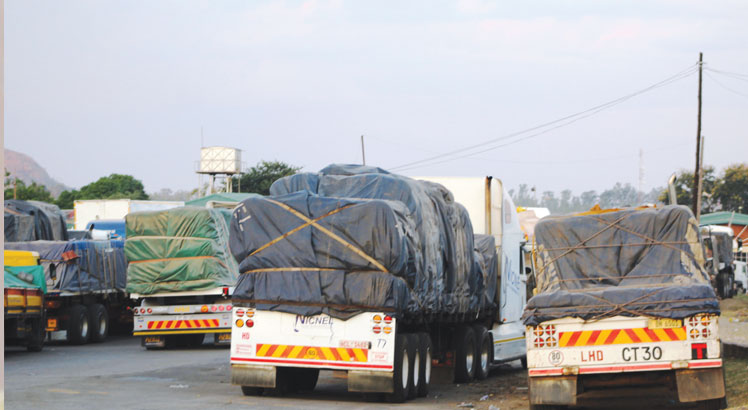
In a written response to a questionnaire on Wednesday, the Transporters Association of Malawi (TAM) said operators are facing unsustainable haulage rates and struggling to keep pace with rising expenses.
TAM director and spokesperson Frank Banda observed that transporters are grappling with increasing costs for fuel, vehicle maintenance, insurance, toll fees, regulatory compliance, wages and foreign exchange, while transport rates have largely remained unchanged for years.
He said: “Transporters are operating under very difficult conditions.
“Most of the costs have increased significantly, but haulage rates have not moved in the same direction. This is putting many operators under financial pressure.”
According to an analysis presented by the association, transporters on the Lilongwe-Beira route earn about K3.2 million per trip while operating costs exceed K5.8 million. On the Lilongwe-Johannesburg route, transporters receive about K5.6 million per trip against costs of more than K13.7 million.
However, in 2008, transporters were receiving $2 000 for the Beira route when diesel averaged K400 per litre. Today, despite diesel prices rising to K6 687 per litre, representing an increase of 1 572 percent, transport rates have declined to between $1 766 and $1 850 per trip.
“Transporters are increasingly struggling to meet their financial obligations, including compliance with the recently announced minimum wage adjustments affecting truck drivers and other employees within the sector.
“Drivers have increasingly expressed frustration and have threatened nationwide industrial action should the situation remain unresolved,” he said.
Meanwhile, TAM has written Minister of Transport Jappie Mhango seeking his intervention over what it describes as “unsustainable haulage rates and the deteriorating financial position of Malawian transporters”.
A letter seen by Business News, dated June 1 2026 and signed by Banda and TAM secretary-general Sympathy Chisale, indicates that the move follows failed attempts to engage industry stakeholders, including tobacco companies and cargo owners, on freight charges. The association said freight forwarders had maintained that they were not the ultimate decision-makers on haulage rates.
Mhango had not responded to our questionnaire by press time.
However, according to the Ministry of Transport’s Strategic Plan, road transport handles about 99 percent of all passenger traffic, around 70 percent of domestic freight and 90 percent of international freight.
The rail network comprises about 933 kilometres of single-gauge mainline, with some sections currently non-operational. In terms of infrastructure quality, only about 36 percent of paved roads were rated to be in good condition as of 2024.
According to Jica, poorly paved roads, heavy dependence on road transportation and weak rail and water transport alternatives are contributing to elevated transport costs.
The analysis reads in part: “While the Nacala, Beira and Dar es Salaam corridors remain essential lifelines, they also face challenges related to infrastructure, climate vulnerability and border inefficiencies. On the other hand, the Durban corridor, which is not widely used because of its long distance, has more efficient port services.
“Strengthening corridor connectivity, improving border procedures and diversifying transport modes remain top priorities for enhancing trade and economic resilience.”
Earlier, the World Bank said that while transport and logistics costs are high in many countries, those faced by Malawi and other landlocked developing countries in sub-Saharan Africa translate into significant competitive disadvantages.
Malawi is one of the world’s landlocked countries, with no direct access to the sea, and relies heavily on neighbouring transit countries to access international markets.
United Nations data also shows that the country’s transport sector accounts for 56 percent of landed transport costs and 30 percent of export costs, increasing the cost of imported goods and undermining Malawi’s regional trade competitiveness.
The report further states that transport accounts for 3.8 percent of the country’s total energy consumption and 43 percent of its commercial energy consumption. More than 70 percent of internal freight traffic and 99 percent of passenger traffic are handled by road transport.