Ministry of Finance, Economic Planning and Decentralisation has said the development of regulations for the Confiscation Fund is at an advanced stage to guide management of assets seized from suspects and convicts in financial crimes.
The fund has lacked operational guidelines since enactment of the Financial Crimes Act in 2017.
Ministry of Finance, Economic Planning and Decentralisation spokesperson Williams Banda yesterday said his ministry has been working with the Ministry of Justice and Constitutional Affairs and Financial Intelligence Authority (FIA) to develop the guidelines.
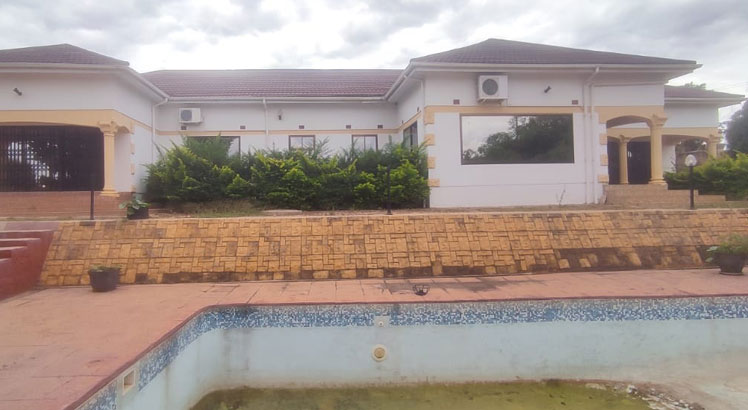
desolate after the forfeiture order. | Nation
He said his ministry will this week provide final feedback on the comments made by the Ministry of Justice on draft regulations.
Said Banda: “The draft Financial Crimes [Confiscation Fund] Regulations were submitted for vetting to the Ministry of Justice and Constitutional Affairs which made some comments on the draft.
“The draft regulations are now being considered by Ministry of Finance and FIA before submitting them back to Ministry of Justice and Constitutional Affairs for finalisation and publication in the Gazette.”
Commenting on fears that the value of property such as motor vehicles and houses may have depreciated in the absence of the regulations, he said such property is currently in the custody of law enforcement agencies such as Directorate of Public Prosecutions (DPP) and Anti-Corruption Bureau (ACB) who would be better placed to comment.
Ministry of Justice and Constitutional Affairs spokesperson Frank Namangale confirmed in a separate response that they have been working with the Finance Ministry and FIA to make sure that the fund is operational but could not state timelines on completion of the exercise.
“The draft regulations are still work in progress. With regard to timelines for this exercise, our opinion is that the Finance Ministry, being the policy holder, is better placed to advise on that matter,” he said.
FIA public relations officer Patience Lunda was yet to respond to our questionnaire by press time yesterday.
Commenting on the issue, private practice lawyer Benedicto Kondowe said the finalisation of the Confiscation Fund regulations is a test of government’s commitment to fighting corruption and financial crime.
He said: “It is unacceptable that nearly a decade after the Financial Crimes Act came into force, the fund remains without operational regulations. Delays of this magnitude undermine public confidence and raise legitimate concerns about the management, accountability and utilisation of assets recovered from criminals.”
Two past administrations of Peter Mutharika and Lazarus Chakwera failed to establish operational guidelines for the Confiscation Fund. In 2023, the government promised to have the guidelines set up by July that year and later by the end of 2024.
The fund currently holds slightly over K3 billion deposited by various authorities such as the Malawi Police Service, ACB, DPP and FIA.
Apart from money, FIA also oversees property such as houses, plots and motor vehicles recovered from corruption suspects. Section 48 (2) of the Financial Crimes Act (2017) provides relevant courts with the mandate to order forfeiture or confiscation of tainted property of a convicted person.
In March 2024, the High Court ordered the forfeiture of fugitive Paul Mphwiyo’s house at Area 43 in Lilongwe, valued at K690 million following his failure to honour bail conditions over corruption and money laundering charges linked to the 2013 Cashgate scandal uncovered while he worked as Ministry of Finance budget director.