With many young Malawians clamouring for white-collar job and few making it to public universities, relevant technical and entrepreneurial skills could help transform their economic prospects and unleash the country’s potential to prosper.
In Salima, the Technical, Entrepreneurial and Vocational Education and Training Authority (Teveta) has constructed several school blocks, giving over 1 000 young men and women hands-on training in the process.
The on-the-job training combines practical experience with classroom learning, helping the youth acquire skills they can use to get jobs or employ themselves.
Teveta attaches the trainees to various institutions in their respective industries and provides start-up tools to boost entrepreneurship and self-reliance.
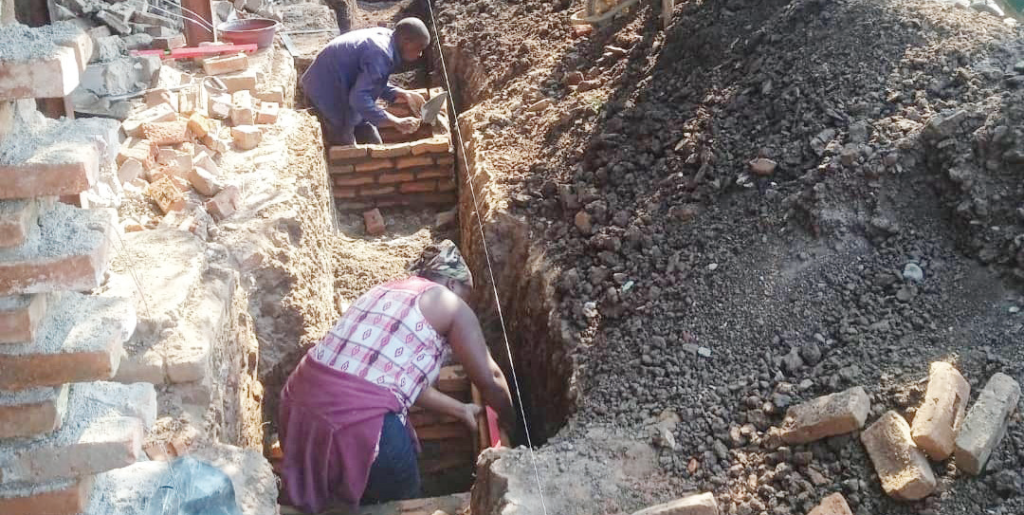
Gift Khambadza, from Gwirize Village, Traditional Authority (T/A) Pemba in Salima, completed a bricklaying course in 2024 at Mponela Community College in Dowa.
He participated in the on-the-job training during the construction of school blocks in Salima under Teveta.
“This has changed my life and economic prospects. Since enrolling into this initiative, I’ve gained vital experience, confidence and skills from the construction of school blocks,” says Khambadza, 26.
He has established a bricklaying business and shares the skills with his peers.
Recounts Khambadza: “Due to the bricklaying training, I am now self-reliant.
“I get hired by people to build their homes and infrastructure, which gives me the money I need to support myself. This is a well-paying job and I encourage my fellow young people to join in.”
After completing his theoretical training earlier, he struggled to convince potential customers to hire him.
However, that is history after the on-the-job training.
Edith Chikweza, from T/A Kwataine in neighbouring Ntcheu, says learning on the job has expanded her skillset and experience.
She says: “As a young woman, I have accumulated more experience than ever before. For young people who want to stand on their own, the on-the-job approach is worth the time.
“Through this project I have learnt more about welding, roofing and other skills that have made me a complete builder who can competently execute big projects and earn some money.”
The on-the-job initiative is part of the competency-based education (Cbet) and training framework which seeks to provide relevant skills and real-world job experience.
The programme has equipped the youth with skills in construction, agriculture, aquaculture and other necessary skills.
Teveta executive director Elwin Chiwembu Sichiola says equipping the youth with skills they can use to transform the economy could benefit the nation, which envisions becoming a self-reliant middle-income country by 2063.
He said Cbet is a corporate and social responsibility that enables the youth to gain valuable skills that prepare them to become self-reliant and dynamos of the country’s socio-economic transform.
“We work with communities surrounding some schools where there is a need to construct or renovate classroom blocks. To perform this task, we chose young people from various regions who were pursuing careers as carpenters or builders,” said Sichiola.
Recently, Teveta has reconstructed a classroom block at Kalonga Primary School in Salima.
Headteacher Mayingiso Tembo described the use of young skilled people as a game changer in skills development and ending dependency.
“Following the renovation of the school block at our school, which enrols 446 boys and 451 girls, they are now learning in a good environment, not in tree shades. The youth who participated in this project acquired the skills they can use to beat poverty and train their colleagues back home,” he says.
Group village head Kalonga said the youth in her community have benefited immensely from the hands-on training instead of staying idle.
“This strategy provides commendable skills for the youth and many were recruited in my area, thanks to Teveta,” she said.
According to the International Labour Organisation, almost a quarter of Malawians, aged 18 to 35, are seeking employment, but cannot find any.
The training aims to bridge the gap between theoretical learning and practical application in a real workplace setting.
It helps trainees gain the skills and experience needed for life-changing employment.