Malawi’s mining boom beckons, but the United Nations warns that without ironclad governance, surging investor interest could trigger “elite capture” and conflict, cautioning that transparency is vital to prevent wealth from fueling instability.
“Elite capture” occurs when powerful local figures or companies divert these riches for personal gain, leaving the general public with little more than environmental damage.
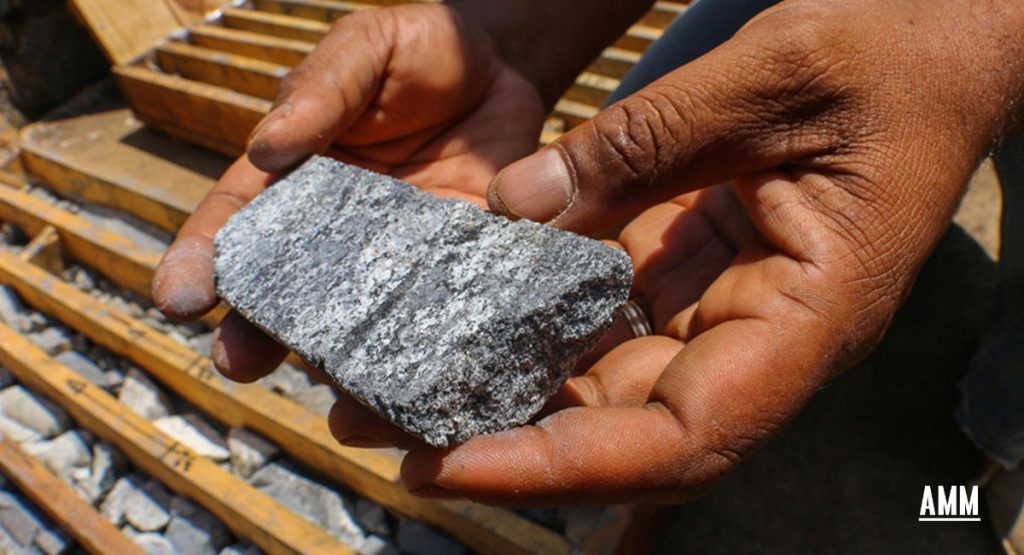
The UN’s warning comes amid accelerating investment interest, with the country emerging as a new frontier for regional and global firms actively exploring rare earths, uranium, gemstones, and other minerals.
In its Common Country Analysis, published in March 2026, the UN views the discovery of critical minerals as a transformative signal, “reshaping prospects for rural mining communities” while expanding revenues and attracting foreign direct investment (FDI).
Drivers of momentum
The analysis observes that this momentum is driven externally by the global demand for decarbonisation minerals and internally by Malawi’s strategic push to diversify its economy beyond agriculture.
“If sequenced and governed effectively, mining offers a pathway to export diversification and industrial clustering, positioning the sector as a cornerstone of long-term economic transformation,” the report reads.
The report prepared by UN Malawi notes that despite this optimistic outlook, persistent infrastructure gaps in power and transport, limited regulatory capacity, and financing constraints continue to slow the pace of development.
Structurally, the report suggests that mining could redefine the country’s growth model by forging upstream and downstream linkages to diversify the economy and create jobs.
However, progress remains fragile. The industry’s share of GDP fell from 10 percent in 2012, with Kayelekera contributing 50 percent of that, to less than 1percent in 2014 following the closure of the Kayelekera uranium mine, slipping further to just 0.7percent by 2024.
Modest rebound forecast
Looking ahead, the government’s 2025 Annual Economic Report projects a modest rebound, as the sector was forecast to expand by 6.3percent in 2025—driven by construction demand and the planned restart of Kayelekera.
Yet, the UN warns that persistent weak governance and infrastructure gaps risk “elite capture” and could stifle growth.
The report cautions that without strong governance, environmental safeguards, and local inclusion, the sector risks “enclave development,” leading to environmental degradation, price volatility, and rising inequality.
Enclave development refers to when a mine builds its own roads, power, and schools that only serve the mine, while the surrounding areas remain in poverty with no connection to the new wealth.
According to the UN, these risks highlight the urgent need for resilient institutions and inclusive frameworks.
Lack of integrity hampers enforcement
In a WhatsApp response, the Mining and Minerals Regulatory Authority (MMRA) public relations officer Sella Singini said her organisation is strengthening oversight to ensure the sector drives economic growth while minimising risks.
Working with the Ministry of Energy and Mining, she said the MMRA is finalising new regulations, increasing compliance audits, and partnering with security agencies to enforce the Mines and Minerals Act.
Singini noted that the authority is also prioritising environmental protection through rigorous impact assessments and collaboration with environmental agencies.
“Companies are required to implement environmental management plans, rehabilitation programmes and continuous monitoring to minimise ecological damage.
“We are committed to protecting Malawi’s natural resources while enabling responsible investment. The authority has enhanced its collaboration with Malawi Environmental Protection Authority and the National Water Resources Authority,” said Singini.
To ensure Malawians benefit, the MMRA is promoting local employment, community consultation, and development agreements.
Mining and natural resources legal expert Ahmed Mussa noted in an interview on Tuesday that existing laws are robust enough to combat corruption but that their enforcement is hampered by a lack of integrity and transparency.
He called for the urgent protection of whistleblowers, noting that the debate over such protections is reaching a turning point.
The new Mines and Minerals Act offers a potential solution, promising better benefit-sharing for local communities through mandatory development agreements and value-addition requirements.
But geoscientist Ignatius Kamwanje cautioned that mining benefits only materialise if the government prevents “elite capture” through independent monitoring. He criticised the current community development levy—set at a mere 0.45 percent of gross sales—as “too small” for large-scale operations.
Kamwanje argued that both community benefits and the national taxation regime must be revised upward as the industry matures, ensuring the country isn’t left behind as production scales up.
Push for private-sector led mining growth
In January, the Malawi Confederation of Chambers of Commerce and Industry (MCCCI) formally urged the Treasury to establish a private-sector-driven Mining Investment Fund.
The proposal aims to optimize revenue generation and management as the nation seeks to capitalise on its vast mineral wealth.
According to the MCCCI, such a fund would provide critical seed capital, co-financing, and guarantees for exploration and development projects—particularly in rare earths, graphite, and niobium.
By creating a localised financing mechanism, the chamber argues that Malawi can reduce its current over-reliance on foreign direct investment (FDI) and ensure more wealth remains within the country.
Strategic backing
The Malawi Mining Investment Company (Mamico) has thrown its weight behind the initiative.
During a four-day African Mining Indaba held in Cape Town, South Africa, in February this year, Malawi Mining Investment Company (Mamico) threw its weight behind the initiative.
The organisation called for a well-coordinated fund that would bolster investor confidence and provide a structured framework for sustainable mineral development, delivering long-term dividends for the Malawian economy.
This domestic push coincides with the government’s recent efforts on the international stage.
Mining as an economic catalyst
Currently, the mining sector contributes approximately 1 percent to Malawi’s Gross Domestic Product (GDP).
However, under the Malawi 2063 (MW2063) long-term development plan, the sector has been identified as the fastest route to achieving the targets set out in the strategy’s first 10-year implementation plan (MIP-1).
By aligning private-sector financing with state development goals, Malawi aims to transform its mining industry from a peripheral contributor into a central pillar of national prosperity.
Malawi is home to a diverse array of mineral deposits, ranging from energy and industrial minerals to high-value critical metals and gemstones. While historically viewed as an agricultural nation, the country is currently transitioning toward a more mining-centric economic model.
Government projections suggest that with commercial scaling, the sector’s output could rise significantly, potentially reaching 12 percent of GDP by 2027 and up to 20 percent of GDP by 2030.