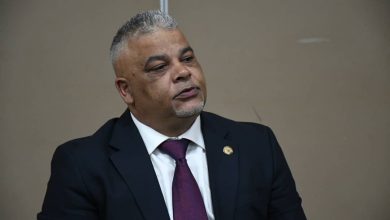
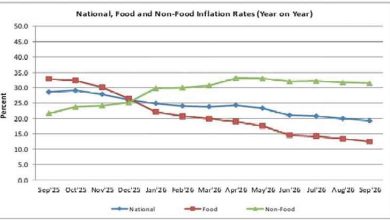
Economist-cum-politician Dalitso Kabambe says the conflict between expansionary fiscal policy and tight monetary measures is fuelling a fragile economy unable to absorb shocks and consequently driving up the cost of living.
He was reacting to a World Bank Malawi April 2026 Macro-poverty Outlook which says Malawi’s macroeconomic instability remains entrenched in the face of slow reforms progress.
In a written response, Kabambe, who served as Reserve Bank of Malawi (RBM) governor between 2017 and 2020 and is now UTM Party president, said efforts to control inflation through exchange rate management and borrowing have distorted markets, discouraged investment and deepened economic uncertainty.
He said as a result, economic recovery remains weak and exclusionary, worsening poverty and eroding welfare, a situation that needs decisive reforms to restore policy coherence, stabilise markets and drive structural transformation.
Said Kabambe: “At present, the economy is operating under a set of internal contradictions that cannot be sustained indefinitely.
“Fiscal policy remains expansionary, with large deficits financed through domestic borrowing, while monetary authorities attempt to contain inflation through high interest rates. This is not coordination; it is policy conflict.”
On her part, Economics Association of Malawi president Bertha Bangara-Chikadza observed that a highly unstable macroeconomic environment weakens the prospects of economic recovery and worsens the welfare of people.
She said: “Overall, this creates a cycle where population growth, low economic growth, high poverty, and economic instability reinforce each other, making recovery more difficult. The cycle will also lead to increased over-dependency of the government on grants and aid for livelihood support programmes, including the social cash transfer programme.”
On her part, Centre for Social Concern Economic Governance officer Agnes Nyirongo said without urgent reforms to restore fiscal discipline, stabilise markets, and diversify the economy, the country risks remaining trapped in a cycle of low growth, high poverty, and worsening welfare.
She said: “At the heart of the crisis is unsustainable fiscal management. Large and persistent budget deficits have significantly increased debt servicing costs, with interest payments consuming a substantial share of government revenue.
“As a result, fewer resources are available for critical sectors such as health, education, and social protection. This crowding out effect undermines long-term development and delays economic recovery.”
Published data show that fiscal deficit is projected to widen to 12.6 percent of GDP in 2025 due to election spending and reduced aid, pushing debt above 90 percent of GDP and increasing debt service pressures that are crowding out investment and private sector growth.
The current account deficit, on the other hand, widened to 17.6 percent of GDP in 2024 due to weak export competitiveness and trade barriers, while low foreign exchange reserves and stalled exchange rate reforms have increased external vulnerability and widened the official–parallel market gap.
Treasury has since developed a Malawi National Recovery Plan (Nerp) which is a subset of the Malawi 2063 First 10-Year Implementation Plan. The Nerp has consolidated reforms on revenue, expenditure, monetary side and all the other policy interventions the government is planning to implement to correct the social and macroeconomic imbalances.