Maize prices dropped by two percent in October 2025 with the national average recorded at K1 240 per kilogramme (kg) from K1 264/kg the previous month as government ponders importation of the grain.
According to the International Food Policy Research Institute (Ifpri) Maize Market Report for October 2025, the grain’s retail price dropped, building on the trend observed post-September 16 General Eections that marked a reversal of an upward price movement that started in June.
Reads part of the report: “The relative stability of maize prices in October is comparable to the same period last year when maize prices increased by four percent. Markets across regions displayed mixed price changes.”
It observed that grain’s prices declined by 13 percent in Mangochi, nine percent in Lunzu (Blantyre), and Ngabu (Chikwawa), while the price in other markets dropped as much as 11 percent like Chitipa and Chikwawa.
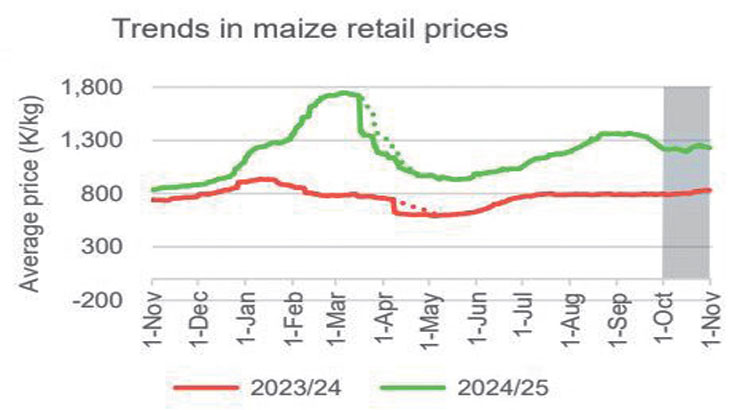
“These rather random price movements were likely the results of a mix of factors, including post-election uncertainties, government import plans influencing traders’ behaviour and cheaper imports due to currency gains,” it says.
In an interview, Centre for Social Concern economic governance programmes officer Agnes Nyirongo described the easing of maize prices as a temporary relief emanating from government maize imports and election-induced market speculation.
However, she noted that despite this drop in the staple grain, the overall food market landscape remains highly unstable and the easing has not translated into a lower overall cost of living.
For instance, she said the CfSC food basket needs for October shows that the minimum survival cost for a low-income household rose from K938 291 in September to K945 029 in October—a 0.72 percent increase.
“This means that despite easing maize prices, households continue to struggle,” she said.
Nyirongo said to sustain the recent easing of maize prices in the short-term, Malawi must act decisively by ensuring timely and transparent execution of maize imports to prevent speculation and panic.
In a separate interview, Consumers Association of Malawi executive director John Kapito said the drop in maize prices would push inflation down though it is too early to see significant benefits as inflation movements remain too low.
Meanwhile, Economics Association of Malawi president Bertha Bangara-Chikadza said inflation trends highlight the country’s underlying food pressures that need to be addressed by importation of maize.
She said: “We have observed a notable increase in food prices in recent months, which has significantly influenced overall inflation.
“While non-food inflation had remained relatively stable for some time, the persistently high headline inflation trends suggest that the country must address the underlying food pressures.”
Government, through Admarc Limited, is planning to import 200 000 metric tonnes of maize in a move that could continue to improve maize supply and further reduce the grain’s prices and food inflation.
Inflation was recorded at 29.1 percent in October 2025 up from 28.7 percent in September with the Reserve Bank of Malawi projecting the rate to average 28.9 percent this year from 32.2 percent in 2024.