As President Peter Mutharika marks his first 100 days in office, one of the earliest economic pressure points his administration faced was the soaring cost of maize, Malawi’s staple food.
At the centre of the efforts to steady the market has been State produce trader Agricultural Development and Marketing Corporation (Admarc) Limited, which now insists its interventions have helped ease pressures and offered some relief to consumers.

In its manifesto, the Democratic Progressive Party (DPP) pledged to reform Admarc into a “fully functional commercial entity with both local and international market linkages”.
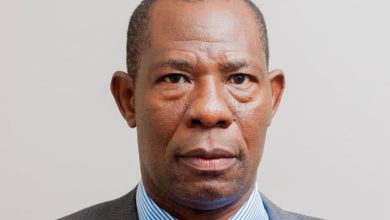
Admarc Limited chief executive officer Ben Botolo said the company’s immediate response following the change of government was to assess national maize stocks and identify the drivers behind the sharp price hikes hitting markets nationwide.
He said after working with the Ministry of Agriculture, Irrigation and Water Development, Admarc concluded that maize prices were “skyrocketing” and that urgent action was required to prevent the situation from spiralling out of control.
Said Botolo: “What we have done in Admarc is that wherever the price of maize is going outside [and] that there cannot be affordability, Admarc has gone there to cushion. So, you find that we have contributed to the containment of inflation.”
He said before the current administration took over government, maize prices were on an unchecked upward trend and that Admarc’s targeted market interventions helped to contain the situation.
Said Botolo: “The prices have not gone up that much. You remember before 100 days, prices of maize were just going higher. But now we can see that they are ranging from K1 000 to K1 100 per kilogramme in some cases.
“With good management, we are optimistic that the price would even go down further.”
Botolo further outlined a broad turnaround strategy to change Admarc’s fortunes and reposition it as a commercially viable enterprise before 2030.
Central to this vision is diversification away from a near-exclusive focus on grain trading.
Among the proposed ventures are fish farming and the manufacturing of leather products such as bags, shoes and belts using locally sourced animal skins, including crocodile skins.
“We will need a lot of competent people to ensure that we realise our dreams before 2030,” said Botolo.
On financing, he said Admarc Limited intends to engage government as its key shareholder while also courting partnerships with the private sector to mobilise the necessary resources.
Lilongwe-based agricultural expert Alice Mukona described Admarc’s diversification plans feasible, but warned that success will depend on seriousness, discipline and the ability to attract competent personnel.
She noted that the grain market today is not as it was in the 1990s, saying currently there are many competiting companies and individuals in the same space.
Said Mukona: “Relying much on the grain will not take Admarc anywhere. The idea is to diversify to turn around Admarc’s misfortune into a profit-making institution is brilliant.
“But the question is: does Admarc have the capacity to secure funds for their plans? We have been hearing such commercialisation drives for quite some time, now people want to see the results.”
In November 2020, Malawi Government, through the Public Sector Reforms Management Unit, signed a performance contract to recapitalise Admarc with K265 billion.
The capital injection, planned as a once-off loan facility with a tenure of not less than five years, was meant to rescue the financially crippled institution.
Under the same contract, former president Lazarus Chakwera and former minister of Agriculture Lobin Lowe committed that Treasury would settle K23 billion owed to Admarc between 2020 and September 2023 to further boost its working and investment capital.
However, before these pledges were fulfilled, government controversially closed Admarc operations on August 31 2022.
On the other hand, Admarc had also pledged to adhere strictly to all procurement guidelines under the Public Procurement and Disposal of Assets Act of 2017 and to operate free from political interference.
But Admarc failed to fulfil its pledges following revelations of a K330 million fraud and abuse masterminded by employees through bogus car insurance, medical cover claims and staff loans exposed by audit in 2022.