When Cyclone Ana tore through the Lower Shire in January 2022, a 12-year-old boy named Douglas shared a tale of devastation.
When Ana ripped homes and hope across the Southern Region, Douglas and his siblings lost their father as floodwaters shattered their house.
“He left us to search for a safer place, but he never returned,” he says.
Four years later, his body has not been found.
However, flooding continues to pound Chikwawa, evoking memories of the loss and warnings not heeded.
Last week, that tale of devastation played out again, but with a different ending.
Selina Lamosi and three other women from Nyamphota Village in Traditional Authority Lundu feel lucky to be alive after being trapped in swelling Mwanza River.
The farmers were returning from their rice fields when the swelling river nearly swallowed them.
“The water level was too high, so we just held hands and walked to higher ground,” Lamosi recounts. “When the higher ground was almost submerged, we climbed a tree and stayed there from Tuesday to Thursday, when people finally rescued us.”
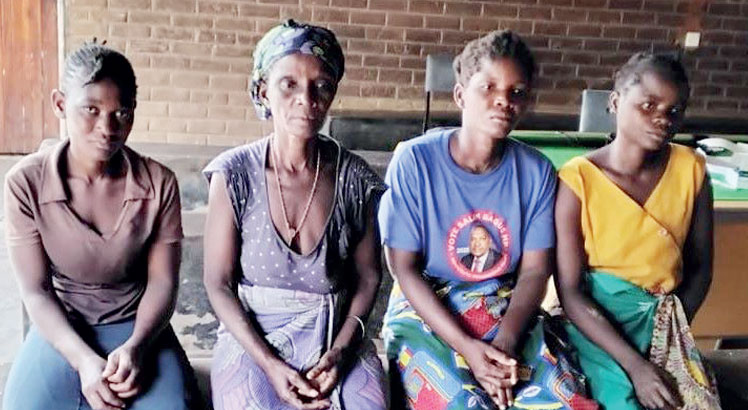
in Chikwawa. | Leah Malimbasa
The search-and-rescue efforts by volunteers who swam through floodwaters offer some relief in a district where such stories too often end in loss.
However, floods claimed three lives in Chikwawa this month.
Chikwawa district disaster risk management officer Charity Machika says the pattern is both alarming and persistent.
“During Cyclone Freddy in 2023, about 27 936 households were affected. In 2024, strong winds affected households, while floods affected 1 634 households,” she said.
This month alone, flash floods have hit over 1 500 households.
These figures highlight a district caught in a relentless cycle of destruction, where recovery is often interrupted by yet another disaster.
Despite ongoing interventions, the scale and frequency of disasters stretch the capacity of both communities and authorities.
Since 2022, there have been numerous resilience projects in Chikwawa, one of the districts with a concentration of non-governmental organisations.
However, Chikwawa Civil Society Organisations Network chairperson Anderson Biliati says NGOs’ presence does not always translate into lasting impact.
“Despite the presence of many NGOs, several structural and systemic factors limit long-term impact,” he says. “Most interventions are project-based, typically lasting one to three years and ending with funding cycles. Resilience, however, requires 10 to 20 years of systems change. Once funding phases out, projects close and communities often lack sustained technical and financial support.”
Biliati calls for a paradigm shift.
“Much of the funding comes after disasters, which is short-term. We need more investment in anticipatory action, climate adaptation before disasters strike and risk-informed development planning. Short-term grants cannot build generational resilience,” he says.
Chikwawa District Engineer Ellen Kasanga says the Regional Climate Resilience Project is improving the durability of public infrastructure by enforcing strict construction standards.
Structures are designed to withstand floods, strong winds and prolonged rainfall, while environmental measures such as tree planting are integrated to reduce erosion and stabilise soil.
However, Kasanga notes that the most buildings affected by floods are privately owned.
“Many households still struggle to access safe areas and durable materials. This affects the ability to withstand climate shocks,” she says.
Chikwawa district housing officer Thandiwe Ngalande says the government promotes safer and more resilient housing, including the construction of grant houses for vulnerable households.
“While communities are encouraged to adopt better building practices, high costs of durable materials remain a major barrier. The district is, therefore, appealing to partners to ensure people access both knowledge and support to construct safer homes,” explains Ngalande.
Environmental management efforts are underway, supported by institutions such as the Malawi Environmental Protection Authority (Mepa).
However, Mepa environment, information and education Manager Aubren Chirwa admits that progress has been insufficient.
He says although councils such as Mulanje, Salima, Dedza and Rumphi are implementing climate and environmental projects, low levels of environmental management and vulnerability reduction call for stronger and more coordinated action.
Meanwhile, environmental degradation continues to undermine efforts to build resilience.
Recently, police captured a hearse smuggling charcoal hidden in a coffin surrounded by fake funeral procession.
The incident highlights the growing pressure on natural resources, says principal forestry officer Hector Nkawihe.
“The demand for forest resources continues to outpace replenishment due to population growth, urban pressure from Blantyre, limited alternative livelihoods and weak local bylaws. Promoting alternative energy sources, strengthening forest-based enterprises, enforcing bylaws and improving land-use planning could help reduce the problem,” he says.
Ministry of Natural Resources and Climate Change spokesperson Tikondane Vega acknowledges that climate-related disasters are becoming more frequent and intense due to climate change, land degradation and poor water management.
“Climate resilience strategies are often not reducing devastation because the speed and intensity of climate change are outpacing adaptation efforts, while systemic barriers limit the effectiveness of implemented solutions,” he says, adding sustainable land management interventions, tree planting and solar-powered irrigation remain too slow to overturn environmental degradation.
The situation in Chikwawa reflects a national challenge that requires urgent, coordinated and long-term action in building resilience. Despite ongoing resilience-building efforts, families still flee rising waters in search of higher grounds and survival.