On what seemed like an ordinary morning of April 5 in 2012, Malawi woke to a loss that would echo across the country’s hills, villages, towns and trading centres.
Professor Bingu wa Mutharika, the country’s third Republican President, had died.
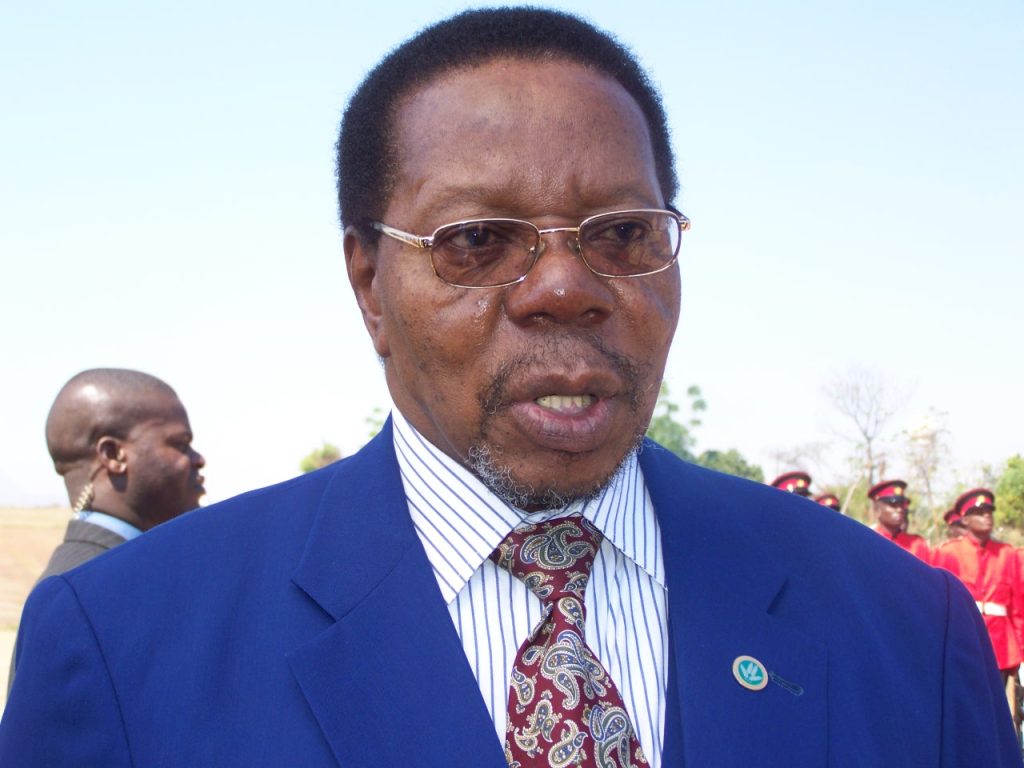
His death marked the end of a chapter defined by bold ambition, hard choices, and a relentless push to reshape a struggling nation into a state of self-reliance.
“This man gave us food. He gave us roads. He laid the foundation for our country,” says Chiza Mdambo, a retired teacher and now a farmer in Traditional Authority Wimbe in Kasungu.
Trained as an economist, Bingu built an extensive career across global institutions, shaping his conviction that Africa’s future lay in economic independence.
Speaking in 2005, he laid bare the reality facing Malawi, citing challenges such as extreme poverty, food insecurity, malnutrition, low investment and weak systems that constrained the economy.
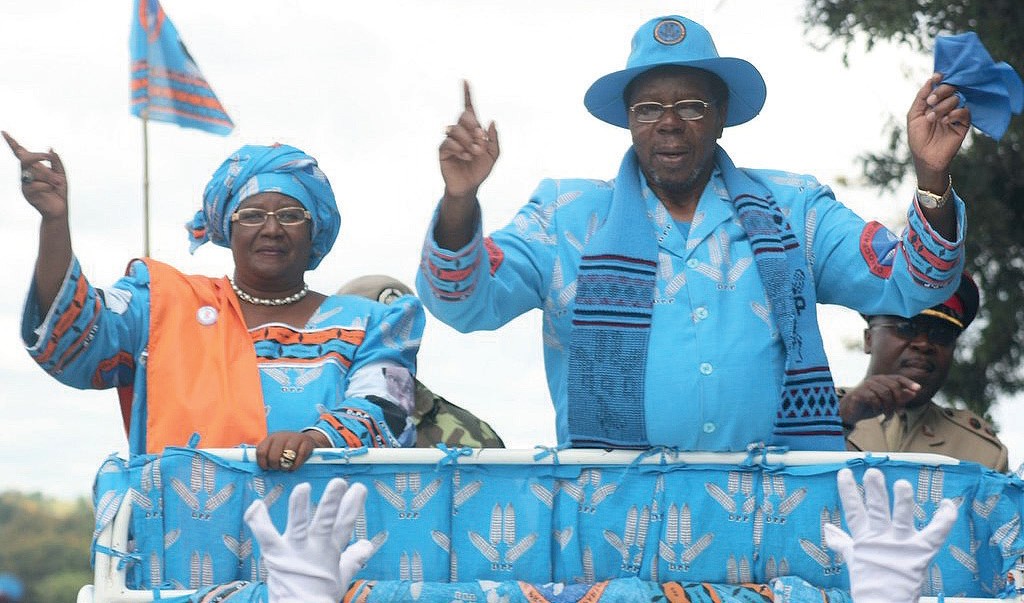
Bingu challenged that Malawi was not poor but, rather, its people were.
So, charged with the realisation, the third Malawian leader set the tone for what would follow, declaring his vision: “to kick-start macroeconomic growth, leading the country out of poverty to prosperity”.
“Prior to his presidency, Malawi was a very hungry nation largely because our priorities were not right. But when he came in, things changed immediately,” Mdambo says.
Bi ngu framed it in stark , uncompromising terms, declaring that hunger is an impediment to realisation of human rights.
“Democracy, governance and human rights cannot be achieved if the people are hungry,” he told world leaders at a food security conference, placing food security at the centre of his development agenda.
His response came in the form of the Farm Input Subsidy Programme (Fisp) in 2005, reaching out to 1.6 million smallholder farmers.
The move pushed the country’s harvest from 1.2 million metric tonnes (MT) to 2.7 million MT; and then to 3.4 million MT in the subsequent harvest.
Bingu turned the achievement in food security into a broader philosophy, taking advantage of his position as chairperson of the African Union where he argued that food security must be treated as a strategy.
“Food security must not be treated as a charitable issue: It is a matter of sovereignty, dignity and economic development,” he said.
He urged African governments to invest in agriculture as the backbone of transformation so that Africa becomes a global food basket within years, driven by a deliberate policy and political will.
“Time for rhetoric has gone…it is time for action to eliminate hunger and malnutrition,” he told an international conference during one of his outings, adding: “I want to present to you another Africa…an Africa of new hopes and new possibilities.”
Bingu rejected the notion of inherent poverty insisting, instead, that Africa possessed the resources and capacity to transform itself.
Back home, his economic policies reinforced this belief in that his administration pursued fiscal discipline, stabilising the economy and restoring donor confidence.
At one point, he advanced the idea of a zero-deficit budget, an approach that challenged dependence on external financing and reflected his broader philosophy of self-reliance.
Media and Communication academic Ziliro Mchulu describes Bingu as “a visionary leader” who lived by his words—“Let the works of my hands speak for me”.
He argues that the former president revolutionised agriculture through Fisp and that he set high governance standards.
“His government [also] prioritised infrastructure development that changed the face of the country,” Mchulu explains, and he continues: “The face of Lilongwe changed and the structures he built remain significant monuments in our country.”
Echoing Mchulu’s remarks is journalist Vincent Chauma who says Bingu redefined Malawi’s economic geography, steered the country towards progress and that he stands out as a leader who left an indelible mark on the nation’s development path.
Bingu’s legacy also became visible when his administration embarked on an ambitious infrastructure programme, constructing roads and opening up to all regions, knowing that agriculture, could not thrive without transport, energy and market access working in tandem.
In Lilongwe, the construction of the Bingu International Convention Centre and the National Stadium reshaped the capital’s identity, alongside the relocation of key government function to the Capital City.
Education also formed part of this vision as he championed the establishment of the Malawi University of Science and Technology (Must).
In his speeches, he repeatedly stressed the need for the application of science and technology as a driver of economic growth, particularly in agriculture and industry.
“Bingu will be remembered as the only leader in multiparty era who built a university. In about 30 years of multiparty democracy, we have only added Must and that’s Bingu’s brainchild,” Mchulu says.
In his Ministerial Statement delivered at Parliament on April 08 2026 titled ‘Honouring Bingu: Rekindling the Spirit of Development, Justice and Security’, Minister of Information and Communications Technology, Shadric Namalomba, recognised Bingu as “a promise this nation dared to keep, a dreamer who saw colour where others saw only grey”.
Namalomba recalled Bingu’s achievements from food security; infrastructure; education to health, and how the strides in those areas contributed to the country’s economic growth.
“The fields he revived still feed the nation. The roads he built still carry its movement. The institutions he established still shape its future. The lives saved through his health interventions continue to speak in quiet gratitude,” said Namalomba.
The minister’s sentiments were also echoed by many political figures, including the Malawi Congress Party (MCP) secretary general, Richard Chimwendo Banda, who described Bingu as “a patriotic leader who promoted equitable development and resisted nepotism, ensuring that resources and opportunities were distributed fairly across all regions of the country”.
Former vice-president Khumbo Kachali, who served under Joyce Banda, said Mutharika’s administration reflected inclusivity, noting that individuals from the Northern Region were entrusted with key leadership positions, reinforcing national unity and cohesion.
In a statement marking his life, the Democratic Progressive Party (DPP) described him as “a transformative leader, an economist of discipline, a patriot of conviction, and the architect of a development agenda that redefined Malawi’s trajectory”.
The statement, signed by the party’s secretary general Peter Mukhito, noted that Bingu’s presidency “delivered decisive economic reform, restored food security, and advanced infrastructure development,” adding that the Fisp proved Malawi could be “self-reliant, productive, and proud”.
It further notes the principles he championed that national progress demands disciplined and visionary leadership; that food security is the bedrock of sovereignty; that self-reliance must replace dependency.
“Today, we recognise with pride that his vision continues to live on — ably advanced under the leadership of [President] Professor Arthur Peter Mutharika… This continuity reflects the strength, relevance, and durability of the ideals upon which the DPP was founded.
“The greatest tribute we can offer is not remembrance alone, but action — by upholding the values he stood for, and advancing the foundation he laid,” Mukhito said in the statement
And now, years after his passing, the imprint of his leadership remains, largely manifesting in infrastructure that stands as testimony to a period when policy met purpose.
Bingu wa Mutharika’s legacy is ultimately captured in a philosophy he repeatedly voiced, that nations must produce to prosper, and that leadership must be measured by results.
Or, as he once challenged both African and global leaders: “If not us, then who? If not now, when?”