The Reserve Bank of Malawi (RBM) says it is facing challenges to manage allocations of foreign exchange to the country’s essential sectors due to inadequate forex reserves.
RBM principal economist Whytone Jombo stated during Monetary Policy Technical Committee Forum in Mzuzu on Monday, emphasising that making allocations has not been easy for the central bank.
He was responding to a question on how RBM is managing the forex situation in light of growing needs, including fuel and drugs, with figures showing that foreign exchange reserves are below three months of import cover or $750 million (about K1.3 trillion).
Said Jombo: “I can assure you that when forex is not enough, it is really difficult to manage because you have to address competing needs such as pharmaceuticals and fuel.
“It is tough to allocate and ensure that all sectors get enough. Some of the policies we implemented last year are working while some are under review.”
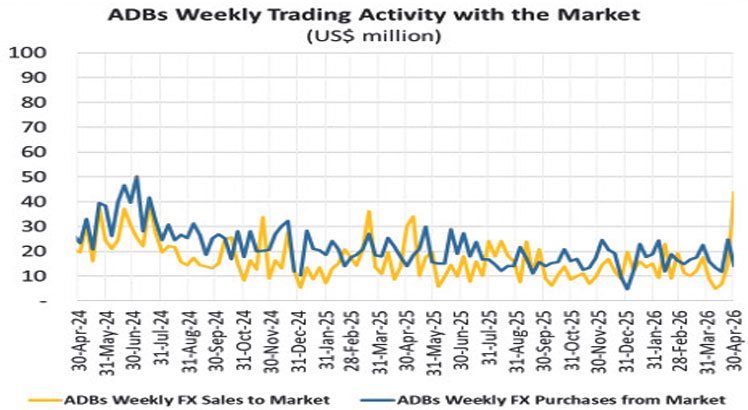
However, he could not disclose Malawi’s forex position at a time the country is into the third week of the tobacco marketing season, which has raked in $26.1 million (K45.7 billion), and in light of RBM’s recent decision to sell gold to finance fuel imports.
The Monetary Policy Committee (MPC) report for May 2026 indicated that foreign exchange supply remained subdued relative to demand during the first quarter of the year.
Last month, Minister of Information and Communications Technology Shadric Namalomba said the Malawi Government sold some of the gold that RBM stocked and paid $30 million (about K52 billion) to fuel suppliers.
But Jombo said the gold that was sold is not monetary gold, but the gold the RBM, through its subsidiary Export Development Fund, has been buying from local miners.
He said: “We bought the gold so that we could sell it. We did not sell it because we were desperate.
“This time around, we are buying more gold, faster than we used to. The gold we buy from artisanal miners has to be sold to earn forex.”
During the meeting, Kwithu Kitchen finance adviser Pyoka Mfune questioned RBM’s independence when making monetary policy decisions, asking why the country has not yet reformed its exchange rate to improve forex supply.
He said: “What is so difficult with releasing the exchange rate? If we are to release the kwacha, a lot of forex would come into the country. Let us remove politics from RBM and our economy.”
Last week, RBM maintained the policy rate at 24 percent to support ongoing efforts to stabilise prices and safeguard macroeconomic stability.
In its MPC statement following its second meeting of 2026 on April 29 and April 30, RBM Governor George Partridge, who chairs the MPC, said the decision reflects a cautious approach to consolidating recent gains in inflation reduction.
To complement the decision on the policy rate, the MPC also increased the liquidity reserve requirement (LRR) for local currency deposits to 12 percent from 10 percent, a decision the central bank said would help reduce excess liquidity in the banking system that continues to fuel inflationary pressures.
Reads the statement in part: “The MPC noted that earlier monetary policy actions have contributed to the observed decline in inflation. However, rising non-food inflation, elevated money supply growth, and excess liquidity conditions require continued attention.
In March this year, RBM eased the policy rate by 200 basis points to 24 percent , the first time since raising the policy rate to 26 percent in January 2024.
However, in recent months, commercial banks have been reducing their lending rates following policy rate adjustment, a development analysts argued is not significant enough to transform the investment climate.
Cumulatively, commercial banks have cut lending rates since February from 25.2 percent to 24.7 percent before dropping twice in March to 23.7 percent and 22.4 percent after the RBM cut policy rate from 26 percent to 24 percent.
This month, commercial bank have also cut the reference rate to 20.6 percent, making the cost of borrowing lower.