A community-owned maize mill is transforming livelihoods and driving new economic activities in a remote village in Lilongwe, barely three years after its establishment.
Spark Microgrants Country Director Express Moyo confirmed this during a visit to the village on Tuesday where he hailed the community for successfully managing and expanding the project beyond maize milling.
Established in 2023 under the Titukulane FCAP Project with support from Shaping Our Future Foundation and Spark Microgrants, the facility in Kumala Village in TA Chiseka generates between K300 000 and K480 000 monthly while creating jobs and funding other community ventures.
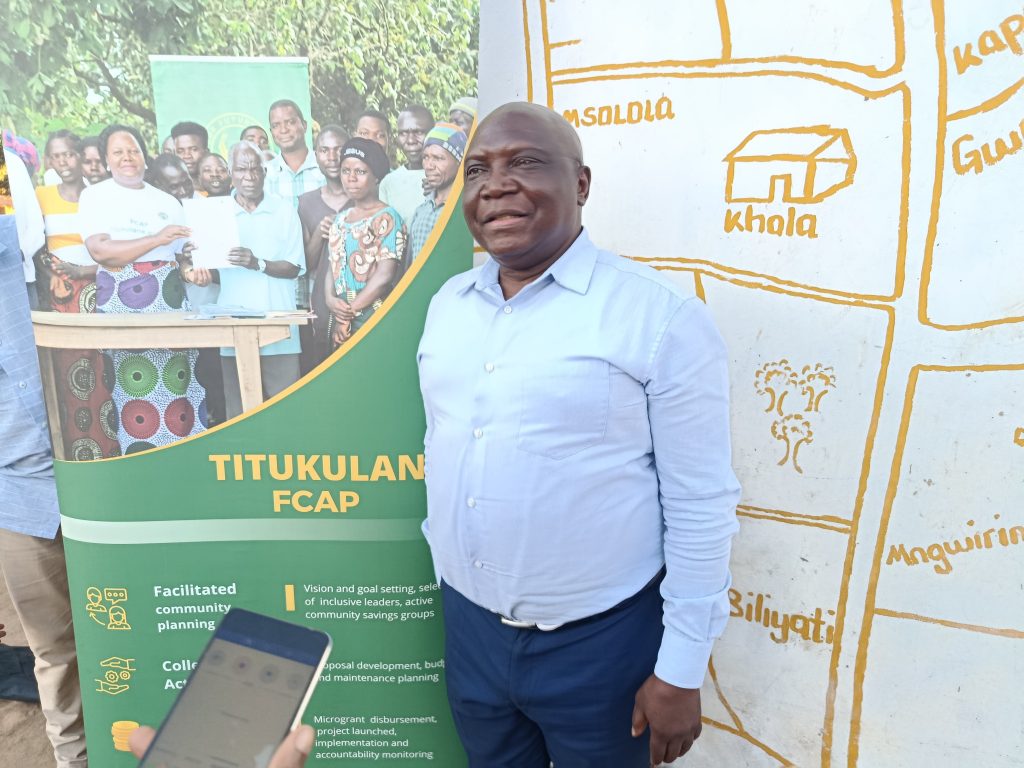
“We are proud of how the community is managing the maize mill and using it to grow other development activities. These initiatives promote self-independence among communities,” Moyo said.
He noted that profits from the initiative have since enabled the villagers to invest in soy farming, winter cropping, goat pass-on programmes and village savings schemes where members have already accumulated over K1 million in shares.
Moyo, however, warned the community against greed and called for continued transparency and unity in managing the enterprise.
Taking his turn, Executive Director for Shaping Our Future Foundation Michael Mkandawire said the project demonstrates how rural communities can use locally-driven initiatives to achieve sustainable development.
“The community’s expansion into farming, livestock rearing and savings initiatives reflects the growing economic impact of the maize mill enterprise,” Mkandawire said.
Lilongwe District Council representative Blessings Makhilinga concurred with the sponsors, saying the intervention has significantly improved livelihoods in the area.
“Before these interventions, this community was extremely poor, but now there are visible improvements in the people’s livelihood. What is worth noting is that the community itself identified its own challenges and chose the maize mill initiative as a solution,” he said.
One of the beneficiaries of the initiative, Sophie Chikhwawe, noted that the maize mill has reduced challenges villagers previously faced in accessing milling services while generating resources for broader development projects.
“The project has had a huge impact on our lives. Not only has it made maize milling easier for us, but the profits from the business have helped us buy goats and even purchase farmland for the community,” she said.