For the past six years, visual artists across the country have looked forward to the biannual Art in the Park, held in May and October.
The platform has become more than just an exhibition space to most artists.
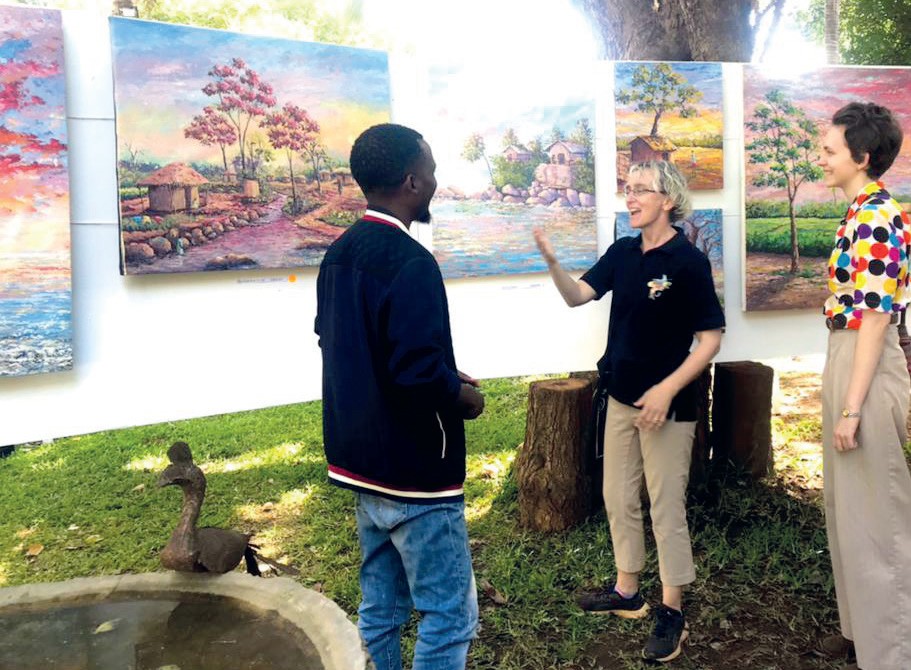
It has evolved into a marketplace, a networking hub and a meeting point for creatives and art lovers. This was the case from Friday to Sunday, the past weekend.
Organised by the Wildlife and Environmental Society of Malawi (Wesm), the event merges visual arts with environmental and wildlife conservation awareness.
When Wesm introduced the initiative a couple of years ago, the aim was to amplify the organisation’s conservation work through art. Today, artists say the platform has become one of the biggest markets for visual arts and is slowly reshaping how Malawians perceive art.
“Art in the Park has become a home for artists and has grown to accommodate creatives from across the country, giving us a platform where we can meet art lovers,” said Panji Tembo, who showcased his work for the second time.
For three days, Four Seasons Gardens transformed into a display of paintings, sculptures and artistic expression.
But beyond the beauty of the artworks hung across exhibition stands, one thing remained central to most artists on the final day, sales.
The success of the event, to a large extent, depends on how many artworks are sold or commissioned.
A walk around the venue on the day revealed mixed fortunes, some exhibition spaces had several artworks marked sold stickers while others had none.
Tembo said the reality reflects the continued low appreciation of visual arts especially among locals who barely patronise these events.
“It seems Malawi is still in its infancy when it comes to visual arts because you barely see locals showing up in large numbers. Foreigners are usually the ones who buy the artworks, but they are a small fraction and cannot buy everything. We need to see more locals taking interest in such platforms,” he said.
Other exhibitors echoed similar sentiments, saying it is often the same people who patronise the event every year.
Some buyers, artists said jokingly, have even reached a point where their homes are already filled with artworks and cannot buy more.
However, visual artist Jimmy Malinga, believes sales in art are unpredictable and largely depend on personal connection.
“It is about finding art that speaks to you and connects with you. If nothing speaks to someone, they may not buy. But there are artists who have sold and that is still positive,” he said.
Malinga noted that this year’s edition had improved quality of art works.
“You can see that artists are becoming more serious about their work and the standards are being raised,” he said.
Beyond sales, artists repeatedly stressed the need for greater investment in the sector so that visual arts become more visible and accessible to Malawians.
Afro-ecological artist and researcher Megan Banda, who was exhibiting for the first time, said there is need for government, the private sector and various stakeholders to increase investment in the arts sector.
According to Banda, the lack of appreciation for visual arts is partly linked to limited infrastructure and spaces dedicated to art.
“There is need for us as artists to start demanding support because we are already doing the work. We need growing appreciation and one way of achieving that is by having established art centres and other spaces where locals can come and interact with the art,” she said.
In addition, Banda stressed that art must also go beyond mere aesthetics and become a tool for preserving heritage and advocating for social and environmental issues.
Visual artist Charles Levison also called for increased support from government and corporate institutions.
He said sponsorships are crucial in helping platforms such as Art in the Park continue creating opportunities for artists and he commended Standard Bank Malawi plc for contributing to the promotion of visual arts.
“We need more platforms like this across the country because they give artists visibility and exposure. Support from government and stakeholders is very important,” he said.
This year marked the third time Standard Bank Malawi plc, through its Joy of the Arts initiative, partnered Wesm by injecting K20 million towards the edition.
Speaking during the opening night, Standard Bank Malawi chief executive officer Phillip Madinga said economic growth should not only focus on financial indicators.
“True growth is not just about economic indicators. It is about investing in the creative potential of our artists, preserving our heritage and building a platform where Malawian talent can flourish not only locally but also internationally,” he said.
Madinga further encouraged companies and individuals to support local artists by buying their artworks and displaying them in homes and offices.
“Blank walls are an opportunity to tell the story of Malawi through art,” he said.