It is once again that time of year our beautiful continent celebrates Africa Day set aside 63 years ago to commemorate the birth of the Organisation of African Unity, now African Union.
For about 63 years, some African countries, including Malawi have been independent, but the debate on identity has refused to die.
Over the years, western and eastern influences on Africans’ culture such as dressing, language, religion and music are visible, igniting fears of erasing our identity as Africans. In recent years, modernism and technology have further imported values that pose a significant threat of changing almost anything deemed African. Yet, scholars and cultural experts argue that the so-called western values are not really a threat to African cultures.

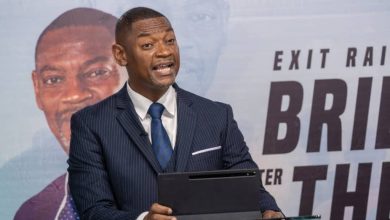
University of Malawi Associate Professor and head of Literary Studies Dr Wesley Macheso says people should understand that cultural aspects that identify a people are dynamic, meaning they cannot remain the same over time.
“We need to accept the fact that identity is always in a state of flux. As such, we have to be open minded and understand that what identified us 60 years ago, may not be the same today,” he says.
Macheso explains that learning institutions have always championed identity and culture and students in the fields such as liberal arts are made aware of where we are coming from as Africa.
“History from whatever perspective it is taught, is very important in shaping the future. However, the question is how many of our youths have access to such knowledge?” he argues.
Macheso says although the Africa Day is about unity, Africans need to go back to the basics and ask themselves why the day is celebrated in the first place.
“We all belong to the African Union yet we cannot even co-exist among ourselves as Africans. Borders are still closed both for trade and travel, tribalism is rife and we have a problem of xenophobia, even here in Malawi, I think we are still burdened by colonial legacies,” he states.
On his part, Africa enthusiast and ethnomusicologist Waliko Makhala says the celebration is coming during challenging global times.
“Our teaching and learning institutions are yet to awaken to the reality that the global trends are always dynamic and moving with times. Culture always evolves with time and we need to be resilient to safeguard our heritage. Let us go into the global village with our identity and pride,” he states.
Makhala says there is a greater need to protect and promote our cultural heritage which is fundamental in the resistance to foreign denomination.
Malawi University of Science and Technology’s Bingu School of Culture and Heritage commemorated the day with a message of encouraging umunthu for Malawi and Africa.
“At the school, we believe Africa’s renewal begins with umunthu-education rooted in humanity, dignity and justice. In the spirit of this year’s theme, our journey from Malawi to the wider continent shows how resilience and innovation can empower us to shape our future and safeguard the environment,” says the executive dean Dr Atikonda Akuzike Mtenje-Mkochi.
She adds that Africa is richly blessed with people, culture and natural resources.
“By using these gifts wisely and embracing unity, responsibility and vision, we build the Africa we want for today and for generations to come,” says Mtenje-Mkochi.
The Africa day this year was held under the theme ‘63 years of unity and integration and development: Let us celebrate together’.
The main event took place at the African Union Headquarters in Addis Ababa, Ethiopia with games, family activities and cultural bazaars. In Malawi, the commemoration was held at Bingu International Convention Centre in Lilongwe.