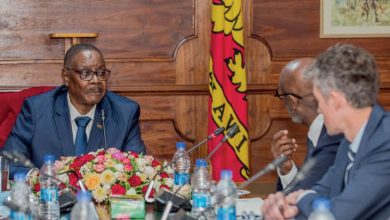
President Peter Mutharika directed all Cabinet Ministers and their deputies to restrict domestic travel to one trip per month, aiming to curb excessive spending on fuel and allowances that were undermining ongoing national austerity measures.
The directive, issued on February 11 2026, by Chief Secretary to the Office of President and Cabinet Justin Saidi, requires officials to seek presidential approval for any additional, essential trips.

The official circular outlined the following policy: “The recent increase in local travel is consuming substantial funds on travel allowances and fuel, undermining the very purpose of the austerity measures.”
But despite the austerity directives from the Office of the President and Cabinet (OPC), Cabinet Ministers and their deputies continue to crisscross the country.
While the OPC argues these travels are necessary to deliver services and require proper approval, citizens and civil society groups frequently criticize the trips as excessive.

From Wednesday to Thursday last week, Minister of Homeland Security Peter Mukhito and his deputy Norman Chisale, Local Government and Rural Development Minister Ben Phiri, Information Minister Shadric Namalomba, and Gender, Children and Social Welfare Minister Mary Navicha travelled to Chikwawa and Nsanje. There, they led civic education campaigns to dispel myths surrounding “missing private parts”.
Between March and yesterday, Minister of Labour, Innovation, and Skills Development Joel Chigona inspected various technical colleges. His itinerary included stops at: Kasama (Chitipa), Ngara (Karonga), Mzuzu Technical College, Nasawa Technical (Zomba), Soche (Blantyre), Nsoni Community Technical College (Chiladzulu), Liwonde (Machinga), Nkhwisa Community Technical College (Balaka)
Local Government Minister Ben Phiri visited Chikwawa twice, Nsanje, Zomba, Blantyre twice, Mzuzu, Rumphi, Phalombe, and the United States of America (USA).
Transport and Public Works Jappie Mhango has been to the United Arab Emirates, Morroco, Rumphi in his constituency, Chipoka in Salima, Zomba-Matawale-Liwonde Road Rehabilitation, Thuchila Bridge in Mulanje, Mpatamanga Bridge in Neno, Bakili Muluzi International Airport in Blantyre, Salima, Mkoma Bridge in Nkhotakota and for Martyr’s day in Nkhata Bay.
Minister of Health and Sanitation, Madalitso Baloyi is currently in Geneva, Switzerland. She has visited Nsanje, Mzimba, Zomba, and Mwanza.
Minister of Gender, Children, Disability and Social Welfare, Mary Navicha, recently spent about two weeks in the United Kingdom. Locally she has travelled to Nsanje, Chikwawa, Salima, and Ntchisi. .
Minister of Agriculture, Irrigation and Water Development, Roza Fatch Mbilizi, is currently in Accra, Ghana. Locally, she has toured Karonga, Mzuzu, Nkhata Bay, Mzimba, Bvumbwe (Thyolo), Chikwawa, Blantyre, and Kasungu.
But the Office of the President and Cabinet (OPC) has defended the ministerial travels, stating they are not as excessive as some believe.
OPC director of communication, Focus Maganga, argued that certain portfolios, such as the Ministry of Transport, require officials to travel and inspect project progress first-hand, provided official clearance is obtained.
He clarified that the government’s travel directives were not intended to replace essential duties that directly benefit Malawians.
Maganga said. “When people demand accountability regarding the quality and condition of our roads, the government and the Minister must be answerable.”
Mzuzu University Economics lecturer Christopher Mbukwa noted that just as the public previously deplored frequent travels by Vice Presidents, the continued travel by Cabinet Ministers amid their own austerity drive is a serious concern.
Echoing these sentiments, University of Malawi (Unima) macroeconomics lecturer Edward Leman pointed out the economic dangers of misallocating scarce public funds. He warned that directing disproportionate resources toward such travels comes at the expense of already underfunded productive sectors.