You have heard about property grabbing against women. However, some men suffer in silence when their wives die. Our Correspondent LOVEMORE KHOMO reports:
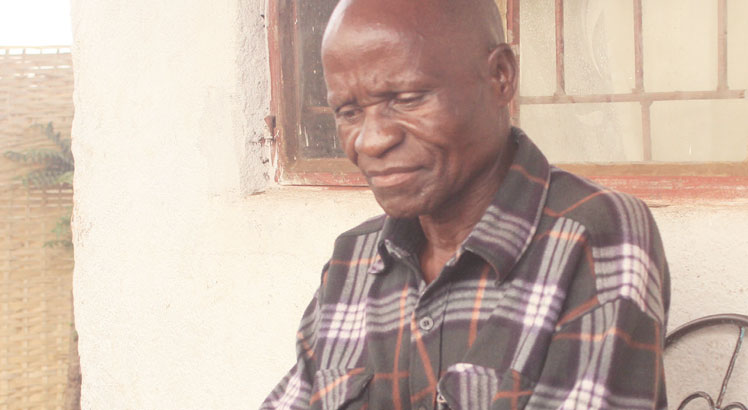
It is a cool Friday morning and retired civil servant Amos Jere of Kalonga Village in Salima is peeling potatoes for breakfast.
However, meals no longer taste the same following his wife’s death in December 2024.
“The same day we laid her to rest, about 15 relatives of hers asked me to surrender house keys and all belongings, including utensils, goats and chickens,” narrates Jere, 66.
The belongings included a plot comprising six houses and six shops. They also grabbed seven goats kept in his friend’s kraal.
“I kept calm and gave them what they wanted because we had just buried my dear wife,” he says. “I’m a Chewa and they are Yao, so our tradition might be different. These discussions could have waited for a year.”
Interestingly, Jere had built a house for his wife and her elderly mother in Traditional Authority Maganga, Salima.
“I didn’t know some of these people until they came to grab the property,” he says.
Jere married the late Steria Mlokote in 2007 after divorcing his first wife, but they had no children.
However, the wife had filed for divorce shortly before her death.
“I didn’t know that death would strike before the matter was resolved in court, but her relatives pursued the case until the court terminated the matter following her death,” he says.
Jere, who worked in the civil service from 1991 to 2015, invested his pension in two plots and his retirement home.
“I was investing in our future, but people I didn’t know grabbed all I had worked for all those 24 years,” he states.
Jere approached paralegals when his wife’s relatives came to evict him from his marital home.
“I wanted to understand what the law says about deceased estates,” he says.
Section 17 of the Deceased Estates, Wills, Inheritance and Protection Act of 2011 requires fair distribution of property when one dies without a valid will.
To prevent hardship, the law entitles any surviving spouse to retain all household belongings. It lists the surviving spouse, children and parents as primary beneficiaries.
Salima Civil Society Organisations Network vice-secretary John Mangwalala says most men suffer in silence when it comes to gender-based violence (GBV).
“Men seldom open up for fear of being ridiculed,” he says. “Most cases relate to property grabbing and violence when a man remarries and the divorced woman isn’t satisfied.”
Salima district gender officer Friness Samaliya says her office rarely receives GBV complaints from men.
“Men also face GBV, but rarely report to authorities or seek support because they fear being diminished in a society,” she says.
Samaliya ranks property grabbing, fighting and eviction from chikamwini (a woman’s village) as the most common men-related GBV cases
“As men hardly report GBV, records of GBV against men remain scanty. We need to intensify campaigns to make men aware of reporting GBV,” she says.
Centre for Human Rights and Rehabilitation executive director Michael Kaiyatsa says GBV against men remains underreported nationwide due to stigma and shame fanned by “societal expectations that a man must always appear strong”.
“In many communities, a man who reports abuse is rarely taken seriously or gets mocked. The actual scale of GBV against men is likely much bigger than official statistics show,” he states.
Kaiyatsa says the culture of silence drives some men into suicide, alcoholism and drug abuse to release pent-up emotions.
He reckons those suffering without access to justice, counselling or psychosocial support are at high risk of depression, trauma, substance abuse and suicide.