Malawi could create more than 100 000 jobs, attract over $2.4 billion (about K4.2 trillion) in private investment and significantly expand export earnings if it implements targeted reforms in commercial mining, nature-based tourism and mango production, according to a new World Bank Group report.
The Country Private Sector Diagnostic (CPSD), launched in Lilongwe yesterday alongside the Public-Private Dialogue Forum (PPDF), identifies the three sectors as commercially viable opportunities capable of driving investment, exports and job creation in the short to medium term.

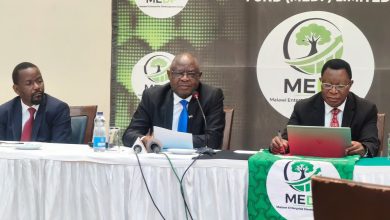
resources. | Nation
World Bank Group division director for Malawi, Tanzania, Zambia and Zimbabwe Firas Raad said Malawi’s challenge was not a lack of economic opportunities, but the barriers preventing investors from exploiting them.
“Malawi has substantial natural assets that can be turned into a competitive advantage with the right investments,” he said.
Raad, a former country manager for Malawi, said the report found that strategic reforms in the three sectors could attract more than $2.4 billion in private investment while generating well over 100 000 jobs and broadening the country’s export base.
He said tourism alone could create about 60 000 jobs if Malawi improves road connectivity to key destinations, reforms air access and strengthens the framework governing tourism concessions.
Raad said the report also identified significant opportunities in mango production and processing, arguing that Malawi enjoys a natural advantage because its harvest season coincides with periods of lower global supply and higher prices.
According to the report, improved phytosanitary systems and easier access to land for investors could help the sector generate about $100 million in annual export earnings.
The report further projects that commercial exploitation of rutile and graphite deposits could generate more than $1.9 billion in annual exports by 2033, potentially doubling Malawi’s current export earnings.
However, the World Bank cautioned that these gains will depend on reforms aimed at improving the business environment.
The report highlights regulatory barriers, limited investor access to land, inadequate transport and air connectivity, and weak public-private engagement as some of the factors constraining investment.
Raad said the opportunities identified in the report were not inevitable and would require deliberate action by both government and the private sector.
Speaking at the same event, Malawi Confederation of Chambers of Commerce and Industry president Ronald Ngwira said businesses continue to face persistent challenges, including foreign exchange shortages, high financing costs, unreliable electricity supply and rising production costs.
He said while agriculture contributes about 22 percent of gross domestic product and employs roughly 70 percent of the labour force, much of the country’s production remains concentrated in low-value activities.
“Our export base also remains concentrated on a few primary commodities, making the economy vulnerable to external shocks,” he said.
Ngwira, who is also Illovo Sugar Group managing director, said the country’s manufacturing sector contributes only about 11 percent of GDP, highlighting the need for greater value addition and industrialisation.
He warned that studies and diagnostics alone would not transform the economy without implementation.
“What matters is implementation,” he said. “Business as usual has not proved to work.”
On his part, Minister of Industry, Trade and Tourism Simon Itaye said government would use the CPSD recommendations to guide reforms aimed at unlocking private investment and job creation.
He said the newly launched PPDF would provide a structured platform for government and businesses to identify constraints, monitor reform implementation and strengthen accountability.
“Malawians are looking for tangible results,” said Itaye. “The success of this forum will be judged by real improvements in the lives of ordinary Malawians and not by the number of meetings organised.”
The CPSD comes as Malawi continues to grapple with persistent foreign exchange shortages, low industrialisation, rising public debt and high unemployment despite possessing significant tourism, agricultural and mineral resources.
The World Bank argues that unlocking the country’s natural assets will require sustained reforms, stronger institutions and a more predictable environment for private investment.