Isaac Chibade, 37, has donated blood for a whopping 73 times.
The trusted blood donor, from Bangwe in Blantyre, started donating blood in 2005.
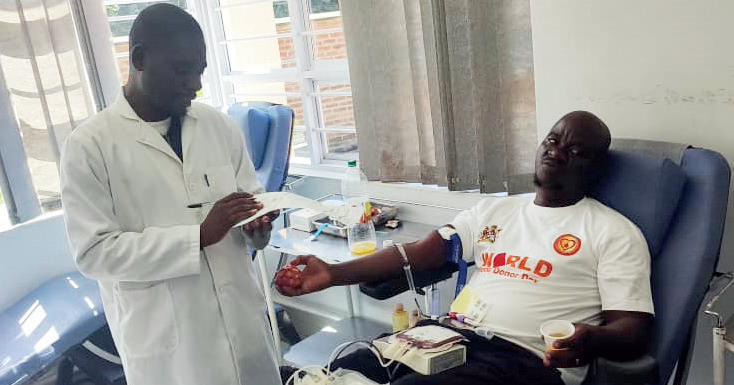
He recalls: “I was in Form One when Malawi Blood Transfusion Services [MBTS] officials came to Nanjiri Community Day Secondary School in Blantyre and shared with us the importance of donating blood. I was touched and made a decision to help save lives.”
Chibade jealously guards his health to continue donating blood for those who need it most.
“I even told my wife about this,” he says.
Major winners when it comes to blood transfusion include pregnant women, malaria patients as well as survivors of road accidents.
Malawi has allocated K11 billion to strengthen blood collection and distribution amid persistent shortages in public hospitals.
According to Minister of Health and Sanitation Madalitso Baloyi, the country requires about 150 000 units of blood annually to meet growing demand, particularly for maternal health services and accident victims.
The minister disclosed that the youth, aged between 16 and 25, donate at least 80 percent of the blood collected by MBTS.
“Blood cannot be manufactured, so it depends entirely on healthy individuals who are willing to donate,” said Baloyi. “Therefore, I encourage adults to emulate the commitment by young people and become regular blood donors.”
Road carnage
Road accidents claim a life every eight hours, police figures show.
Police recorded 931 deaths last year, a slight drop from 958 in 2024.
“This is still way high,” says Inspector General of Police Richard Luhanga.
Behind the figures are the beloved children, parents, friends, workmates and neighbours.
Some of them could have survived if they had a pint of blood when they needed replenishment.
However, many are not as lucky as hospitals often run out of blood pints.
Donating blood could help accelerate the global race of halving road traffic fatalities and maternal deaths by 2030.
It constitutes a lifeline for pregnant women faced by severe bleeding, a top cause of maternal deaths in the country.
This makes blood donors like Chibade, a father of three, selfless heroes.
No one is forced to give blood, butto donate it out of passion to save lives.
The gift of blood is critical for managing emergencies, conflicts and pregnancy-related bleeding.
The World Health Organisation (WHO) declared June 14 as World Blood Donor Day to celebrate the life-saving gift most patients get in life-and-death conditions when their relatives and contacts are beyond reach.
“Your generosity helps save lives, supports emergency care and strengthens health systems.
Together, we can help ensure safe blood is available for everyone who needs it,” WHO Africa Region commends blood donors.
World Blood Donor Day also highlights the responsibility of governments and health authorities to invest in robust blood transfusion systems that support voluntary donations, equitable access and safe transfusion practices.
Transfusion is also essential for treating severe childhood anaemia, supporting medical surgical procedures and providing life-long care for conditions such as sickle-cell disease, haemophilia and immune disorders.
This year’s theme, One Drop of Humanity, Give Blood, Save Lives, places humanity at the heart of every blood donation.
“Each act carries compassion, solidarity and care for others,” says WHO.
Blood donors rising
According to MBTS marketing and public relations manager Janet Katonda, blood donations are increasing.
She states: “There has been an improvement in the supply of blood in the country. For three consecutive years, MBTS has been able to collect over 100 000 units of blood.
“In the 2025/26 fiscal year, we have collected 107 140 units against a target of 146 000, representing 73 percent achievement.”
Katonda saluted social influencers, including faith leaders, village heads and the corporate captains, for encouraging Malawians to donate blood.
Since last year, MBTS supplied 133 260 litres to both public and private hospitals.
Chibade vividly remembers how blood donated by a group of strangers saved his aunt who was admitted to Queen Elizabeth Central Hospital in Blantyre when he was in Standard Seven.
“I don’t know them and may never meet them, but their priceless gift saved a life,” he says.