The Transporters Association of Malawi (TAM) fears some of its members will not renew their Liquefied Fuels and Gas (LFG) transportation licences due to a lack of business and dissatisfaction with payment arrangements.
TAM spokesperson Frank Banda disclosed this in an interview following a warning by the Malawi Energy Regulatory Authority (Mera) that LFG transportation licences for the 2026/27 financial year must be renewed by July 15, 2026, or operators risk licence revocation and other penalties.
In a notice titled ‘Renewal of LFG Transportation Licences for the Year 2026/27 and Warning to Unlicensed and Non-Compliant Transportation Operators’, Mera said it had noted that many LFG transportation operators were operating with expired licences or without licences altogether.
Part of the notice reads: “Failure to renew, settle outstanding fees or comply with all regulatory requirements by this date may result in the recovery of unpaid fees with interest, the imposition of monetary administrative penalties, and/or revocation of the licence without exception or recourse.
“All LFG licensees are hereby directed to engage only transporters that hold a valid LFG transportation licence for the transportation of liquid fuels and gas. Failure to comply with this directive shall result in appropriate regulatory action against the respective licensee.”
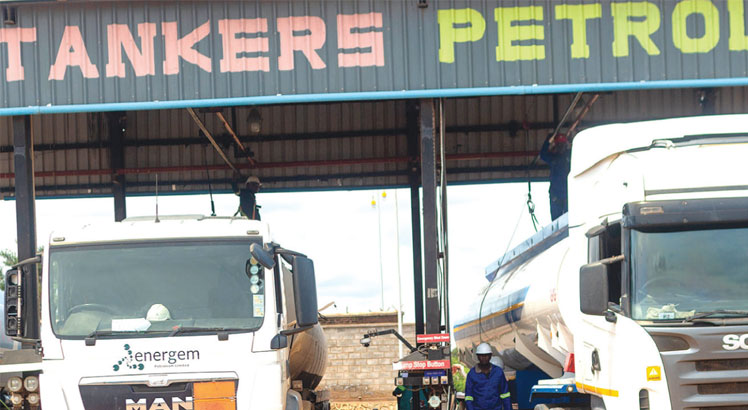
However, in an interview on Wednesday, Banda said fewer than half of the operators are expected to renew their licences because about 60 percent of the tankers that previously participated in the fuel transportation business are no longer operating due to various challenges.
He said local transporters currently receive only about 10 percent of the business from the National Oil Company of Malawi (Nocma), mainly on the Dar es Salaam route, while Tanzanian transporters handle a larger share and are paid in US dollars.
“As I speak, out of the 850 tankers that were transporting fuel in 2020, we currently have only about 350. Most of the tankers bringing fuel into Malawi are from Tanzania. Local transporters have also complained about payment arrangements, as we are paid in kwacha while our counterparts are paid in dollars.
“Our expenses are incurred in foreign currency, so being paid in kwacha and then having to purchase expensive forex on the black market does not make business sense for most operators,” he said.
Banda said local transporters are paid about K800 per tonne. He added that it costs approximately $13 500 (about K23.4 million) for a Tanzanian truck to transport fuel into Malawi, a situation he believes could generate savings for the country if local rates were reviewed and local operators prioritised.
“We remain confident that through ongoing discussions, an amicable and mutually beneficial resolution can be achieved. However, should all negotiation and engagement efforts fail to produce satisfactory outcomes, the association will not hesitate to consult its members on the next course of action,” he said.
There was no immediate response from Nocma spokesperson Raymond Likambale. However, Petroleum Importers Limited (PIL) general manager Martin Msimuko acknowledged the foreign exchange challenges faced by local transporters while maintaining that the company’s business model prioritises Malawian operators.
“On our part, we always prioritise local transporters to bring fuel into the country. As for paying them in local currency, this is in line with national regulations, which require local procurement transactions to be conducted in kwacha.
“That is why foreign transporters are paid in foreign currency while local transporters are paid in local currency,” Msimuko said.
Truck Drivers Union of Malawi vice-president Francis Mkandawire said the union has registered numerous complaints with government and participated in several round-table discussions, but said no tangible solution has been reached.
Mera spokesperson Fitina Khonje previously said the regulator would continue engaging transporters on the matter.
“The agreed position will be shared with the media,” she said.
Between 2020 and 2024, local operators protested against the Delivered Duty Unpaid (DDU) system, which was used mainly by Tanzanian transporters to haul fuel into Malawi, arguing that it disadvantaged local operators.
In August 2024, the High Court of Malawi outlawed the DDU system in a case brought by the Fuel Tanker Operators Association.
In April 2026, Mera announced that it had resolved grievances raised by tanker truck drivers regarding their welfare by allocating 85 percent of contractual fuel volumes to Malawian transporters and establishing offices at loading ports.