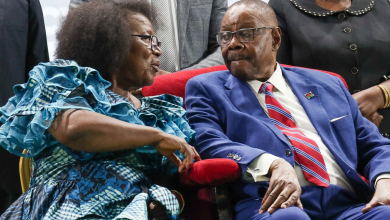
Fresh from a resounding election victory over Lazarus Chakwera and the MCP last year, President Peter Mutharika stood before Malawians and delivered a warning that cut through the euphoria that had swept across DPP supporters, sympathisers and citizens who just voted for change.
“We all wanted change,” he said. “We voted for change. We expect change. I promise you real change. Zinthu zisintha! But real change must begin with us, each one of us.”
The President’s promise was emphatic. Malawians had indeed voted for change, and he assured the nation that change would come. However, he carefully attached an important qualifier in his inauguration speech, ‘real change’.
Mutharika argued that real change must begin with each one of us. If Malawians want a different country and different results, he said, then we must learn to think differently and act differently. Simple.
Then came the line that jolted Kamuzu Stadium.
“The honeymoon of looting government is over! You are dealing with a different President now. You are looking at a different President. I will not allow anyone to destroy this country under my watch—and I mean anyone.”
I thought that was a remarkable statement because it confronted one of Malawi’s deepest and most destructive national habits. Since independence in 1964, many citizens have viewed public office not as a platform for service, but as a gateway to personal enrichment. And since the return of multiparty democracy in 1993, elections have largely succeeded in delivering the latter by changing the faces of crooks and thieves around the dining table without fundamentally moving this country forward.
Obviously, that is the mentality Mutharika was confronting when he warned that government is not a feast. Unfortunately, ordinary Malawians have watched the same depressing drama unfold time and again. The names change, the party colours change, but the big appetites for public resources rarely do.
As a result, this tidyelele mentality (the feasting spirit) has fuelled corruption, theft, looting and the gradual destruction of our public institutions. Apparently, the spirit convinces many public officials that government money belongs to nobody and can, therefore, be taken by anybody at any time. It also transforms public service into private business and national resources into personal property.
Folks, that is the attitude the President pointed out at Kamuzu Stadium, and we must really change if Malawi is to move forward.
But there is an even deeper moral problem. Once the feasting spirit takes root, public offices exist for personal gain and corruption instantly ceases to be an exception but an expectation. This is precisely why Mutharika’s call for a mindset revolution deserves serious attention this time.
I say this because this is not a new conversation. Nine years ago, a statesman teaching philosophy at the University of Malawi argued that Malawi’s development challenges are closely linked to ethical failures. His observation remains as relevant today as it was then. Self-interest and disregard for the common good still lie at the heart of much of Malawi’s moral decline today, and his diagnosis mirrors the President’s concerns.
Just look around, the consequences are all over. Our public roads have deteriorated over time because mostly money was stolen or contracts were manipulated, many public hospitals are operating without essential medicines because resources are diverted or stolen, and the majority of young people struggle to find jobs because public funds meant to stimulate economic growth disappear into private pockets.
Malawi’s biggest obstacle is not a shortage of resources, policies or leaders. It is the feasting mentality that has turned public service into personal opportunities. Sadly, every act of corruption simultaneously imposes a hidden tax on ordinary Malawians who depend on public services.
Which is why the fight against corruption, moral decay, political dishonesty and abuse of power requires more than arrests. It demands a collective moral awakening led by the clergy, the media, civil society, educators, traditional leaders, public servants and citizens themselves.
As they say, laws can deter wrongdoing, but only values can inspire people to do what is right when no one is watching.