Dr. Molly Kachale Netter: Global scholar brings expertise back to Malawi

More than a century ago, Malawi’s healthcare system faced a challenge that remains familiar today, including limited government capacity and a heavy reliance on partnerships to provide health services to ordinary people.
An Annual Medical and Sanitary Report of 1937, preserved in the National Archives of Malawi, records that until around 1930, government involvement in healthcare provision was largely confined to a few lakeshore districts, while much of the country’s health infrastructure was developed by missionary institutions.
The report urged the colonial administration to take a more deliberate role in expanding healthcare, warning that the country needed a coordinated and accessible health system.
One of the earliest responses was the establishment of what later became Zomba Central Hospital.
Built through the efforts of the Blantyre Mission under Mrs A. L. Bruce, daughter of the renowned missionary and explorer Dr. David Livingstone, the hospital opened on September 25 1903, as Livingstone Memorial Hospital.
It symbolised an enduring truth that healthcare advances when people and institutions invest their knowledge, resources and commitment in improving the lives of others.
Nearly three decades later, another milestone followed.
In 1930, Dr Shircore, then Director of Medical Services in Tanganyika, was commissioned to review Nyasaland’s medical services.
His recommendations transformed the country’s healthcare direction. They included proposals to establish a medical school in Zomba, construct new hospitals, expand rural health services and strengthen medical and sanitation systems.
The recommendations secured £73 000 from the Colonial Development Committee to build 12 native hospitals, 36 rural dispensaries and three maternity and welfare clinics.
The ambition was simple: healthcare had to move closer to the people.
More than 90 years later, Malawi continues to grapple with many of the same issues. Despite 62 years of independence, the country still faces shortages of healthcare workers, overstretched hospitals, inadequate resources and persistent inequalities in access to healthcare, particularly in rural communities.
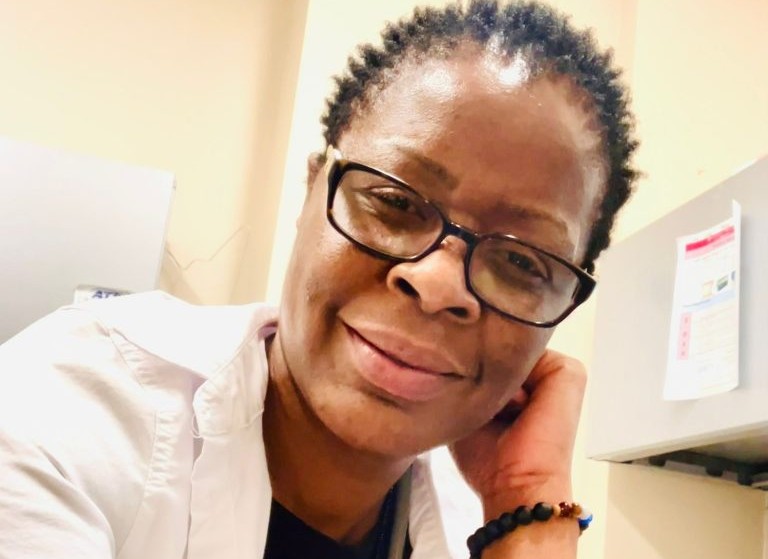
Against this historical backdrop, the story of Dr. Molly Kachale Netter offers a different, but equally important contribution to Malawi’s health sector.
Like Mrs. Bruce more than a century ago, Netter is a Malawian who built her expertise abroad, but remains firmly committed to improving healthcare back home.
She is strengthening knowledge, research, education and partnerships.
Netter is an assistant professor at DePaul University in Chicago, a board-certified family nurse practitioner and a global health scholar whose work spans clinical practice, teaching and public health research.
She has developed DePaul University’s first Study Abroad Programme, with Malawi selected as its inaugural destination.
Through a planned partnership with the Kamuzu University of Health Sciences (KUHeS), the programme will bring together students, lecturers, researchers and healthcare professionals from Malawi and the United States for reciprocal learning, clinical placements and collaborative research.
Netter believes meaningful partnerships should not be one-sided.
Instead, they should allow knowledge to flow in both directions, enabling Malawian professionals to share their experiences while learning from colleagues abroad.
“Even in America, I remained involved in initiatives supporting vulnerable communities, including people experiencing homelessness,” she says.
“Coming back to Malawi is an extension of that commitment.”
Her vision, she says, is to strengthen healthcare education, promote locally driven research and support community-centred health solutions that respond to the realities faced by ordinary Malawians.
Born in Ndirande Township, Blantyre, Netter’s journey began with a childhood fascination for science.
She attended Makata Full Primary School before proceeding to St Mary’s Secondary School.
Netter later enrolled at Chancellor College—now University of Malawi—from 1990 to 1994, where she pursued the First Combination (BSc), the pre-medical programme that was then the traditional pathway for students aspiring to study medicine.
“My dream was to become a medical doctor, but at the time Malawi did not have a medical school,” she recalls.
Like many aspiring doctors of her generation, she completed the pre-medical programme, but had no opportunity to continue medical training in Malawi.
She taught Biology at Mulunguzi Secondary School between 1995 and 1996 before relocating to South Africa, where she continued teaching.
In 1998, she moved to the United States, where a new chapter of her life unfolded.
Determined to remain in healthcare, she pursued nursing and has built an impressive academic career.
She earned a Master’s degree in Nursing Education and Clinical Leadership in 2013, a Master’s in Family Medicine in 2017 and a Doctor of Philosophy (PhD) in 2022.
Since 2022, she has served as an assistant professor at DePaul University while maintaining clinical practice as a board-certified family nurse practitioner.
Alongside teaching, she has built a strong record in community-engaged research.
In 2020, she joined a multidisciplinary research project recognised with the Community Engaged Research Exploratory (Cere) Award. The project worked with communities to understand the causes of social isolation and develop practical interventions through community participation.
That same year, she co-authored an invited paper published in Public Policy & Aging Report examining how Covid-19 quarantine measures and social isolation affected older adults and proposing policy recommendations for future public health emergencies.
In 2022, she contributed to another collaborative study that developed a culturally relevant diabetes self-management programme for Vietnamese Americans, demonstrating how healthcare interventions become more effective when designed with communities rather than for them.
These experiences reinforced her belief that communities should not simply receive healthcare services, but should actively participate in designing solutions to their own health challenges.
Her broader research focuses on HIV prevention, health equity, social determinants of health and strengthening healthcare systems.
In 2024, she founded Pamudzi 360 Health, a private healthcare practice in America that promotes a holistic approach by integrating functional medicine with conventional healthcare to address the underlying causes of illness rather than simply treating symptoms.
“We believe in creating healthier, empowered and resilient individuals through innovative health solutions,” she says.
A year later, she launched Innovation Commons, a community-based public health initiative inspired by lessons from the Covid-19 pandemic.
“The pandemic taught us hard lessons. It exposed how fragile our systems are and how deeply health, trust and justice are intertwined,” she says.
“At Innovation Commons, we use community-based participatory research to rebuild what was broken.”
For Netter, healthcare transformation cannot be achieved through hospitals alone.
It also depends on investing in education, research, partnerships and communities themselves.
She envisions a future where quality healthcare reaches the rural mother travelling long distances to seek treatment, the community health worker serving isolated villages and the patient managing chronic illness with limited resources.
Through the planned DePaul University-KUHeS partnership, she hopes to help position Malawi not merely as a recipient of global health assistance but as an equal partner contributing knowledge and innovation to global healthcare.
“Hopefully, now that we have started this collaboration with KUHeS, the plan is to work together and do some work on the ground,” she says.
Although Pamudzi 360 Health currently operates in the United States, Netter says her long-term vision is to extend its services to Malawi through research, innovation and partnerships with local institutions.