Successive Malawian administrations’ politically-driven decisions have exposed taxpayers to over K3.2 trillion in court-ordered compensations, Weekend Nation analysis has shown.
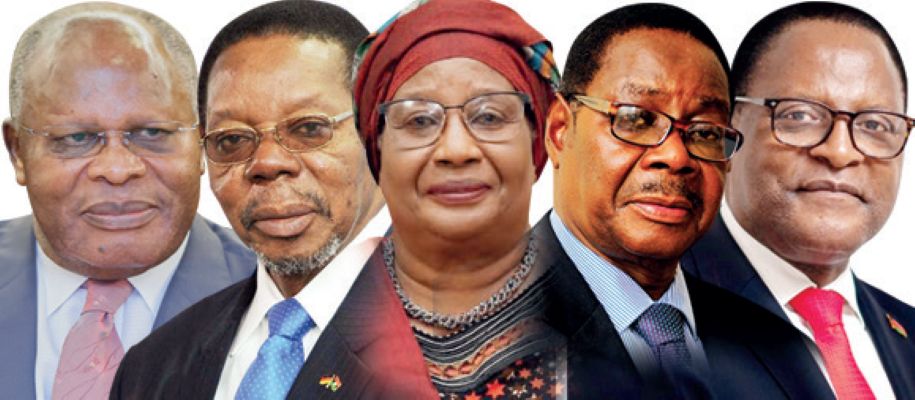
Spanning leadership eras of Bakili Muluzi, Bingu wa Mutharika, Joyce Banda, Peter Mutharika, Lazarus Chakwera and the current regime— this liability stems from politically-motivated contract and employment terminations, police brutality and civil rights violations.
Our analysis based on publicly available data, review of official budget and court documents and audit reports shows that unlawful contract and employment terminations account for around 98 percent of the compensations, with the remainder split between police brutality and civil rights violations.
Unlawful terminations largely happen within months of a new administration coming in after presidential elections as new regimes purge top individuals who served under the previous one. Other victims are firms deemed to have been sympathetic to the outgoing regime.
Given that Malawi has approximately 4.6 million households, it means each family has to contribute roughly K680 000 or around K140 000 per person to the K3.2 trillion payout in a country where the World Bank says roughly 75 percent of its population lives below the international poverty line of $2.15 (around K3 800) per day.
The K3.2 trillion is also equivalent to approximately 29 percent of the 2026/27 National Budget, which stands at nearly K11 trillion.
Based on the current fiscal year’s budget allocations, the money potentially on its way to private individuals and organisations can fund the following key public sectors:
- Education & Skills Development: K1.28 trillion
- Agriculture: K931.1 billion
- Transport & ICT Infrastructure: K664.4 billion
- Energy & Mining: K352 billion
- Tourism & Manufacturing: K51.2 billion
Legal and economic experts attribute these recurring financial losses to systemic flaws in public administration, with one warning that the developments have empowered cartels and incentivised more corruption.
Often, politically-expedient administrative decisions are enacted first, while legal and contractual implications are considered as an afterthought.
This sequence inevitably results in successful civil liability, unfair dismissal and breach-of-contract lawsuits against the State.
These taxpayer-funded compensations have plagued successive administrations for two decades. Notable historical cases include:
Bakili Muluzi era (1994—2004)
Owing to the massive political and legal transitions following the end of the country’s founding president Dr. Hastings Kamuzu Banda’s one-party State, most compensation pay-outs during this decade were not handled directly through the court system, but through the National Compensation Tribunal (NCT).
NCT’s mandate (1994–2004)— established by Section 137 of the 1994 Constitution of Malawi—was to settle all civil and criminal liabilities of the State for human rights abuses and property confiscations that occurred during the pre-democratic era (1964 to 1994).
NCT recorded a total of 822 individual beneficiaries. While the exact cumulative monetary value of the pay outs disbursed by the NCT during this period is not universally consolidated, Open Society Foundations highlighted that the government incurred an estimated K283 million in State losses, specifically attributable to default judgements during this general era.
The official exchange rate for the US dollar to the Malawi kwacha in 2004, when the NCT was dissolved, was K108, which translated to $2.6 million and, therefore, comes to nearly K4.6 billion at current official Malawi kwacha value relative to the US dollar.
Bingu wa Mutharika (2005– 2012):
In 2007, the State halted a major construction project, leading to a K2.9 billion payout to Deco, a company that was stopped from constructing the New Parliament Building when Malawi switched diplomatic ties from Taiwan to China.
In 2008, the government paid K900 million to Glens Waterways Limited. This followed government’s termination of a 20-year concession to run the water transport system after the company had operated it for just six years.
Additionally, in 2008, the courts ordered a K840 million payout to Victoria Forex Bureau for loss of business following the Reserve Bank of Malawi’s shutdown of private forex operations.
Later in 2017, the High Court in Lilongwe ordered the Malawi Revenue Authority to pay approximately K700 million to compensate 167 former employees who had sued it for unfair dismissal in 2010.
Joyce Banda (2012–2014)
In the 2012/2013 fiscal year, government announced it would disburse K7 154 559 550.38 to over 30 companies and individuals. Of that total, about K266 million was allocated to individuals deemed to have been wronged by the State.
These individuals included:
- Charles Matabwa (Former Admarc director general): K82 million
- Alex Nampota (Former ACB director): K70 million
- Perks Ligoya (Former RBM Governor): K49 million
- Bright Malopa (Former MBC Head): K40 million
- Muhara (Former MRA Commissioner General): K25 million
At the time, Peter Woeste— then German Ambassador and co-chairperson of the Common Approach to Budget Support (Cabs)—criticised the massive compensation payouts.
“This cannot be justified in the
Original contractor of this building was paid K2.9 billion after the Taiwan-China diplomatic switch current economic climate and sends a message that while many are suffering, a lucky few are able to gain and even prosper,” Woeste stated.
“Naturally, this causes resentment and dissatisfaction and undermines the efforts of government to handle the economic crisis.”
APM’s first era (2014–2020)
The government under Arthur Peter Mutharika’s first stint continued the costly trend of politically-motivated contract and employment violations:
- Contractor payouts: According to the Auditor General, the government paid contractors K11.483 billion in compensation during the 2019/20 fiscal year alone for breaching certain contract clauses.
- The Charles Nsaliwa case: In August 2014, government (via the Deputy Chief Secretary) transferred the Director General of Macra, Charles Nsaliwa, to the Ministry of Information, Tourism and Culture as a technical adviser. He sued for constructive dismissal and in 2020, the High Court ordered government to pay him K569.9 million in compensation. However, the Industrial Relations Court (IRC) reduced the figure to around K16 million as final payment.
- The Christopher Makileni case: In February 2022, the court awarded former Principal Secretary Christopher Makileni K18 million after he sued over political victimisation dating back to 2014. He had been posted to the Office of the President and Cabinet (OPC) and was left without a vehicle, forcing him to remain at home.
- The consequences of past administrative decisions have continued to impact government finances as follows:
- Graduate police officers: In July 2025, the High Court of Malawi Commercial Division ordered government to pay 53 graduate police officers salary arrears totalling K425 million, dating back to 2018.
Enter Chakwera (2020—2025)
President Lazarus Chakwera’s administration inherited and subsequently accumulated a staggering wave of government compensation claims and judgment debts across various high-profile legal, labour and human rights disputes since 2020.
The timeline below details the massive compensation debts and payouts managed by successive Attorneys General Chikosa Silungwe and Thabo Chakaka-Nyirenda:
2020: The baseline debt
By October 30 2020, former Attorney General Chikosa Silungwe reported that the Malawi Government owed claimants K150.5 billion for 155 past judgment debts dating back to 1995.
2021: Landmark settlements
- Msundwe brutality: Government paid K130 million to 18 women for sexual offenses and brutality allegedly perpetrated by police in 2019.
- Surgical negligence: K305 million was awarded as damages to two women who had foreign objects left inside their bodies during medical procedures.
- Claims surge: By December 2021, former Attorney General Thabo Chakaka Nyirenda said his chambers were tasked with scrutinising or defending claims that had ballooned to over K2 trillion from about 2 800 claimants.
- Top claimants: The top four businesspersons on this list included Abdul Karim Batatawala (K250 billion), Ramchand Hashmatrai (K131 billion), Shiraz Ferreira (K30 billion) and Leston Mulli of Mulli Brothers Limited (K18 billion).
2022: International rulings
Beginning in 2022, the African Court of Human and People’s Rights ordered the Government of Malawi to pay K200 million to Harold Mbalanda Munthali and his eight siblings for the forfeiture of their father’s property during the one-party era in 1976.
2024: Labour and political cases
- Brian Banda: In January 2024, the Industrial Relations Court (IRC) awarded broadcaster Brian Banda K103 million in damages for unfair dismissal from his role as State House press secretary.
- Admarc retrenchments: In December 2024, the IRC ordered Admarc to pay K25 billion to 3 282 former employees following an unfair retrenchment exercise in January 2023.
2025: Recent rulings and awards
- State residences workers: In February 2025, the IRC granted 225 former State Residences employees K1.2 billion for unpaid gratuity, salary arrears and unfair dismissal.
- Pastor Martin Thom: In August 2025, the High Court ordered the government to compensate former presidential advisor Pastor Martin Thom K597 million for defamation following his unlawful arrest and dismissal in 2021.
2025 to date
The recent wave of massive compensation awards and legal disputes highlights a growing economic concern for Malawian taxpayers:
- SFFRFM contract breach: In May, the Malawi Supreme Court of Appeal upheld a High Court decision ordering the State-owned Smallholder Framers Fertiliser Revolving Fund of Malawi to pay K18.5 billion to 30 business operators for breach of contract.
- Malawi Posts Corporation (MPC) dismissal: Also in May, the Industrial Relations Court ordered the Malawi Posts Corporation to pay its former Post Master General, Zachaeus Meke, K378.6 million for unfair dismissal.
- Finance Bank of Malawi (FBM) claim: Taxpayers are bracing for a potentially catastrophic fiscal burden as the defunct Finance Bank seeks K1 trillion in compensation and interest from the Reserve Bank of Malawi for revoking its license in 2005. The Judiciary has since set July 20 2026 for final assessment of compensation to the deregistered bank.
- Mulli loss of business: Business mogul Leston Mulli and five of his companies this month won a significant court settlement—initially demanding K270 billion—stemming from a 2012 government directive that halted ministries and departments from doing business with them. The court is also yet to issue a final figure.
The broader impact
In an interview, Edward Leman, a macroeconomics lecturer at the University of Malawi (Unima), said in an interview that frequent changes in administration often lead to rapid restructuring of institutions and replacement of senior personnel with broad consequences on public finance.
He noted that the resulting compensation claims and legal bills heavily divert public funds away from national development priorities.
To break this costly cycle, Leman emphasizes the need for professionalising the public sector and prioritising merit-based management.
Economist Dalitso Kubalasa noted in an interview that the Malawi government has developed a concerning tendency to break promises and disregard contractual obligations.
“This trend has devastating real-world consequences: it scares off investors, creates job insecurity for public servants and diverts billions from essential services—such as schools and clinics—to unproductive expenses.
“Furthermore, it sends a dangerous message that the government’s word lacks value, ultimately costing the nation heavily in trust and financial resources,” he said.
To fix this, Kubalasa recommends carefully vetting all contracts before signing, maintaining a public registry of claims against the government, empowering the Attorney General’s Office to judiciously defend cases early and ending the arbitrary firing of public officials.
Echoing these concerns, public expenditure tracking expert Mabvuto Bamusi warned that Malawi has degenerated into a State of public finance lawlessness.
He argued that the plunder of public resources under the guise of legal compensations has empowered cartels and incentivised more corruption.
To combat this, Bamusi stressed that the politicisation of contracts and public sector recruitment must end, further urging civil society and citizen groups to actively monitor public contracts and demand an end to ongoing compensation scandals.
From a legal perspective, private practice lawyer Benedicto Kondowe advised that no major contract termination, dismissal of senior officials, project cancellation, or payment dispute should proceed without thorough written legal and financial risk clearance.
“Ministries and parastatals must strengthen contract management, respond promptly to litigation, penalise officers whose negligence causes financial loss, and maintain a central database of claims against the government. Most importantly, public officers must understand that political convenience cannot override the law.”
Meanwhile, the APM administration continues with the same playbook on employment contract.
The administration has either redeployed or suspended and in some cases terminated contracts of top officials in ministries, departments and agencies (MDAs); particularly those who rose to controlling officer positions during the Chakwera administration and have since replaced them with loyalists.
Among some of the institutions where the redeployments and new appointments have so far taken place, include Malawi Gaming and Lotteries Authority (Magla), Blantyre Water Board (BWB), Southern Region Water Board (SRWB), Central Region Water Board (CRWB), Northern Region Water Board (NRWB), National Food Reserve Agency (NFRA) and Public Procurement and Disposal of Assets Authority (PPDA).
Other institutions include Electricity Supply Corporation of Malawi (Escom), Electricity Generation Company (Egenco), Higher Education Students and Loans Board (HESLB), Pesticides Control Board (PCB) and Public Private Partnership Commission (PPPC), Salima Sugar Company and Smallholder Farmers Fertiliser Revolving Fund of Malawi, Small and Medium Enterprise Development Institute (Smedi) and Malawi Housing Corporation (MHC).
While in some of the institutions CEOs and other senior directors have been redeployed to teach at public universities, some remain unassigned or have been moved to mainstream civil service for other roles.
In the main civil service, there has also been a purge of Chakwera appointed principal secretaries and director level technocrats.
With some of the purged MDA levels taking their cases to court, taxpayers should brace for more payouts that will fall on their already sagging shoulders for decisions of the new governing elite they voted in last September.
Other costs to the taxpayer are already piling because in some agencies, both the current and removed CEOs are getting their dues, which Malawi University of Business and Applied Sciences political analyst Chimwemwe Tsitsi describe as wasteful spending that defeats the spirit of austerity measures the administration announced to save public resources.
But Minister of Information and Communications Technology Shadric Namalomba said in an interview two weeks ago that the situation does not translate to profligacy, wastefulness or recklessness. In fact, he stressed, it is leniency, consideration and strict adherence to the rule of law.
“The government faced two options regarding certain officers who served under the previous regime, many of whom were facilitators of bad governance, theft and corruption that brought misery and pain to Malawians under the Malawi Congress Party government,” he said.
“Option one was to dismiss them instantly but that would be legally unsafe, costly and open to endless litigation. That approach would itself violate the principle of austerity, because fighting those legal battles would drain public funds.
“Option two, which we have chosen, is to allow these officers to finish their contracts in positions where their services are still needed until their contracts expire.”
He said under the Employment Act and Public Service Act, every civil servant has a right to employment and that termination can only occur due to gross misconduct, following a fair and transparent disciplinary process.
Namalomba said far from being counterproductive to austerity, the approach government has taken avoids reckless termination, potential legal damages and compensation claims.
He said government is not celebrating double payments of salaries and benefits, but rather, it is managing a difficult transition within the boundaries of the law while ensuring that those who served a dysfunctional system are phased out without exposing taxpayers to even greater costs.
But labour law expert and private practice lawyer Shepher Mumba said in an interview that these political decisions are mostly aimed at rewarding cronies, but are nonetheless in conflict with the law.
“They want to reward people who campaigned for them and used their resources in wooing voters. The CEOs and DGs have vital resources at their disposal which are vital in building the parties and in winning the succeeding general elections,” Mumba explained.
He warned that the government’s approach to these administrative reassignments violates the legal framework surrounding unsafe and unfair labour practices, as outlined in Section 31 of the Constitution and Section 57 of the Employment Act.
—Additional Reporting by Lloyd Chitsulo, News Analyst