More than half of Malawi’s workforce is not fully utilised while nearly one in five people or 20 percent, is unemployed, a trend the World Bank says is holding back productivity and inclusive economic growth.
In its latest overview on Malawi’s development and labour force, the Bretton Woods institution said while 55 percent of workers are underutilised, unemployment stands at 19 percent with 91 percent of jobs in the informal sector.
According to the analysis, pressure on the labour market is expected to increase further as 41 percent of the population is below 14 years and will be seeking jobs in the coming years.
Reads the overview in part: “Although fertility has declined, with 41 percent of the population below the age of 14, demographic pressures on the labour market are intensifying.
“The labour market is 91 percent informal, unemployment stands at 19 percent and 55 percent of workers face labour underutilisation, a significant drag on productivity and inclusive growth.”
It said sustained, credible policy implementation is key not only to stabilise the macro-economy, but to unlock productivity growth, attract foreign direct investment and enable the private sector to become genuine engines of development and job creation.
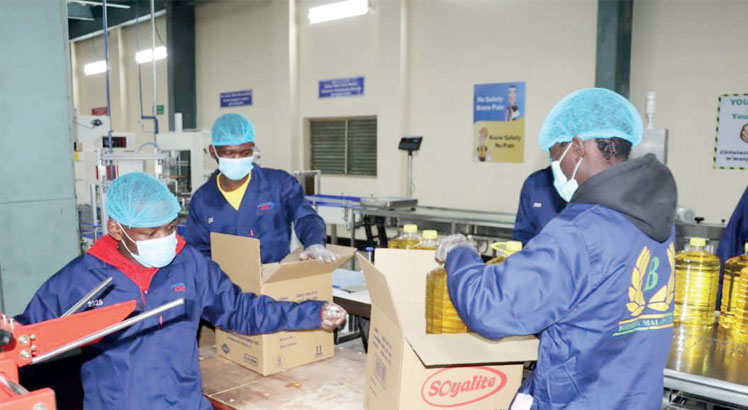
The bank further said businesses are operating in a difficult environment characterised by high costs, unreliable electricity and foreign exchange distortions, resulting in low productivity and underutilised capacity across sectors.
The Malawi Confederation of Chambers of Commerce and Industry (MCCCI) 2025 Annual Economic and Business Review showed that 74.1 percent of businesses identified foreign exchange shortages as their biggest constraint, followed by inflation at 70.4 percent and rising input costs at 55.6 percent.
The review further revealed that 51.9 percent of firms were operating below 50 percent of installed capacity while only 11.1 percent were operating above 75 percent capacity, largely due to limited access to foreign exchange, high production costs and energy supply challenges.
In a written response on Monday, MCCCI director of business environment Lucky Mfungwe agreed that the difficult operating environment continues to be constrained by persistent foreign exchange shortages, high inflation, elevated interest rates, unreliable energy supply and an unpredictable policy and regulatory environment.
“These constraints have significantly weakened private sector confidence, reduced production capacity and discouraged both domestic and foreign investment,” he said.
Minister of Industrialisation, Business, Trade and Tourism Simon Itaye said in a brief interview that government is prioritising policies and investments aimed at strengthening domestic industries, promoting value addition and reducing import dependence to stabilise the economy.
The World Bank data further show that over the past five years, total investment has averaged 15 percent of gross domestic product (GDP) compared to more than 23 percent among regional peers.
On the other hand, private investment averaged only nine percent of GDP and accounted for less than 60 percent of total investment.
The bank said this is an indication that private sector investment in Malawi has fallen sharply and remained volatile over the past five years, undermining productive expansion, job creation and stronger economic growth.