Education stakeholders have highlighted delayed and inadequate funding as key factors that hampered implementation of free secondary education (FSE) in its first academic year that ended on July 24.
They warned in separate interviews yesterday that the challenges could compromise the quality of learning despite the policy expanding access to secondary education.
In an interview, Secondary School Teachers Union president Pilirani Kapolo said delayed disbursement of funds and inadequate allocations are the programme’s biggest challenges.
He said the government allocated an average of K33 900 per student as a matching grant yet many schools were previously getting more than K40 000 from each student as school development fund.
“For many schools, the K33 900 allocation is lower than what students were paying as school development fund,” said Kapolo.
He said the funding constraints, coupled with delays in releasing other recurrent transactions funds, affected the procurement of teaching materials and continuous assessment resources.
Kapolo argued that the way the programme was implemented during the 2025/26 academic year affected the quality of education and he proposed increasing the allocation to at least K60 000 to improve implementation.
Civil Society Education Coalition executive director Benedicto Kondowe said while FSE has removed financial barriers to secondary education for learners, he cautioned that expanding access without corresponding investment risks compromising quality.
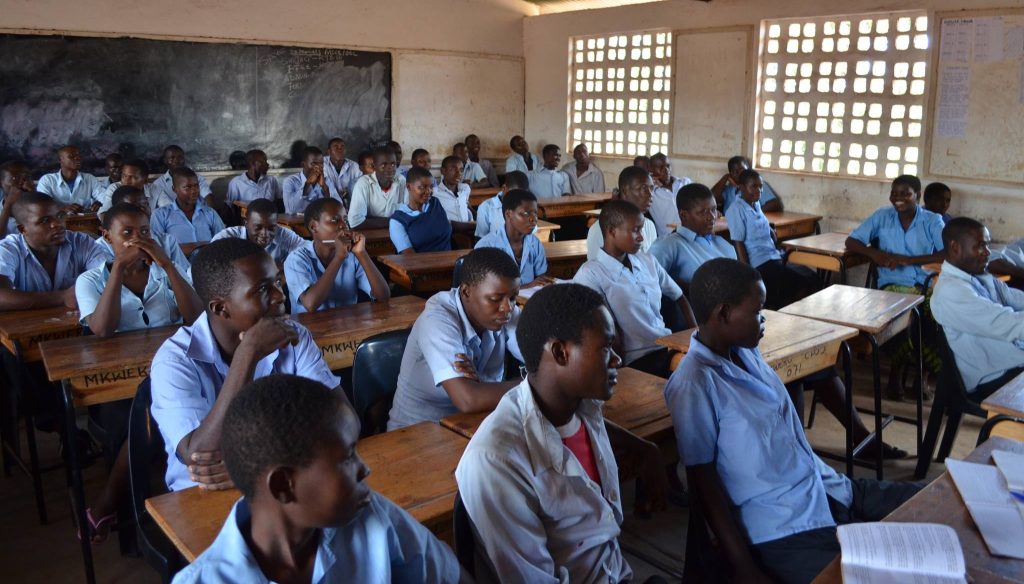
He said the programme’s first year exposed challenges, including increased enrolment pressure on already overstretched schools, shortages of classrooms, teachers, learning materials and other essential services.
Said Kondowe: “Government should establish a predictable and adequate financing framework, ensure timely disbursement of funds, recruit more teachers, expand classroom infrastructure and strengthen accountability in the use of education resources.”
Education expert Limbani Nsapato said while some delays are inevitable because the government first has to collect revenue before disbursing funds, they should not be prolonged.
But in an interview yesterday, Ministry of Education, Science and Technology Principal Secretary Ken Ndala said the K33 900 allocation is an average figure and that some schools are receiving more funding than they previously generated.
He acknowledged delays in disbursing funds to schools, but attributed them to administrative processes rather than a lack of resources.
“We will continue improving to ensure schools receive funding at the start of each term. Usually, it is the process that causes delays, not that we do not have the funding. We will keep monitoring the situation to ensure schools get resources on time,” said Ndala.
He said the government is also addressing infrastructure and learning resource challenges through support from development partners constructing classrooms, laboratories and other facilities.
In the 2026/27 National Budget, the government allocated K1.28 trillion for the education sector with K31.7 billion earmarked for free secondary education and K15.9 billion for free primary education while K11.3 billion was allocated to free national examinations and student identity cards.