Emmie Katangwe is a God-fearing Malawian, but something terrible happened just when she was going down on her knees in supplication.
The first stroke struck her one chilly June morning four years ago as she knelt to pray.
“It felt as if my left thigh had been ripped apart, then came the numbness,” recalls the 65-year-old Blantyre resident.
Her husband called a colleague to pray for her paralysed limbs, but it brought short-lived relief.
“When I could move my arm and leg again, I jumped in celebration, convinced that the ordeal was over. However, I suffered two more strokes on the left side within an hour,” she recounts.
Family members and friends in worship took Katangwe to a private hospital that referred her to Queen Elizabeth Central Hospital (QECH) in Blantyre.
She did not know what to expect at the Southern Region’s largest healthcare facility.
The woman feels lucky to have survived the crippling condition at the hospital where some are pronounced dead on arrival and others die shortly afterwards.
She salutes caregivers at the health facility for switftly coming to her aid and helping her without shortcuts.
Katangwe recalls health workers at QECH conducting a computed tomography (CT) scan before admitting her to Malawi’s first dedicated stroke unit.
“Upon entering the unit, I was amazed. It felt as if I was in a hospital abroad. The interiors, the equipment and the level of care were excellent,” she says.
Within hours, a diverse team of specialist caregivers— neurologists, physiotherapists and other specialists—visited her bed to assess her condition and administer the necessary treatment, care and support.
Katangwe spent three days in the specialised stroke unit before being discharged to continue physiotherapy at home.
Today, she has regained full use of her arm and walks with remarkable ease.
Still, she continues to undergo physiotherapy at her home—a tale of tenacity and triumph over a paralysing condition that paralyses organs when blood flow to the brain is interrupted, depriving brain cells of oxygen.
“My arm is fully restored,” she says, flexing her muscles with might. “Stroke is treatable, so I advise people to promptly go to hospital when they experience symptoms.”
Katangwe’s recovery reflects the impact of Malawi’s first specialised stroke unit, established at QECH in May 2022.
The five-bed facility personifies the hospital’s life-saving partnership with the University College London, Malawi-Liverpool Wellcome Research Programme (MLW) and the private sector.
It provides coordinated stroke care to patients from various clinics in Blantyre and the rest of the Southern Region.
Neurologists, clinicians, nurses, physiotherapists and palliative care specialists work together to treat patients during the critical hours and avert preventable deaths.
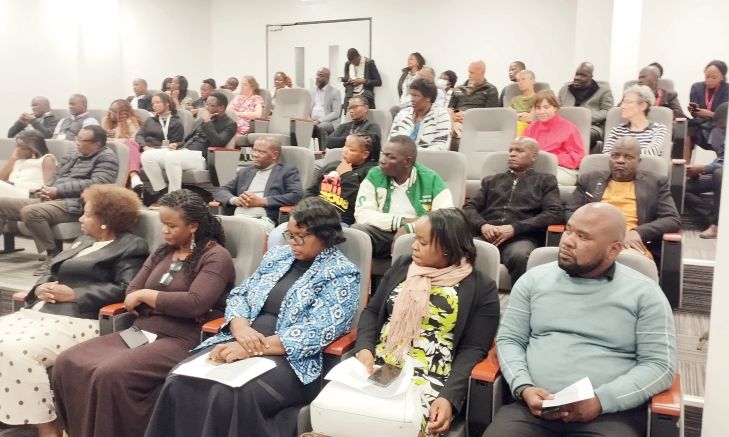
Four years after the facility opened its doors, past patients, health authorities, researchers and medical experts gathered in Blantyre for the screening of a documentary highlighting the unit’s life-saving journey.
The facility now admits about 30 stroke patients a month, according to lead neurologist Dr Tiwonge Phiri.
On arrival at QECH, patients with stroke symptoms undergo a CT brain scan before being admitted.
Admissions depend on bed availability at the unit.
However, the specialist team also reviews stroke patients admitted to other wards in the massive hospital.
Among others, the doctors from diverse background conduct swallow assessments to determine whether patients can safely eat or drink—reducing the risk of pneumonia, a common but potentially fatal complication after stroke.
Phiri says attention to detail has significantly improved patient outcomes.
“Since the unit was opened, we have seen premature deaths and disability from stroke reduce across the hospital,” she says, recalling the dark days when suspects were dying shortly after arriving.
The gains, however, come against a backdrop of severe specialist shortages.
Malawi has only two adult neurologists, limiting access to specialist stroke care across the country.
The doctors who diagnose and treat disorders of the nervous system are Phiri herself and Dr Yohane Gadama,
“This is a critical situation because there are certain things that specialists will see much earlier than anybody else,” says Phiri.
According to the World Health Organization, stroke was Malawi’s second leading cause of death in 2021, accounting for at least 50 deaths per 100 000 people.
MLW director Professor Henry Mwandumba says stroke cases are likely to rise as hypertension becomes more common and more people living with HIV survive into old age.
He says: “High blood pressure remains the leading risk factor while HIV infection can increase stroke risk by causing inflammation of blood vessels, leading to blockages or bleeding in the brain.”
Early detection and treatment of hypertension alongside consistent HIV treatment keeps the risk factors under control, he says.
QECH deputy director Dr William Peno says partnerships such as the one behind the stroke unit demonstrate how collaboration can strengthen specialised healthcare in Malawi.
Four years after three strokes, every step Katangwe takes stands as a testament to what timely specialised stroke care can achieve.