Food and Agriculture Organisation (FAO) has said escalating costs between 2017 and 2025 have made affordability of healthy diets out of reach for a majority of Malawians.
The UN agency, in its 251-page report titled ‘The state of food security and nutrition in the world’ said the global average cost of a healthy diet reached $4.28 purchasing power parity per day in 2025, slightly above the poverty line for lower-middle-income countries.
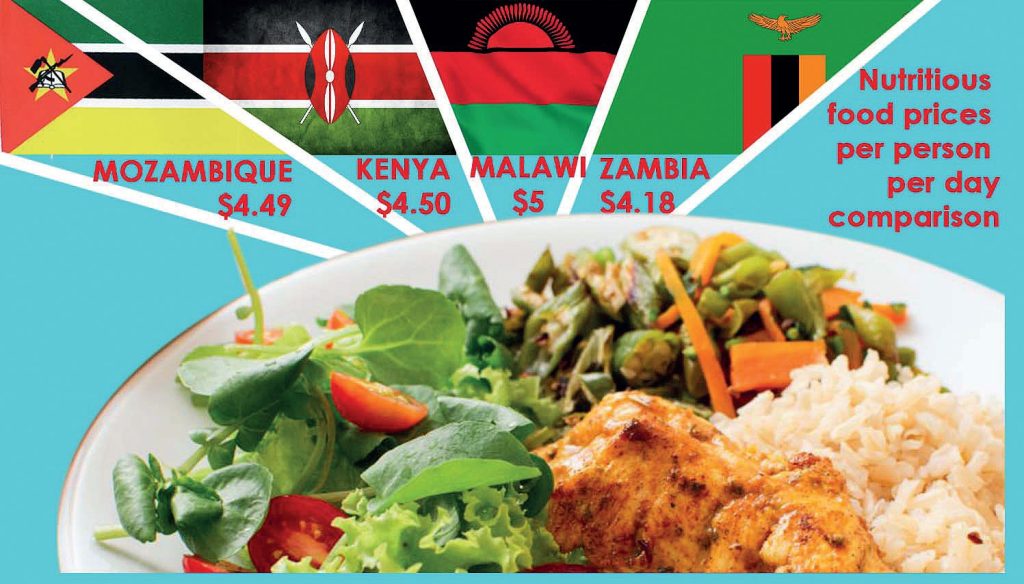
“However, this global figure masks wide disparities across countries and regions, with costs varying as much as threefold between the least and most expensive countries,” the report reads in part.
During the review period, in Malawi the rate rose from $2.38 (K4 167.38) to $5.01 (K8 772.51) per person per day.
The report defines healthy diets as adequate, balanced, diverse and moderate.
Based on the highlighted purchasing power parity, an average Malawian needs about K263 175 per month to afford a healthy diet. The amount is slightly higher than in neighbouring countries, including Zambia and Mozambique.
The report adds that because the cost of a healthy diet varies widely across regions, targeted and context-specific responses are required rather than uniform solutions.
In Malawi, about 75.4 percent of the population lives on less than $3 per day while roughly 71.3 percent survive on less than $2.15 (about K3 764.65) per day, according to the World Bank.
This means that most Malawians are unable to afford a consistent healthy diet, which affects their well-being.
The report says healthy diets are essential to achieving Sustainable Development Goal (SDG) 2, but they remain economically out of reach for large segments of the global population.
The UN goal aims to end hunger, achieve food security and improved nutrition and promote sustainable agriculture by 2030.
The report further states that while healthy diets are essential for population health, child development and sustainable livelihoods, unhealthy dietary patterns persist globally.
Farmers Union of Malawi president Maness Nkhata said yesterday that there is a clear link between healthy diets and agricultural policy, noting that Malawi has tended to prioritise maize production to achieve food security, with relatively less investment in the diversified production of nutritious foods such as fruits, vegetables, legumes, livestock, fish and dairy.
“As a result, the supply of these foods has remained limited, contributing to high prices and making healthy diets unaffordable for many households,” she said.
But Nkhata said the rising cost of a healthy diet is also driven by broader factors, including climate shocks, inflation, exchange rate depreciation, high input and transport costs, and low household incomes.
The Centre for Agricultural Research and Development (Card) and the Consumers Association of Malawi (Cama) have also said the report is a true reflection of the situation on the ground.
Card director Innocent Pangapanga-Phiri and Cama executive director John Kapito said in separate interviews that the problem can be addressed by, among others, intensifying food diversification and civic education.
Pangapanga-Phiri said the problem is that Malawians equate food with maize when there are several other crops that can substitute maize as sources of carbohydrates.
On the high cost of protein-rich foods, he said the country has focused largely on crop production, making maize more available while doing little to promote livestock production, which provides meat, milk and eggs that are essential for a balanced diet.
“If we diversify, we will be oversupplying [meat products], if we oversupply, we will be pushing the prices down,” said Pangapanga-Phiri, whose organisation operates under the Lilongwe University of Agriculture and Natural Resources.
On his part, Kapito said the government should lead by example by encouraging people to eat other types of food.
Ministry of Agriculture, Irrigation and Water Development spokesperson Salome Gangire asked for more time to consult, but was yet to respond by press time.
The 2026 report was prepared by a team of technical experts from FAO, the International Fund for Agricultural Development, Unicef, the World Food Programme and the World Health Organization.
The cost of a healthy diet, introduced as a benchmark indicator in 2020, allows for consistent and comparable monitoring of the minimum daily cost of purchasing locally available foods that constitute a healthy diet.
It is estimated using retail food price data from the International Comparison Programme, coordinated by the World Bank, based on a dataset of comparable food items across countries.