The manufacturing and wholesale as well as retail trade sectors have seen their share of gross domestic product (GDP) shrink over the past decade, a decline experts link to deep-seated structural challenges that have forced companies to scale down production.
In its National Accounts Report (2017–2026), the Reserve Bank of Malawi (RBM) said manufacturing’s GDP contribution slipped from 11.3 percent to 11.1 percent, while wholesale and retail trade fell from 12.6 percent to 10.6 percent.
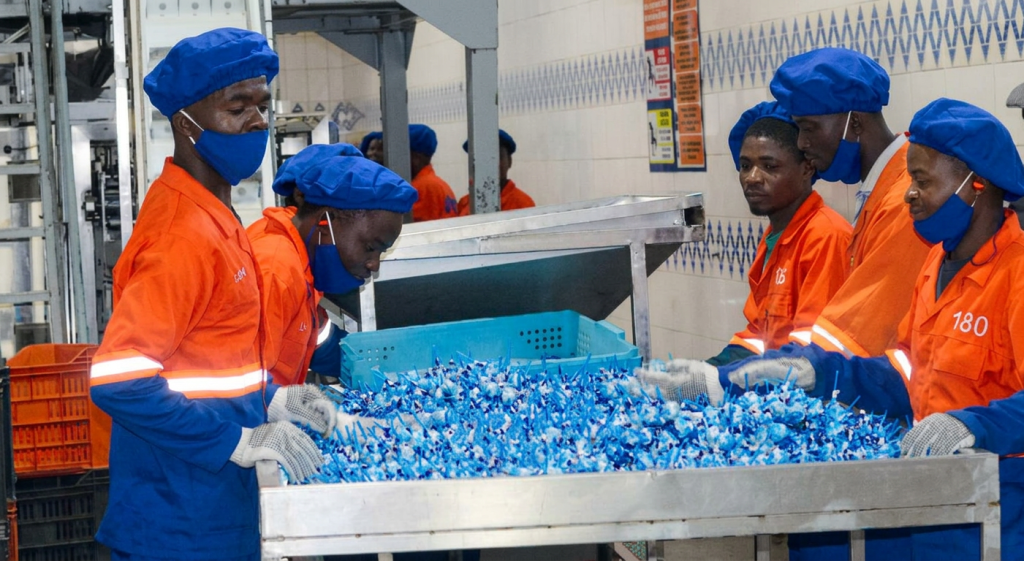
Both sectors have posted stagnant annual growth rates since 2023, averaging just 0.5 percent and 1.1 percent, respectively.
Economists have attributed the stagnation to a mix of foreign exchange scarcity, energy constraints and high interest rates.
University of Malawi economics lecturer Edward Lemani called the slowdown “concerning,” observing that the economy needs stronger industrial production and value addition.
He said: “The sector’s weak performance can be attributed to a combination of macroeconomic and structural factors.
“Rising lending rates since 2022 have increased the cost of investment while persistent foreign exchange shortages and successive currency devaluations have raised the cost of imported machinery, raw materials and intermediate inputs.”
Leman further said weak policy implementation and infrastructure gaps have further limited industrialisation.
Trade expert Paul Kwengwere warned in an interview that the decline undermines Malawi’s industrialisation drive under the Malawi 2063, a long-term strategy that seeks to turn the country into a lower middle-income economy by 2030 and an upper middle-income economy by 2063.
“In a developing economy, manufacturing should expand as a share of GDP to absorb agricultural labour and drive value addition. Instead, Malawi remains anchored in raw commodity exports,” he said.
Kwengwere, who is Malawi Investment and Trade Centre former chief executive officer, said energy shortages are a key bottleneck, with over 90 percent of grid power reliant on the Shire River basin, where weather shocks frequently disrupt hydro generation.
He said this has direct effects on manufacturing plants as they cannot maintain continuous assembly lines or thermal processes when national generation drops.
National Planning Commission director general Frederick Changaya said reforms remain constrained by political economy.
He said: “What we need is aggressive State intervention, proper industrial policy, strong institutions, and accountability frameworks.
“Countries have moved from fragile economies to industrial heavyweights by identifying strategic sectors with high growth potential and pushing value-added exports.”
Malawi Confederation of Chambers of Commerce and Industry Business Climate Survey found that most firms are operating below capacity with 51.9 percent of them operating below 50 percent utilisation, 37 percent operating between 50–75 percent with only 11.1 percent operating above 75 percent.
Ministry of Industrialisation, Business, Trade and Tourism spokesperson Patrick Botha acknowledged the challenges but remain upbeat.
He said many firms have downsized or closed, but reforms promoting value addition are expected to yield results.
Ministry of Finance, Economic Planning and Decentralisation spokesperson Williams Banda cited capital and energy constraints as key barriers but noted that falling interest rates, driven by reduced government borrowing, are easing pressure on production.