Malawi remembers Jack Mapanje’s literary legacy

Malawi is remembering the literary legacy of Professor Jack Mapanje, whose poetry challenged political repression, shaped generations of writers and earned him international recognition.
His three years and a half incarceration at the notorious Mikuyu Prison in Zomba earned him an international repute that contributed to the introduction of democracy in Malawi.
Writers and literary figures have paid tribute to the celebrated poet and academician, describing him as a towering figure whose contribution to the country’s literary and cultural life will endure.
Writer and academician Dr Ken Lipenga, a former minister and academician, described Mapanje as a former colleague and mentor, said his death was both a personal loss and a blow to Malawi’s literary and cultural life.
He said: “I am deeply saddened by the passing of Jack Mapanje, a distinguished poet, former colleague and mentor from whom I learned so much.
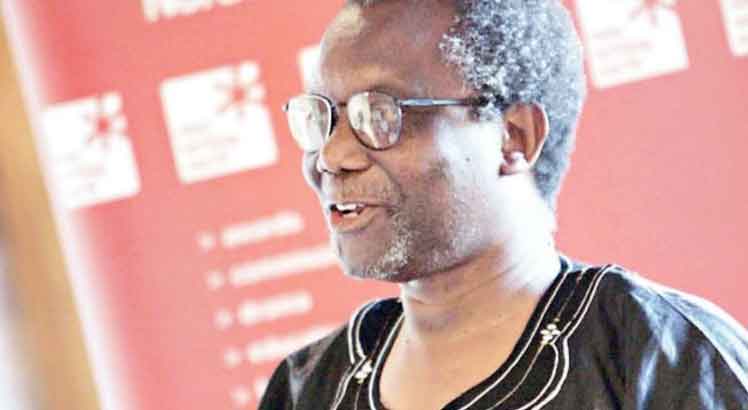
“In my view, he was one of Malawi’s finest and most accomplished poets. His death leaves an enormous void in our national literary and cultural life.”
The former Cabinet minister said he spoke to Mapanje a few weeks ago and remembers him as a humble man despite his literary achievements.
“Despite his stature as a literary giant, Jack was unfailingly humble, gracious and gentle. He wore his immense learning and accomplishments lightly, treating everyone with warmth, courtesy and respect,” he said.
Born on March 25 1944, in Kadango Village, Mangochi, Mapanje studied at the University of Malawi before pursuing further studies in England.
He returned to Malawi in 1975 and taught English at Chancellor College where he later became head of the Department of English.
His literary journey took a defining turn in 1981 when he published his first poetry collection, Of Chameleons and Gods, with the African Writers Series.
The collection, which explored political power and the contradictions of society, was withdrawn from circulation in Malawi during the government of former president Hastings Kamuzu Banda.
On September 25, 1987, Mapanje was arrested and detained without charge or trial at Mikuyu Prison.
But his imprisonment did not silence his pen. Instead, it became another chapter in the literary legacy that would earn him international recognition.
While in detention, he continued writing, producing poems that later formed part of The Chattering Wagtails of Mikuyu Prison, published in 1993, and Skipping without Ropes, published in 1998.
His detention also attracted international attention with prominent writers and human rights campaigners, including Wole Soyinka, Harold Pinter and Susan Sontag, joining calls for his release.
Even the Amnesty International called for his immediate release, as well as other prisoners of conscious.
University of Malawi Associate Professor and Head of the Department of Literary Studies Wesley Macheso said Mapanje’s death should also prompt Malawians to reflect on whether the country had learnt lessons from the struggles of writers who challenged dictatorship.
He said: “While we celebrate the life of Mapanje, we need also to ask ourselves certain difficult questions: what gains can we count from his struggle and that of fellow writers during the dictatorship?
“Have we learnt from its past or continued to allow politicians to abuse their power? If the latter is the case, Mapanje’s spirit of fighting for justice should haunt us.”