Malawi’s justice system is buckling under a crippling shortage of judicial officers, with some judges handling thousands of cases at a time, according to the Magistrates and Judges body which warns that mounting workloads are compromising the quality and timeliness of justice.
Magistrates and Judges Association of Malawi president Jabar Alide said the shortage has become so acute that judicial officers are increasingly performing administrative and research duties that should ordinarily be handled by support staff, leaving them with less time to concentrate on hearing cases and delivering judgments.
He warns that the resulting backlog is denying thousands of Malawians timely access to justice, keeping some remand prisoners behind bars for prolonged periods and forcing litigants to endure years of uncertainty and mounting legal expenses.
In an exclusive interview on Thursday, Alide also warned that the sheer volume of cases handled by individual judicial officers was making the effective administration of justice increasingly difficult.
“Efficiency becomes a problem. Sometimes a single judge handles about 2,000 cases. Is this feasible?” he asked.
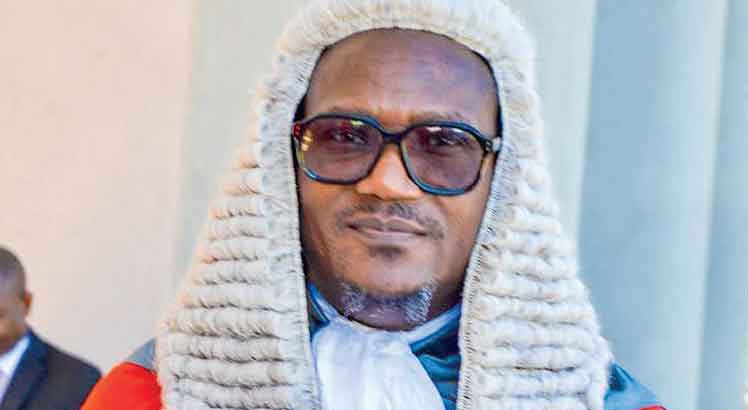
about 2 000 cases. In the foreground: High
Court, Blantyre Registry | NationAlIde: Sometimes a judge handles
about 2 000 cases. In the foreground: High
Court, Blantyre Registry | Nation
Figures compiled by the Industrial Relations Court, covering active and pending cases across its four registries in Blantyre, Lilongwe, Zomba and Mzuzu, paint a troubling picture of the workload.
According to the Judiciary Case Baselining preliminary findings, between April and August 2026 alone, the country’s courts had registered 26 335 cases and concluded 11 237, during the same period. The report further said as of September 29 2026, the High Court had 12 926 live cases while the Industrial Relations Court had 9 238 cases.
Alide said the pressure was not only delaying the disposal of cases but also creating conditions in which judicial officers could struggle to give each matter the attention it deserves.
He warned that the pressure to clear backlogs, coupled with inadequate resources and support staff, could undermine the quality of judicial work.
“Because of being overworked and under-resourced, judges would rather just deliver a judgment for the sake of clearing the backlog under pressure,” he said.
The staffing crisis is further exposed by figures contained in the Judiciary Authorised Establishment Warrant, which show a substantial gap between the number of judicial officers required and those currently in post.
While the Supreme Court is fully staffed—11 Justices—the High Court is operating at only 45 percent of its authorised establishment, with 45 judges against an approved complement of 100.
The Magistracy is also significantly understaffed, with 248 magistrates against an establishment of 405, representing a staffing shortfall of 157, or nearly 39 percent.
The figures suggest that the problem is not simply an accumulation of cases but a structural weakness in the Judiciary’s capacity to process them within reasonable timeframes.
Alide, who is also a High Court judge in the Commercial Division, said the shortage was taking a heavy toll on the physical and mental well-being of judicial officers.
He described the emotional burden of watching court users wait for years for their cases to be concluded as painful, particularly because the public often holds judges responsible for delays arising from inadequate institutional capacity and government funding.
“Most of these delays happen because a human heart creeps into the judicial officers. They think, ‘I will write this one, but let me do good and attend to those whose needs are dire first,’” he explained.
His remarks illustrate the difficult choices judicial officers face when their workloads exceed their capacity: deciding which cases to prioritise while others remain unresolved.
Appearing before the Legal Affairs Committee of Parliament on September 29 this year, Deputy Chief Justice Lovemore Chikopa said that case delays and overwhelming backlogs remain areas of concern for the Judiciary.
Legal practitioners and civil society organisations warn that the consequences extend beyond administrative inefficiency, touching on fundamental constitutional guarantees, including access to justice, fair trial and the right to have cases determined within a reasonable time.
Malawi Law Society (MLS) honorary secretary Francis M’mame said access to justice was not meaningful if court users could not obtain remedies within a reasonable period.
In an interview on Thursday, he said the staffing crisis raised serious concerns about the Judiciary’s institutional capacity to deliver effective remedies to people seeking legal redress.
He said the ability to access courts must be matched by the capacity to hear and determine cases without unreasonable delays.
Head of the Practical Legal Studies Department at the Catholic University of Malawi and former MLS president Burton Mhango described the situation as a manifestation of institutional neglect, urging government to intervene urgently.
In a WhatsApp response to our questionnaire on Thursday, Mhango said judicial officers needed an enabling working environment, adequate staffing and the necessary institutional support to discharge their responsibilities effectively.
“Judges and magistrates must work in an environment where they are treated as human beings. [Currently] they are forced to work day and night, even in their homes after knocking off, which is completely unhealthy,” he said.
He warned that sustained pressure on judicial officers was neither healthy nor conducive to the effective administration of justice.
The human cost of the staffing crisis, however, falls most heavily on ordinary Malawians who depend on the courts to protect their rights and resolve disputes.
Centre for Social Accountability and Transparency (Csat) executive director Willy Kambwandila said delays in the justice system had serious implications for court users, particularly people who lacked the financial resources to sustain prolonged legal battles.
“For court users, it means prolonged detention for remand prisoners, mounting legal costs, and endless uncertainty for victims and families,” he said in an interview on Thursday.
He added: “Malawians must not continue paying for institutional neglect with their freedom, livelihoods, and dignity.”
For remand prisoners, delays can mean spending months or years in custody before their cases are concluded, even though they have not been convicted. For victims of crime, justice delayed can prolong trauma and uncertainty, while people involved in civil and commercial disputes may find their livelihoods and investments tied up in unresolved litigation.
The situation also raises questions about the effectiveness of government efforts to strengthen the Judiciary, given that the shortage persists despite recent recruitment initiatives.
In March this year, the Judicial Service Commission invited applications for various judicial positions in an apparent effort to address staffing gaps.
Judiciary spokesperson Ruth Mputeni had not responded to our inquiry on how many judicial vacancies government intends to fill, and the recruitment timetable.