Non-governmental organisations (NGO) in the health sector are the worst affected by the United States Agency for International Development (USAid) aid cut, an NGO Regulatory Authority (Ngora) survey has established.
In the analysis titled ‘Assessment report on the effects of the USAid and donor funding freeze on the NGO sector in Malawi’ conducted from March to June 2025, Ngora says 77.14 percent of the surveyed organisations reported disruptions in implementation of health projects.
The report says all of the country’s 28 districts reported having ongoing or planned project activities affected by the aid withdrawal.
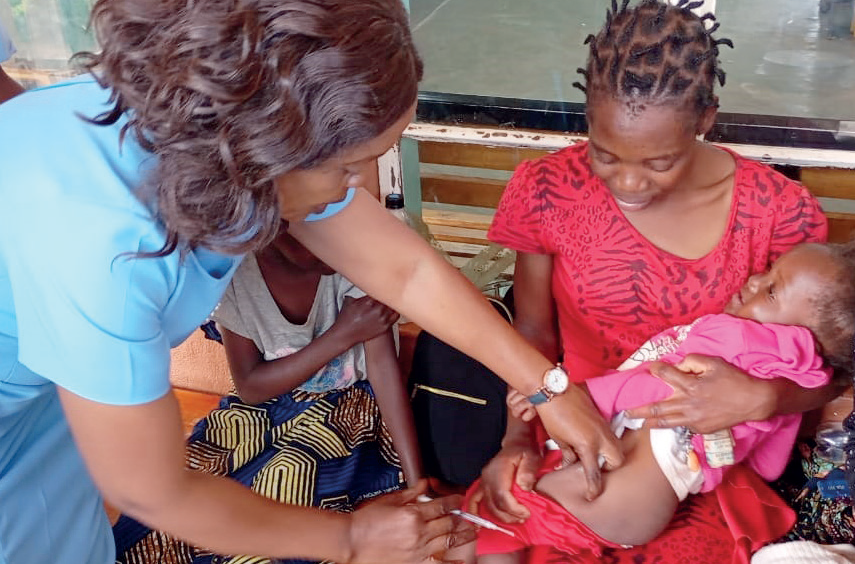
“Districts such as Lilongwe, Blantyre, Mangochi, Zomba and Mzimba are among the most impacted, given their concentration of USAid-supported health interventions, including HIV and Aids, maternal and child health and disease prevention programmes,” reads the report.
The survey targeted 250 NGOs registered under the NGO Act, specifically those with updated contact information and ongoing project activities during the time of the assessment.
Ngora says in the report that NGOs were selected to ensure data reflected current operational realities within the sector with the analysis encompassing project implementation status, geographic areas of operation, funding sources and USAid freeze impact.
Of the 250 that had previously reported receiving funding from USAid, 151 responded, representing a 60 percent response rate which Ngora says provided a reasonably strong foundation for drawing insights.
The report says out of the 151, there were 38 representing 25.2 percent which reported direct negative impacts.
The assessment establishes that the second most affected sector is gender, youth and development as reported by 40 percent of the NGO’s. The impact in this sector is particularly evident in Salima, Dedza, Machinga and Karonga districts where related projects were prevalent, according to the report.
On the other hand, education, research and development come third with 22.86 percent of organisations indicating disruptions in rural districts such as Kasungu, Dowa and Ntchisi where USAid supported school improvement, learner support and teacher training projects.
Other sectors impacted include economic governance, integrated rural development and democratic governance, energy and mining, vulnerability, disaster and risk management, water, sanitation and irrigation and tourism, wildlife and culture.
Reads the report: “A notable 58.3 percent of NGOs reported the closure of specific programmes, with the health and education sectors being particularly affected. Fifty-two percent experienced delays in the implementation of planned activities, while 47.2 percent were forced to scale down the scope or reach of their initiatives due to budget constraints.
“Human resource capacities were also affected, as 50 percent of the organisations reduced their workforce. Of these, 63.6 percent implemented modest staff reductions of between 0 to 20 percent, while 18.2 percent undertook more drastic measures, cutting over 60 percent of their personnel.”
The analysis further observes that 85.7 percent of the surveyed NGOs reported that their beneficiaries experienced negative consequences, including reduced access to life-saving health services, termination of school support and nutrition programmes, and significant disruption to humanitarian relief efforts in disaster-prone regions.
Ngora chief executive officer Edward Chileka Banda, speaking in an interview, advised NGOs to engage in economic activities such as production in order to navigate through the funding cuts from various development partners.
He said: “We have NGOs, for example, those involved in school feeding programmes. They just need maize flour to provide porridge for learners. They have been depending on donors to buy maize. It is possible for such NGOs to produce maize. Maybe they can just engage their donor to assist with farm inputs.”
In his reaction, Malawi Health Equity Network executive director George Jobe expressed worry that many health personnel are now jobless following the US aid freeze.
Data contained in a study jointly conducted by the National Planning Commission (NPC) and International Food Policy Research Institute (Ifpri) released in May 2025 showed that as of March 2025, at least 4 451 healthcare staff relying on US-funding had their contracts terminated.
In March this year, the US government terminated contracts worth $230 million (nearly K400 billion) under USAid in Malawi.
This followed US President Donald Trump’s decision in January this year to issue an executive order for a 90-day halt in foreign assistance pending a review of efficiencies and consistency with his foreign policy.