First Vice-President Jane Ansah has encouraged people in Nkhotakota District to remain determined and work hard to become economically independent instead of banking on handouts.
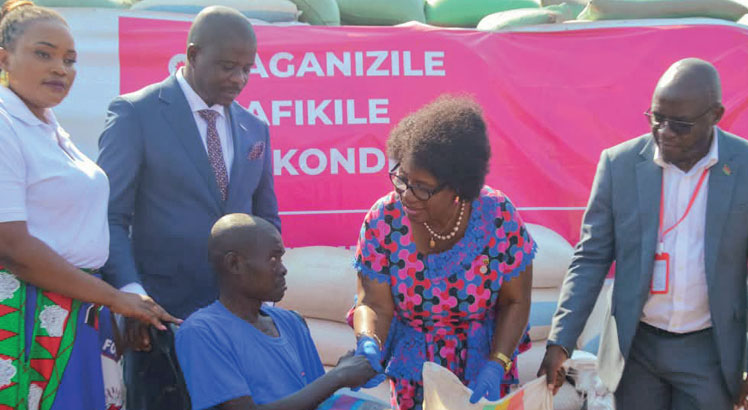
She made the call on Monday in Dwangwa, Nkhotakota District where she donated various items to vulnerable groups through her Jane Ansah Foundation.
The items included 400 bags of maize, blankets, soya pieces, bicycles and other essential supplies.
| Lovemore Khomo
Ansah encouraged people to remain committed to improving their livelihoods and strive to become self-reliant despite the challenges they face.
She said: “We have asked them to form cooperatives and groups to be assisted to become financially independent. Once these people achieve financial independent, they will be able to support their families.
“So, we will help them with everything, including seed and fertiliser as we did with others in Rumphi.”
Ansah said that the initiative is part of her commitment to helping people facing difficult situations in the country.
“I, therefore, thank President Professor Arthur Peter Mutharika for appointing me as his deputy, a role that has enabled me to assist vulnerable people across Malawi,” said Ansah.
Senior Chief Kanyenda commended the First Vice-President for providing relief items to his subjects.
“These people had nothing to eat. The maize, therefore, will take them a long way as they work around how to move forward. I urge the beneficiaries to use the items for their intended purpose,” he said.
Nkhotakota Nkhunga legislator Dorothy Chikonje (Malawi Congress Party) also thanked Ansah for the donation, saying many elderly people, people with physical disabilities, people of short stature and people with albinism were facing hunger following floods that destroyed crops in the area in February this year.
The Jane Ansah Foundation seeks to empower and improve the lives of socio-economically disadvantaged and marginalised people, including orphans, vulnerable families, the elderly, persons with disabilities and people with albinism through sustainable support and empowerment programmes