President Peter Mutharika’s newly reconstituted Cabinet has drawn mixed reactions with some commentators questioning fiscal discipline and gender inclusivity adherence.
But Minister of Information and Communication Technology Shadric Namalomba said yesterday the new lineup is enhancing youth inclusivity.
In the new Cabinet announced on Monday with four new deputies and four ministers moved around, there are seven women, which translate to 25 percent female representation, down from 29.1 percent before the shakeup.
The low female representation contradicts key commitments made by the now governing Democratic Progressive Party (DPP) in its 2025–2030 manifesto, which promised to increase women’s participation in politics, Cabinet appointments and decision-making positions.
The Nation analysis of Mutharika’s Cabinets since 2014 shows that the 28-member team is his second largest after the one in March 2020, which had 32 members with barely three months to the June 2020 court-sanctioned fresh presidential election.
Throughout much of his previous Cabinets beginning in 2014, Mutharika maintained an average of 22 members, with women accounting for roughly 19 percent.
While the current 25 percent female representation marks an improvement compared to previous years, Women Lawyers Association of Malawi (WLA) argues that it still falls short of national and international gender equality standards.
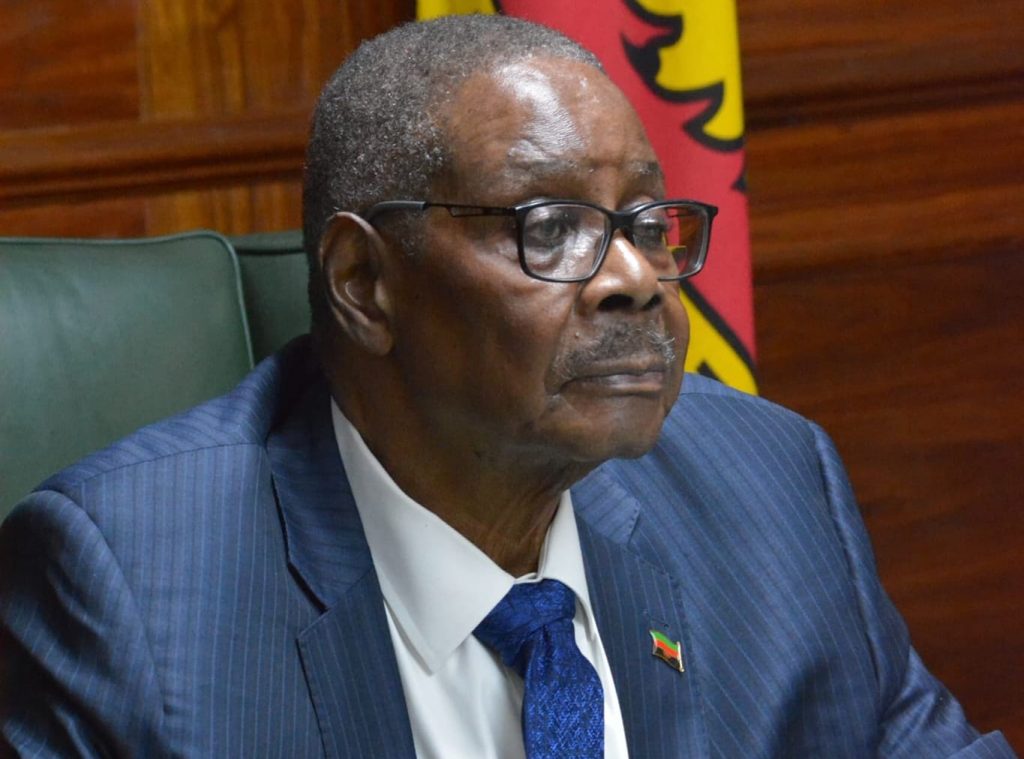
guidelines: Mutharika. | State House
Responding to concerns over both Cabinet expansion and gender balance, Namalomba said the increase from 24 to 28 ministers was aimed at enhancing youth inclusivity.
He said the move aligns with DPP’s manifesto commitment to engage young people in leadership roles early in their careers, arguing that broader representation can strengthen governance and innovation.
Namalomba, who is the government official spokesperson, acknowledged that women’s representation has declined in the new Cabinet
“While HE [His Excellency] President APM [Mutharika] has designed a Cabinet that remains flexible for regular review according to national needs, the public can anticipate greater inclusion of women in future appointments,” he said.
Namalomba stressed that the DPP administration has consistently demonstrated its commitment to empowering women and youth and pointed to the appointment of women as First Vice-President in both of the party’s administrations.
The absence of roles for First Vice-President Jane Ansah and Second Vice-President Enock Chihana in the official Cabinet announcement also raised speculation that the two had been stripped off the functions.
Ansah was ass igned disaster management affairs while Chihana is the political champion for the construction
of Mombera University in Mzimba.
But Chief Secretary in the Office of the President and Cabinet Justin Saidi said yesterday that official Cabinet statements traditionally specify only the roles of the President.
“When issuing those communications, it is only the President whose roles are indicated. So the roles of the First Vice President and the Second Vice President remain the same,” he said.
WLA executive director Golda Rapozo described the reduced female representation as worrying, noting that instead of moving closer to gender parity, progress appears to be reversing.
She pointed out that 25 percent female representation is far below the widely advocated 60:40 gender inclusivity benchmark.
“Gender at length is missing when it comes to appointments of Cabinet ministers. It is quite important to always keep in mind the gender quota when it comes to appointments,” said Rapozo.
But former president Lazarus Chakwera’s government recorded a comparatively stronger female presence in Cabinet, averaging 40 percent, although his administration also had the highest average Cabinet size of 30 ministers.