Ten-year-old Asiyati Chiweza could never have imagined rising to the pinnacle of academia as a professor, the highest academic rank.
Neither did she dream of making history as the first Malawi School of Government (MSG) director general (DG).
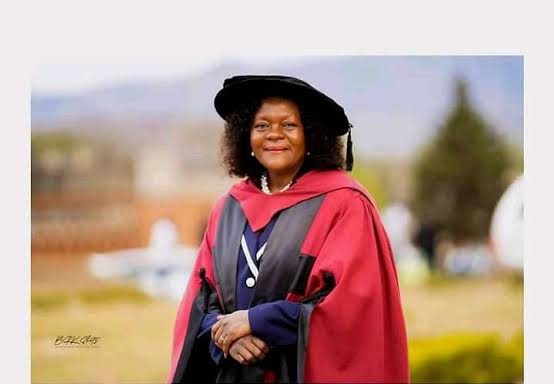
Yet today, Chiweza stands among few women occupying top leadership positions in Malawi, a testament to what faith, resilience, discipline and unwavering commitment to excellence can achieve.
Her remarkable journey from growing up in Naperi Township, Blantyre in a family that valued hard work and integrity, to becoming Malawi’s first female professor of public administration at 56 years old in 2023, is one of determination, purpose and breaking barriers.
Looking back, Chiweza still wonders how she earned that PhD while raising four daughters, describing it as a humbling milestone.
“My journey spanned about 28 years, progressing from lecturer, senior lecturer and associate professor,” she adds.
Chiweza says she learnt success in the academic world is not determined by gender, but what you bring to the table.
“I remain grateful to God for His grace and faithfulness throughout that journey,” she adds.
Chiweza was appointed DG in February 2023 at the request of MSG council at the time.
She says they urgently needed someone with her expertise to be seconded to the position to set up and lead the institution’s organisational development and transformation.
“I accepted as a way of serving my country. The appointment represented recognition and culmination of many years of distinguished service, training, commitment to public administration, leadership and institutional development,” she says.
Chiweza also says the appointment carried historic significance because MSG was established through the merger of two long-standing institutions; Malawi Institute of Management and Staff Development Institute, creating a new national institution with a critical mandate to build the capacity of the public service.
“Being entrusted to lead such a transformation from its inception was both an immense privilege and a formidable challenge, given the state in which the two institutions were.
“I had the privilege of serving the institution for 39 months and have now returned to my academic home at the School of Law, Economics and Government, University of Malawi, with deep gratitude and cherished memories of all that God enabled us to accomplish during that remarkable journey,” she says.
Chiweza observes that despite progress made in women leadership, they continue to face structural and personal barriers.
“These include unconscious bias, unequal opportunities for career advancement, the challenge of balancing professional and family responsibilities and at times, a lack of confidence that causes capable women to underestimate their own potential.
“Overcoming these barriers requires action from both institutions and individuals. Organisations must create inclusive workplaces where leadership opportunities are based on merit and where women are supported to grow and lead,” she notes.
She adds that equally important is self-care and building a strong personal brand because leadership is demanding and “we cannot pour from an empty cup.”
Chiweza says self-doubt is more common than many people realise, even among highly accomplished leaders.
“At different stages of our careers, most of us have questioned whether we were good enough or ready for opportunities before us. The key is not whether those feelings arise, but whether we allow them to define or keep us from pursuing our potential.
“I also encourage young women to replace the question, ‘Am I good enough?’ with ‘How can I prepare myself to do this well?’ That simple shift transforms self-doubt into a commitment to growth,” she says.
Outlining her achievement, Chiweza says the World Bank Robert Macnamara Research Award gave her the opportunity to delve into fiscal decentralisation research in the early years of her career.
“This gave me a solid experience that later contributed to my strong, impeccable research and consultancy profile, which has marked my years as an academic,” she adds.
In 2003, Chiweza got the Australian Postgraduate Research Scholarship that enabled her to complete her PhD within three years.
She is also proud of the investment in her four daughters’ education and of what they have become.
But her promotion to professor of Public Administration has been the greatest achievement and recognition of her academic work.
Chiweza challenges young leaders to remain true to their values and integrity while navigating demanding careers and leadership.
“Values and faith should be the compass that guides how we lead. It begins with a clear sense of purpose and knowing who you are before leadership defines who you become,” she says.
Chiweza adds the need to make time to nurture one’s spiritual life, invest in families, care for physical, emotional well-being and remain accountable to people who can speak the truth into our lives.
Like many professionals, she confessed to have faced challenges in her career such as balancing academic excellence and leadership responsibilities.
“What helped me overcome these challenges was a combination of faith in God, a clear sense of purpose, resilience and focusing on solutions rather than problems,” she says.
Chiweza also attributed her success to a supportive, family, mentors and colleagues who shared a common vision.
“I also continue to grow through the writings and teachings of respected leadership and management thinkers,” she says.
Chiweza says she has been inspired by the wisdom, mentorship and encouragement of Professor Address Malata, Malawi’s first female Vice- Chancellor and her sister Hawa Ndilowe, whose distinguished career in the public service has been a constant source of inspiration and counsel.
Her message to women and girls is to embrace who they are and never underestimate their God-given potential.
Chiweza was born to Vanwell and Grace Masamba, both of Yao heritage from Zomba and Blantyre districts, respectively.
She is the seventh of 10 children. Her parents had limited formal education, but were successful entrepreneurs.
Chiweza attended St. Pius Girls’ Primary School before proceeding to Providence Secondary School where she completed her secondary education in 1984.
She was then selected to study at Chancellor College where she obtained a Bachelor of Social Science, majoring in economics.
After graduating in 1988, she joined the University of Malawi central office as an administrative assistant in the finance office and later rose to the position of assistant finance officer.
That same year, she married her husband Diston Chiweza, whom she met at Chancellor College and together they have four daughters Chikondi, Chifundo, Chisomo and Chimwemwe.
In 1993, she was awarded an International Development Research Centre Scholarship to study for a Master of Public Administration at Dalhousie University in Halifax, Canada.
After completing her studies in 1995, Chiweza returned to Malawi and began her academic career as a lecturer in public administration.
Outside work she enjoys spending quality time with her family, dining out and travelling.
“I also enjoy gardening, cooking and reading. My husband and I have a shared passion for service. We facilitate marriage seminars, mentor couples and conduct youth empowerment programmes,” she adds.
Above all, Chiweza treasures quiet moments of prayer, reflection and worship.
These keep her grounded, renew her perspective and remind her that leadership is ultimately about service, stewardship and making a positive difference in others’ lives.