Nearly 600 000 Malawians are falling into poverty as rising food prices, climate-related shocks and persistent inflation erode household incomes, threatening the country’s long-term economic development prospects and weakening consumer spending power, it has emerged.
In its October 2026 Poverty and Equity Brief, the World Bank said the number of Malawians unable to meet their basic needs increased by about 600 000 to 10.5 million in 2025 from 9.9 million in 2020.
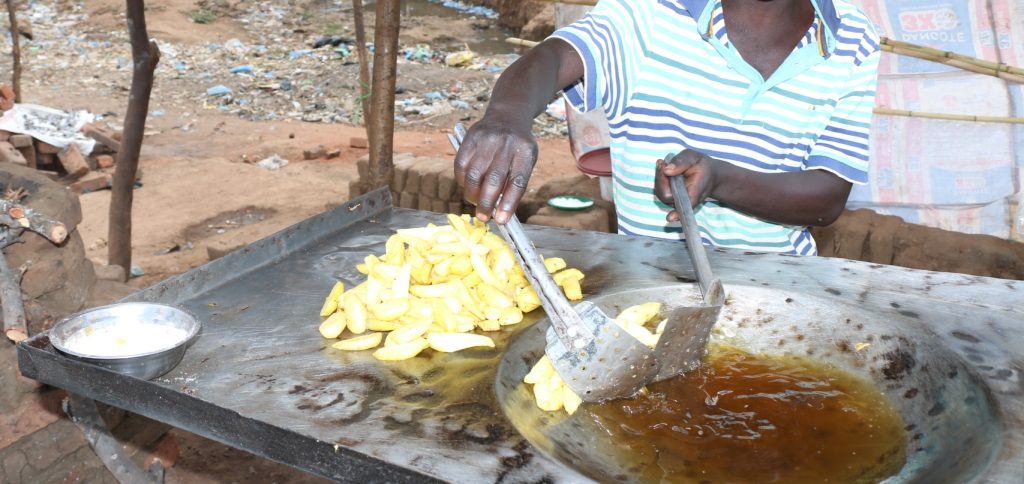
During the same period, the Bretton Woods institution said the proportion of people living in food poverty increased to 24 percent from 20.5 percent, underscoring growing pressure on household budgets.
Economists says the deterioration in living standards highlights mounting challenges for policymakers seeking to drive inclusive growth, expand domestic demand and achieve Malawi’s economic transformation goals.
The World Bank said worsening poverty was driven by a combination of economic and environmental shocks, including the 2024 El Niño-induced drought and successive cyclones that disrupted agricultural production and household incomes.
It also indicated that the average inflation rate of 28.4 percent in 2025, which increased the cost of food and other essentials, squeezed the purchasing power and limited households’ ability to withstand economic shocks.
The impact is particularly severe in rural areas where about 86 percent of households rely on agriculture for their livelihoods.
Reads the brief in part: “Agriculture, the main livelihood for about 86 percent of households no longer guarantees food security since most farming households buy much of what they eat and even meaningful productivity gains would lift incomes only modestly.
“Food poverty, which captures the severest deprivation, rose from 20.5 percent to 24 percent, so more Malawians now fall below the food line than five years ago. Inequality has also begun to widen, with the Gini index rising from 37.9 to 39.9.”
With roughly 270 000 young people entering the labour market each year against far fewer formal jobs and formal wage employment remaining flat at around 12 percent, the bank said most workers fall back on low-return farming or casual labour.
In a written response on Wednesday, Centre for Social Concern economic governance officer Agnes Nyirongo said the findings should concern policymakers because more people are struggling to meet basic needs.
She called for stronger measures to protect household purchasing power, improve food security and expand employment opportunities.
Said Nyirongo: “Food inflation is eating away the purchasing power of the poor and any poverty reduction strategy that does not put calories first is doomed to fail.
“The private sector needs an enabling environment, reliable electricity, accessible credit and reduced regulatory barriers, to create jobs.”
Meanwhile, Malawi economic growth has averaged 2.2 percent annually since 2020, which is below population growth of 2.6 percent, contributing to declining income per person over the past four years, according to the National Statistical Office.
The development raises fresh concerns over Malawi’s ability to achieve the aspirations of Malawi 2063, the country’s long-term development blueprint that seeks to transform the economy through industrialisation, urbanisation and increased agricultural productivity.
The slowdown in poverty reduction also threatens progress towards United Nations Sustainable Development Goal 1, which seeks to eradicate extreme poverty by 2030 as Malawi aspires to become a lower-middle-income economy by 2030 and an upper-middle-income economy by 2063.
In 2025, Malawi rolled out a new National Social Protection Policy, a move described as a key step towards strengthening the country’s response to poverty and vulnerability and shielding the poor from economic and climate shocks.
The policy replaces the 2012 National Social Support Policy and introduces a coordinated, lifecycle-based approach.