Imagine this: Applying for a programme manager’s job, convincing the employers you are fit for it, deeming you successful and giving you the keys to the office.
Then, three days later, you go back to the employer and return the keys. You no longer want that job.

You only want to pursue your passion—getting dirty and farming.
This is the reality for Thokozani Chimasula.
Without taking that bold decision in 2022, one would believe the glamour at the Kigali Convention Centre on September 1 would have lost a Malawian flicker.
On the sidelines of the Africa Food Systems Forum in Rwanda, Thokozani ended as a runner-up in the women empowerment champion category of the 2026 Women Agripreneur of the Year Award (Waya).
There were over 2000 applications from 35 countries and she made it into the top 17.
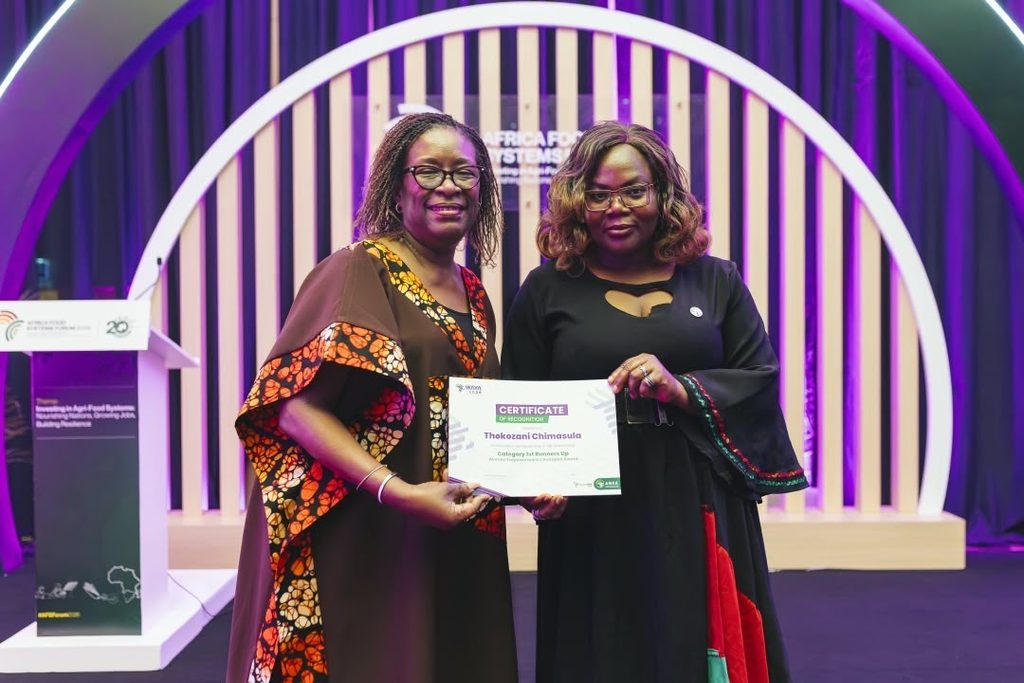
The awards came in five categories to bring outstanding African women involved in businesses that seek to build inclusive and more resilient food systems.
Agra Malawi country director Eluphy Nyirenda said Thokozani’s achievement shows the strength, competitiveness,and innovation of Malawi’s agricultural talent, especially among women and the youth.
“This recognition is both a source of pride and a reminder of the potential within Malawian women. With the right incentives for SMEs, support, visibility, mentorship and investment, local innovators can advance food security, job creation, and sustainable agricultural transformation,” she said.
Nyirenda said women are central to agriculture in Malawi and across Africa, yet many still lack adequate access to finance, land, technology, markets, extension services, and decision-making spaces.
Thokozani’s decision to quit employment was to concentrate on Tac-Maz Sustainable Ventures, which she founded in 2018 and formalised in 2020.
“Yeah, so after three days I decided to resign. It was not an easy thing, but I realised how I had been burned out for the three years I was employed without proper time to rest and recuperate,” she recalls, having quit her previous job in 2021.
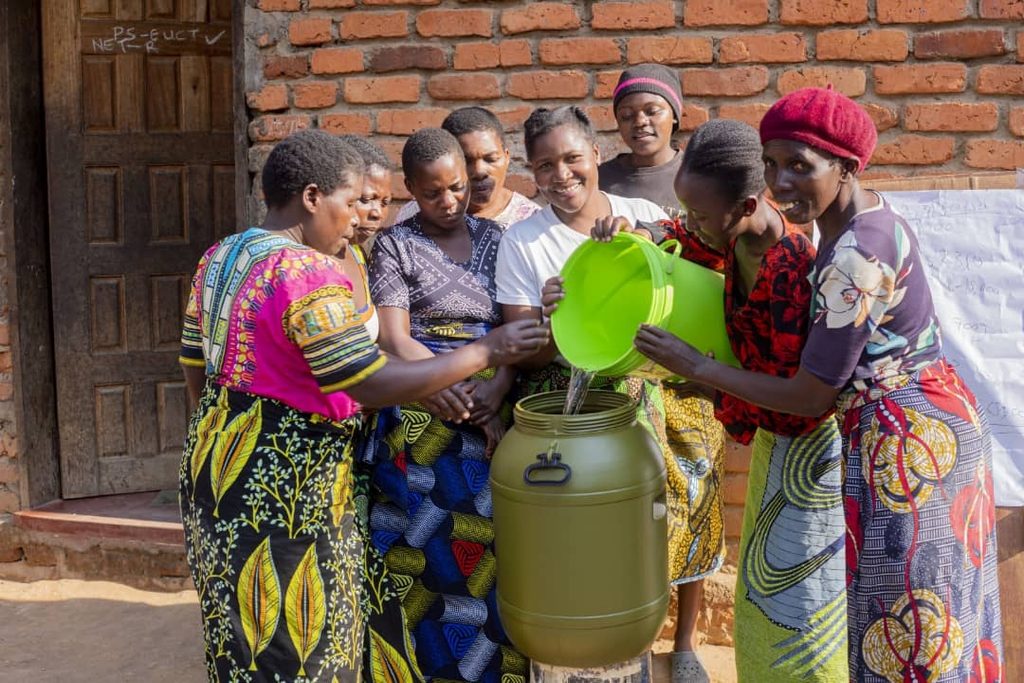
Thokozani, who has written three books, The Fail Advantage, The Unyielding Spirit and The Golden Thread, works with about 2 000 women farmers and 17 500 youths in Blantyre, Thyolo and Chiradzulu districts in sustainable agriculture.
Jacinta Lameck, a mother of two from Mbalame Village in Bangwe Township, is chairperson of Mgwirizano Club.
She recalls how Thokozani trained 100 women in poultry, chilli farming and making compost manure as well as fertiliser.
“From trash, she taught us to make fertilizer. We use locally available materials such as soil, maize bran, urine and water. On a field where I used to harvest three bags, now I get seven. My chickens used to perish, but that is now history,” she says.
Rose Katandika, aged 65, alludes that apart from learning about raising poultry and making fertiliser, improving household economy has changed her life.
“Making fertiliser has enabled me to harvest 20 bags in a field I used to get five. She introduced us to a village savings and loans group. Further she encourages us to plant trees and harness them,” she said.
Apart from imbuing them with the intricacies of developing black soldier fly larvae to produce feed for poultry and to make inorganic fertilizer from trash collected in markets of Bangwe, she also distributes moringa and pawpaw tree seedlings, restoring 12 hectares.
The Rwanda affair came after the Alliance for a Green Revolution in Africa (Agra) included her in Africa’s Top 100 Women in Agribusiness.
She also earned the World of Difference Global Award by The International Alliance for Women.
She insists: “I may receive the certificate or stand on the stage, but I carry that recognition collectively with the farmers who are at the heart of the journey.”
At Tac‑Maz, the enterprise also experiments with alternative poultry feed from black soldier fly larvae, moringa and pawpaw—solutions that simultaneously tackle feed costs, waste management and farmer profitability.
For her, writing and agriculture are twin instruments of change—one shaping narratives, the other shaping systems.
“Together, they form a powerful duet of advocacy and action. Yet beneath the recognition lies a philosophy: empowerment cannot mean training women only to send them back into limiting systems. It must mean reshaping those systems themselves,” she says.
Thokozani says listening to what farmers like Jacinta helps find ways of bringing academic knowledge and experience together.
“We should never underestimate the power of ordinary people to create extraordinary change when they are given the right opportunities. For me, agriculture is not just about food. It is about dignity, livelihoods, climate resilience, women’s economic empowerment and the future of our communities,” she says.
Thokozani is married to Prince, with whom she has three daughters: Maziko-Amelie, Mathando-Adeline and Mandisa-Arielle.
Originally from Dedza District, she is a social entrepreneur, farmer, development communications specialist, gender and inclusion practitioner, and more equitable and sustainable food systems advocate.
She works with smallholder farmers, particularly women and young people, to build more resilient livelihoods while promoting sustainable agriculture, climate adaptation, environmental stewardship and inclusive food systems.
Thokozani has a Bachelor of Arts in Humanities from the University of Malawi (Unima), an MBA in Health Management from Unicaf and a Master of Arts in Theatre, Media and Communication Development from Unima.
She is pursuing a Master’s degree in Women, Children and Nature Rights in Environmental Governance at the University of Nairobi.
“My academic journey has been deliberately multidisciplinary because I have come to understand that the challenges farmers face cannot be solved from one discipline alone. Alongside my university degrees, I have undertaken professional training and earned certifications in areas that have shaped my work,” says Thokozani.
In spite of all the academic accolades, she considers herself a lifelong learner. Every qualification has added another lens through which she understands the communities she works with.
Looking ahead, her ambition is to see women not just as producers, but as decision‑makers, innovators and leaders in agribusiness.
By expanding access to markets, finance and technology, she envisions a future where farming is not bound by age or subsistence, but defined by opportunity, creativity and agency.
“I hope that through my work, I can continue to demonstrate that when we invest in women, young people and sustainable systems, we are not just changing individual lives, we are changing the future,” she says.