It is 9am on a sunny Wednesday and Njovu Clinic in Phalombe District is buzzing with a crowd queueng for checkups and treatment for various conditions.
Nearby, an ambulance is evacuating a patient with high blood pressure to Phalombe District Hospital. He cannot talk, walk or move his left hand.
“It’s an emergency,” says nurse Chinsinsi Nkupila. “The patient suffered mild stroke at night, but couldn’t afford transport to Chitekesa Health Centre, almost 10 kilometres away.”
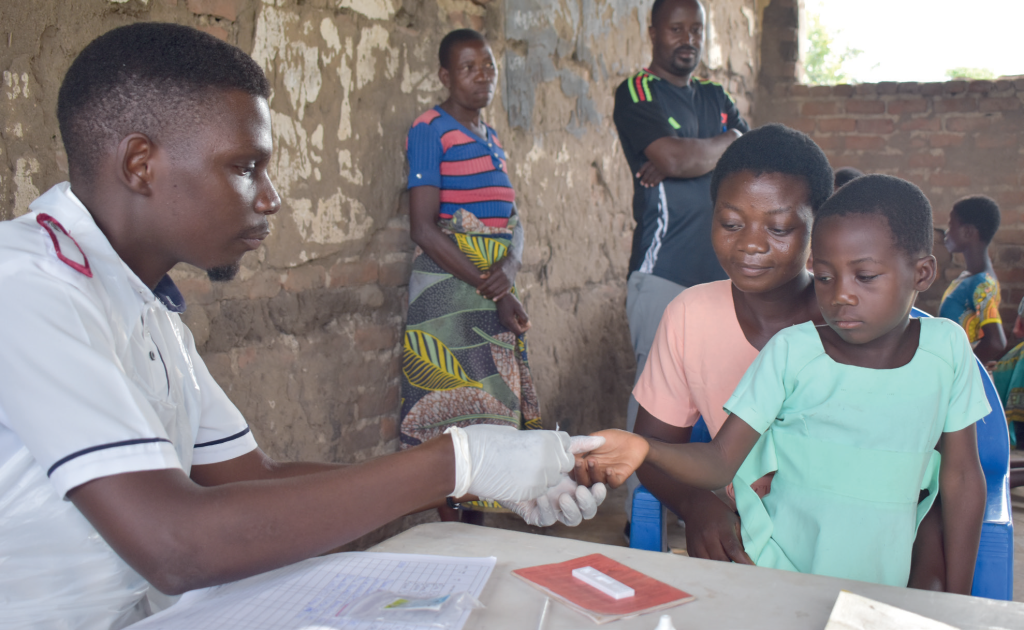
The rural clinic for children aged under five comprises fire-cured bricks with mud mortar. People from seven villages constructed the clinic to cut the long and costly travels to the nearest healthcare facility.
Motorcyclists charge K5 000 for a trip to Chitekesa, but the fare can triple if one is taken ill at night.
The patient’s family could not afford transport when stroke struck.
Fortunately, an ambulance was on standby when he arrived at the clinic.
Every Wednesday and Thursday, it shuttles health workers to the rural locality and serves as a confidential room for HIV testing and family planning.
Phalombe District Health Office runs the mobile clinic with support from the Global Aids Interfaith Agency (Gaia) in partnership with FDH Bank plc.
The team of seven provides immunisation, growth monitoring, nutrition screening and treatment of children below five.
They also screen, treat and refer adults with diverse conditions such as malaria, diarrhoea, coughs and non-communicable diseases.
Before clients start queuing, Nkupila and his team deliver health education on common infections and disease outbreaks.
“We no longer go to Chitekesa to get treatment for everyday illnesses. We only go there when the situation is critical,” said Chrissy Nguluwe, 27, from Mwango Village.
Her seven-year-old daughter had tested negative for malaria, the largest killer of children below 10.
“Teresa has skipped classes for two days because she was feeling fever and headache. She has received treatment for bacterial infection. I hope she returns to school soon,” said the relieved mother.
The mobile clinic has reduced preventable death and out-of-pocket cost for hospital trips. Government wants everyone travelling less than five kilometres to access healthcare.
“I get healthcare services close to home, so there are no delays or bills. I wish it was open throughout the week,” Nguluwe stated.
She salutes the dedicated healthcare staff who weighed every child and adult for possible conditions and accurate prescriptions.
The mobile clinic started in 2019 when hundreds of locals displaced by Cyclone Idai took shelter at Njovu Primary School.
Gaia programme manager Joyce Jere recounts: “The emergency mobile clinic came in response of high HIV prevalence in the area. But when it was time to exit, health authorities and local leaders asked us not to leave because health facilities are faraway.
“I am glad that FDH Bank gave us enough funds to conduct the clinic twice a week, reducing the deadly delays to access treatment, care and support. Gaia is also indebted to the DHO which provides 90 percent of drugs and some staff.”
Gaia approached several banks for support, but FDHBank opted for three tricky sites—Njobvu, Mpata and Miseufolo.
“Each site sees more than 300 clients per day and they have assisted over 2 500 since February. Due to the high turnout at Njovu, we asked for an additional day to reduce the waiting time and workload while maintaining quality services,” says Gaia deputy programmes manager Lucy Munthali.
FDH Bank accounts relations manager Mundi Macheso says only healthy people can make money and bank some.
“When you fall sick, your business stops and you waste a lot of money on hospital trips and bills. As a Malawian bank with branches nationwide, we envision a nation where everyone enjoys good health and generates more wealth,” he said
Phalombe district medical officer, Dr Grace Chikonga, says the healthcare system needs more partners to provide quality health services for all.
“Phalombe has 18 health facilities, but most areas are hard to reach and disaster-prone. When you get to Njovu for the first time, you are bound to ask: Is this really in Phalombe? The mobile clinic shows our shared efforts to ensure everyone gets quality healthcare close to where they live.”
Group village head Njovu says it is pleasing that children no longer die on the way to the nearest clinic.
“We were in trouble,” she says. “Since Gaia arrived in 2020, we feel relieved because the caregivers come to us and help us with a smile. We wish women could give birth right here.
Two years ago, the traditional leader and volunteers summoned Jere to request a second clinic.