The Bankers Association of Malawi (BAM) chief executive officer Lyness Nkungula said commercial banks are facing foreign exchange liquidity pressure as inflows continue to lag demand, highlighting that the forex challenges are structural rather than procedural.
Her remarks come after Reserve Bank of Malawi (RBM) deputy governor for economics and regulation Henry Mathanga directed businesses to channel forex requests through commercial banks instead of seeking direct allocations from the central bank, a move that economists interpreted as a sign of strain within the allocation system.
In an email response yesterday, Nkungula said commercial banks are operating under tight forex conditions largely because “inflows are not matching demand”.
She said: “Liquidity within commercial banks is under pressure largely because inflows are not matching demand.
“While prioritisation frameworks and regulatory guidance do play a role in allocation, the underlying challenge is limited supply relative to requests.”
Nkungula said that although banks remain willing to facilitate transactions, delays are sometimes unavoidable given the imbalance between supply and demand.
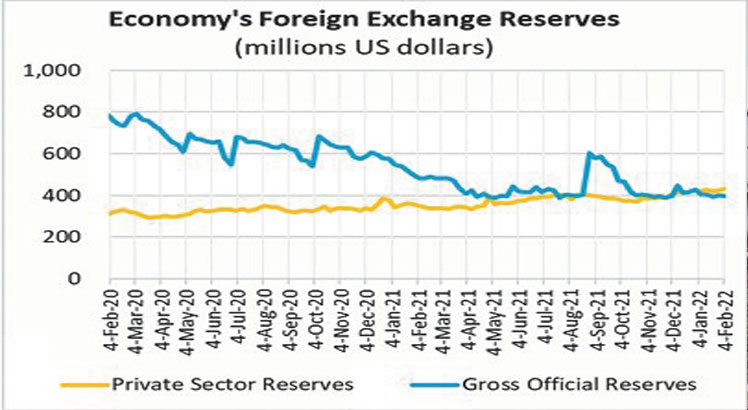
The RBM November Monthly Economic Review recorded total forex reserves at $530 million, which is equivalent to 2.1 months of import cover, but still below the 3.9 months recommended for credit-constrained economies.
Beyond liquidity, structural distortions in the exchange rate framework have compounded pressures.
In its Public Finance Review, the World Bank observed that Malawi’s multiple rate exchange regime functions as an implicit tax on exporters and a subsidy for importers with access to forex at the official rate.
The combination of an overvalued official exchange rate and mandatory surrender requirements, currently at 25 percent of export proceeds, reduces the kwacha earnings of exporters while allowing selected recipients to access forex below market value.
The World Bank cautioned that such arrangements distort incentives, encouraging exporters to hold proceeds offshore or transact outside the formal banking system, thereby limiting RBM access to foreign currency and heightening vulnerabilities.
The bank further noted that over the past five years the RBM has sold more than $3.1 billion into the market while purchasing $2.56 billion, resulting in net sales of $600 million. Selling at overvalued rates generated indicative aggregate losses of K481.7 billion over the period, according to the World Bank.
In an interview yesterday, Christopher Mbukwa, who teaches economics at Mzuzu University, said regulatory tightening without expanding forex supply risks pushing activity into informal channels.
He said: “It is only through increased forex supply through export growth or investor inflows that we can have a natural rate of forex on the market.
“Attempts to regulate without supply-side strategies will consolidate the black market and weaken export incentives.”
From a banking sector perspective, BAM said improving availability requires strengthening export inflows, and enhancing transparency.