Economists and market experts have urged government to restructure the 2025/26 Mid-Year Budget to restore stability amid concerns that the current fiscal path risks destabilising the economy.
Economic and market analysts warn that Malawi’s current fiscal path is fuelling inflation, crowding out investment and eroding confidence as domestic borrowing reaches unprecedented levels.
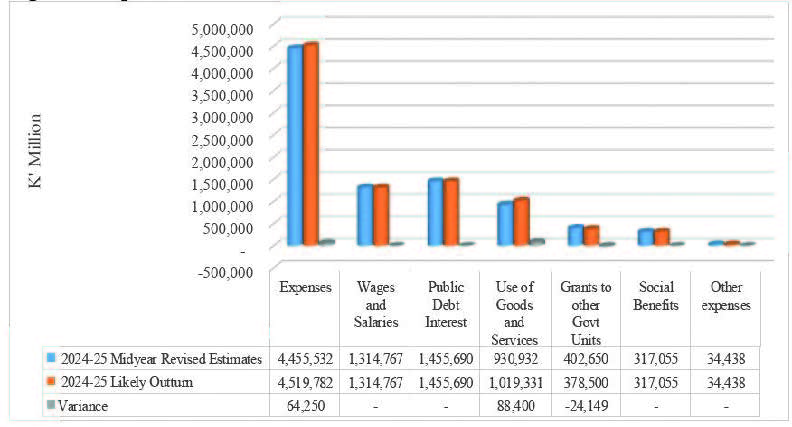
The call follows published Reserve Bank of Malawi (RBM) figures showing that between April and September 2025, Treasury collected about K2.65 trillion against over K4 trillion in spending, leaving a deficit of K1.36 trillion in just six months.
Inflation climbed to 29.1 percent in October and growth projections have slipped to 2.4 percent, dramatically worsening the macroeconomic backdrop under which the 2025/26 budget was designed.
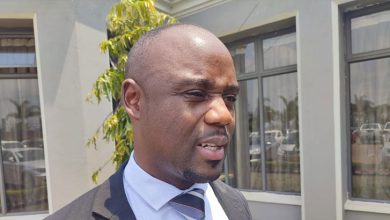
Investor and market analyst Bena Nkhoma said the upcoming Mid-Year Budget Review presents “a decisive test of political will” after what he described as a dangerous convergence of fiscal indiscipline, monetary expansion and currency pressure.
“This is no longer just borrowing,” he said. “This is monetisation — and it is inflationary by definition. The system is now trapped in a cycle where deficits are driving liquidity, liquidity is fuelling inflation, and inflation is eroding confidence.”
Nkhoma said the first step must be to stop using domestic borrowing as the default solution to every fiscal gap. He warned that banks are increasingly shifting away from private lending and toward government securities, deepening what he calls “a quiet but growing crowding-out crisis” that is choking private sector growth.
He argued that the mid-year adjustment should focus on restoring policy credibility through three measures: securing external budget support, tightening monetary policy to halt deficit monetisation, and adopting a realistic exchange rate policy to eliminate distortions and ease import pressures.
“An IMF [International Monetary Fund] programme is not a luxury; it is a lifeline,” he said. “Without it, this debt–inflation loop will harden and the space for policy intervention will close.”
Economics Association of Malawi (Ecama) president Bertha Bangara-Chikadza said the mid-year review must move beyond adjusting spending ceilings and instead repair the structural flaws in the budget itself.
“Money mobilised domestically should cover recurrent costs and borrowing should be reserved for high-return development investment,” she said. “Instead, short-term domestic debt is being used to finance consumption. That raises borrowing costs, crowds out private sector development and weakens growth potential.”
She said government must link recurrent spending to expected revenues and debt-service capacity, while redirecting borrowing toward productive sectors that can strengthen exports, employment and revenue generation.
Bangara-Chikadza also urged reforms to broaden the tax base, minimise leakages and strengthen public investment management so that resources are not simply absorbed into administration.
“The biggest design flaw is the use of short-term domestic borrowing to fund recurrent expenditure,” she said. “We need to link spending to growth and social outcomes, not simply fill gaps in the cash flow.”
Budget assumptions no longer hold
The 2025/26 National Budget assumed real gross domestic product (GDP) growth of 3.4 percent and average inflation of 22.3 percent, with a deficit equivalent to 9.5 percent of GDP—financed almost entirely through domestic borrowing. Those assumptions have already been overtaken by events.
Inflation is seven percentage points higher than projected. Growth has fallen nearly a full percentage point lower.
Interest payments have exceeded K200 billion in some months, and grant inflows have remained irregular. Meanwhile, money supply is expanding at more than 50 percent year-on-year, driven by rising government borrowing and central bank financing.
Nkhoma said the mid-year budget review must acknowledge this new reality and focus on credibility rather than optimism.
“The question now is not whether the budget is ambitious, but whether it is believable,” he said. “If confidence is not restored, no amount of borrowing will be enough.”
Bangara-Chikadza agreed, warning that unless the structure of the budget changes, Malawi risks being locked into a cycle where inflation, debt and low growth reinforce each other.
“The choices made now will determine whether this economy stabilises or sinks deeper into crisis,” she said. “The opportunity for corrective action still exists, but time is running out.”