It is 5.30am and most Blantyre Secondary School (BSS) students are fast asleep. However, Chiyambi Katunga is already awake, helping his Form Two classmate, Talandira Kogoya, get ready for classes.
Born without hands, Talandira was selected to the prestigious national boarding school on merit. Chiyambi helps him do everyday chores, including writing notes.
Their extraordinary friendship started in the school’s corridors, proving that people make inclusion policies work.
Chiyambi comes from Rumphi District, almost 900 kilometres north of Chiyambi’s home in Phalombe. Two boys separated by culture, language and distance, first met in 2024 when they enrolled in Form One and occupied the same hostel at BSS.
“On day one, I saw him struggling to open his suitcase and get his uniform. Everyone was just looking. I asked if I could help,” Chiyambi recalls.
That small act of kindness became a lifetime commitment. Chiyambi helps his friend wash his uniform and dishes, carry food, make a bed, arrange books, bathe, get to class and write notes.
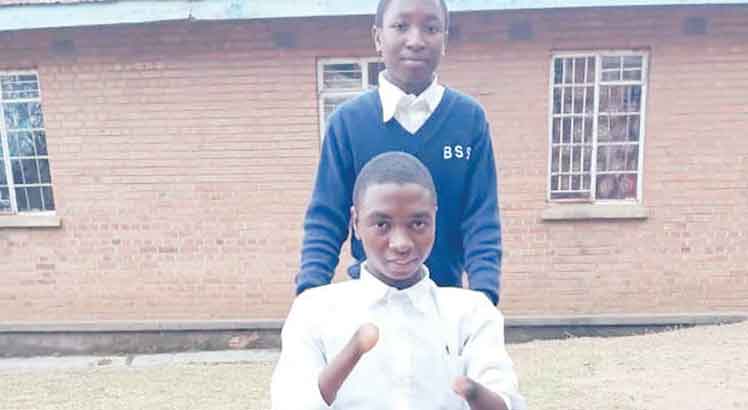
Despite having no hands, Talandira writes with his arms—a skill he perfected in primary school. However, it takes time.
This is where Chiyambi comes handy. He uses free time to copy notes for him and help him complete homework.
Talandira says: “Chiyambi is more than a friend. He is family. He is my hands, my brother and my shadow. Before he came into my life, I feared that I would drop out because life was very hard.
“I couldn’t do anything fast, but he told me: ‘Your disability is not your inability. You are here because you are intelligent’. He gives me hope.”
Inclusion is one of the pillars of Malawi’s education system, where learners with disabilities ironically get selected to boarding schools that lack the capacity, aides and caregivers for students with special needs.
At BSS, there is no staff assigned to Talandira, whoch leaves him at the mercy of fellow students under academic pressure.
Teachers praise Chiyambi for filling the common gap in government schools.
Malawi Council for Disability Affairs (Macoda) district officer Pius Chilewani hails Chiyambi as a selfless young man to emulate.
He states: “He is a true hero when it comes to inclusion. What he is doing for Talandira is beyond friendship. It is tireless, selfless and deeply human.
“He has been doing this work every day without complaining or expecting anything in return. He sacrifices his study time and resources to ensure Talandira stays in school at a time learners with disabilities often quit boarding schools due to lack of care and support.”
Malawi signed the Convention on the Rights of Persons with Disabilities (CRPD) and the African Disability Protocol that promote inclusive education and support services.
This includes provision of personal assistants and caregivers in secondary schools instead of leaving the burden to fellow learners.
“While we are waiting for policy to work, we need more Chiyambis. The case of Chiyambi should be documented and celebrated to promote the spirit of giving,” Chilewani says.
Macoda works with the Federation of Disability Organisations in Malawi (Fedoma) and Phalombe district education authorities to ensure special needs students such as Talandira get appropriate learning support plan.
In 2024, Parliament enacted the Persons with Disabilities Act to make the CRPD and African Disability Protocol work.
The story of Chiyambi and Talandira reminds the nation that laws alone are not enough. Real inclusion happens in spaces where helping hands make life bearable for those who need a hand.
Back at BSS, Chiyambi does not see himself as a hero, but “just a brother doing what brothers should do”.
“I don’t want anything from anyone. I just want Talandira to learn and become what he want to be in life. He is intelligent. If my small hand can help him achieve his dreams, then I have done my part,” he says.