The World Bank says Malawi’s macroeconomic instability will remain entrenched due to unsustainable fiscal, monetary and exchange rate policies, resulting in high inflation and declining living standards.
In its Malawi April 2026 Macro-Poverty Outlook published on Tuesday, the Bretton Woods institution said this is worsened further by increasing trade barriers and a mounting debt burden.
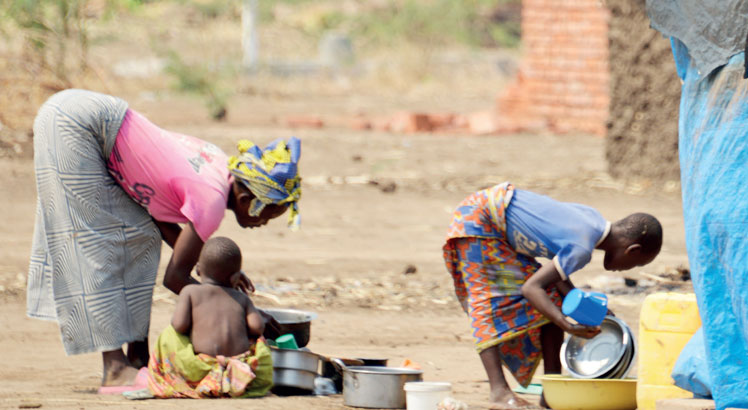
This, the bank noted, is at a time per capita gross domestic product (GDP) growth has been negative in recent years, resulting in persistently high rates of poverty, with three-quarters of the population living on less than $3 (about K5 300) a day.
Reads the outlook in part: “Reform progress has been slow, frequently impeded by vested interests while election-year spending pressures have heightened fiscal risks.
“The outlook is subject to significant downside risks, including the potential of further fiscal slippages, which could deepen macroeconomic instability.”
Published data show that real GDP is projected to grow modestly by 1.9 percent in 2025, but with population growth at 2.6 percent, it continues a fourth year of negative per capita growth, leaving incomes stagnant and poverty at 76.6 percent, among the highest in the region.
The current account deficit, on the other hand, widened to 17.6 percent of GDP in 2024 due to weak export competitiveness and trade barriers, while low foreign exchange reserves and stalled exchange rate reforms have increased external vulnerability and widened the official–parallel market gap.
Meanwhile, the fiscal deficit is projected to widen to 12.6 percent of GDP in 2026 due to election spending and reduced aid, pushing debt above 90 percent of GDP and increasing debt service pressures that are crowding out investment and private sector growth.
In an interview on Tuesday, Mzuzu University economics lecturer Christopher Mbukwa observed that elevated inflation and weak economic growth are limiting recovery by eroding purchasing power, discouraging investment, reducing business profitability and worsening poverty.
“Owing to high debt burden, it is difficult for the government to borrow so as to finance social protection programmes,” he said.
Economist Milward Tobias observed, in a separate interview, that there is a lot of luxury and wastage in the budget, which if removed, could narrow the fiscal deficit.
“That means borrowing would reduce without compromising service delivery. On public debt, much of it goes into areas that do not generate revenue, exports and grow economy,” he said.
On his part, National Planning Commission director general Frederick Changaya said sustainable macroeconomic stability will come from deliberate improvements in resource allocation, productivity and structural transformation, rather than short-term policy fixes alone.
“Malawi’s economic recovery requires a multi-pronged approach, including fiscal consolidation and a focused development strategy driven by structural reforms,” he said.
Changaya, who is also National Working Group on Trade Policy chairperson, said this also includes commercialising agriculture by shifting smallholder farmers from low-value subsistence maize production to high-value, profit-oriented crops, alongside targeted investment in a few strategic value chains such as pharmaceuticals, tyres, batteries and niche tourism.
He said: “We are working with Ministry of Finance, Economic Planning and Decentralisation as they are developing national economic recovery plan.
“We support the recovery efforts with our Accelerator Strategy initiatives, particularly the intentionality and focus on few high-value crops for agriculture diversification and commercialisation at subsistence level.”
Meanwhile, Ministry of Finance, Economic Planning and Decentralisation has developed a Malawi National Recovery Plan, which is a subset of the Malawi 2063 First 10-Year Implementation Plan.
The recovery plan has consolidated reforms on revenue, expenditure, monetary side and all the other policy interventions the Malawi government is planning to implement to correct the social and macroeconomic imbalances.