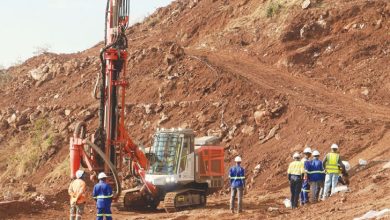
Kanyika Niobium Mine in Mzimba District, owned by Globe Metals and Mining, could rake in $6.9 billion (about K12.2 trillion) in net revenue over 24 years, confirming the mine’s potential ahead of production in 2028.
This is highlighted in the Australian Stock Exchange-listed firm’s latest definitive feasibility study results for the project, which also forecasts its post-tax profit net present value at $1.025 billion (about K1.794 trillion).

Posted on its website www.globemm.com, the study projects annual earnings before interest, tax depreciation and amortisation to average $205 million (about K358.9 billion) with net sales revenue over the 24-year life of mine of $6,983 billion (about K12.2 trillion).
The findings confirm mine as a globally significant, long-life niobium project with compelling economics and low operating costs.
Globe Metals andMining interim chief executive officer Charles Altshuler is quoted in the report as having said that the mine’s project progress represents one of the few near-term opportunities to establish a new, large-scale source of niobium supply outside Brazil.
He said: “As demand continues to grow across aerospace, defence, data centres, artificial intelligence and advanced manufacturing, we are seeing increasing strategic interest in securing long-term, conflict-free supply.
“Our focus is now firmly on execution, progressing funding, off-take and an engineering, procurement and construction management arrangement towards a final investment decision while advancing early works and procurement to enable construction.”
Earlier this year, Globe Metals and Mining announced that construction of mine started, marking a transition from feasibility phase into execution.
Mining experts have since described the project’s progress as inspiring, saying mine construction is part of the development phase, which marks the beginning of a mining cycle and assures stakeholders that actual mining will take place.
In an interview on Monday, geoscience expert in minerals, mining and metals Ignatius Kamwanje described the progress as critical as it guarantees that mining will take place.
He said: “This stage represents the beginning of a mining cycle and it gives confidence to the company and financiers because it indicates that mining will actually take place.
“What is also more important, especially in our case is that this guarantees infrastructure development in the area which means economic activity, job creation and inflow of foreign exchange.”
The firm targets first production of niobium at Kanyika Niobium Mine in January 2028, while the first phase of community relocation is expected in May this year.
The project’s phase two is planned for April 2029 and is expected to scale production to between 3 000 and 3 300 metric tonnes (MT) of niobium pentoxide and 150 to 160MT of tantalum pentoxide annually.
Niobium global supply remains constrained, with more than 90 percent sourced from a single Brazilian producer, while demand continues to rise in aerospace, defence, batteries and advanced manufacturing, positioning Kanyika Niobium Project as a critical supplier.
At full capacity, Kanyika is expected to produce an average of about 3 267MT of niobium pentoxide annually.