Malawi risks failing next year’s International Civil Aviation Organisation (ICAO) audit unless it urgently invests in aviation safety and security, a senior aviation official has told the June 10 2024 plane crash inquiry.
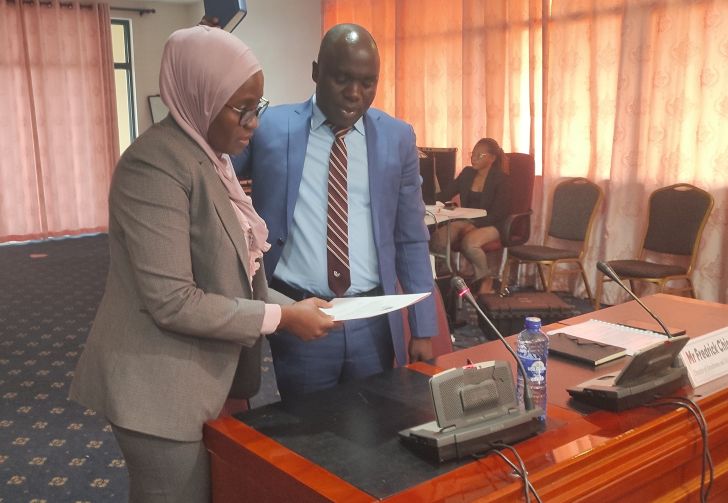
Testifying before Parliament’s Ad-hoc Committee Investigating the Chikangawa Plane Crash that killed Vice-President Saulos Chilima and eight others, Civil Aviation Authority of Malawi (CAAM) director of Aerodromes and Air Navigation Standards Fredrick Chisepeya warned yesterday that the country’s aviation system has significant safety gaps, including inadequate radar coverage and shortcomings at some airports.
He said Malawi only has a secondary flight surveillance radar at Kamuzu International Airport (KIA) in Lilongwe whose coverage is limited for low-flying aircraft.
Chisepeya said the Malawi Defence Force aircraft that crashed in Viphya Plantation was outside radar coverage.
“The limitation is the radar coverage. When you are up, the range is wider and when you are down the range is narrower. So that makes the aircraft sometimes not to be seen,” he told the inquiry.
The official called for investment in aviation equipment at strategic positions, noting that Bakili Muluzi International Airport in Chileka, Blantyre and Mzuzu Airport do not have the facilities.
Chisepeya also expressed concern over the safety standards at Mzuzu Airport, saying its level of protection does not match the requirements for medium-sized aircraft such as the Malawi Airlines Bombardier.
“If the operator is honest today, they will tell you the level of protection is maybe at three because we categorise from one to 10. So, for the Malawi Airlines Bombardier it would require level six,” he said, noting that Mzuzu Airport needs adequate fire attendants and improvements to its runway he described as bumpy and below standard.
Responding to a question from ommittee chairperson Walter Nyamilandu on his assessment of enforcement of aviation standards in Malawi, he said there is room for improvement.
Nyamilandu said Chisepeya’s testimony created the impression that Mzuzu Airport was a “death trap” and wondered why aircraft were being allowed to operate there if conditions were unsafe.
In response to the observation, Chisepeya said Mzuzu Airport was not licensed at the time of the accident but was licensed in 2025 with several conditions.
Lilongwe Mude member of Parliament (MP) Mphatso Boti (Malawi Congress Party) asked whether there were aviation codes used to report issues of interference and Chisepeya said communication becomes difficult when an aircraft is outside radar coverage.
Taking his turn, Mwanza Central MP Felix Njawala (UTM Party) asked whether there could have been frequency interference between the aircraft and airport officials, saying the pilot only spoke to Mzuzu Airport officer-in-charge Joseph Moyo once.
But Chisepeya said engineers would be best placed to comment on possible frequency interference, adding that he was not an engineer and could not say whether there was interference on the day.
As we went to press at 8:30pm, the inquiry was still in session.