Extension services’ underfunding threatens output as El Nino looms

Severe underfunding of agricultural extension services, the critical support network helping farmers boost productivity, is severely threatening yield projections for the upcoming farming season as El Niño approaches.
Agricultural policy experts raised the alarm this week, pointing to a Society Agriculture Network (Cisanet) policy brief which reveals that extension services currently receive one per cent or less of the total agricultural sector budget.
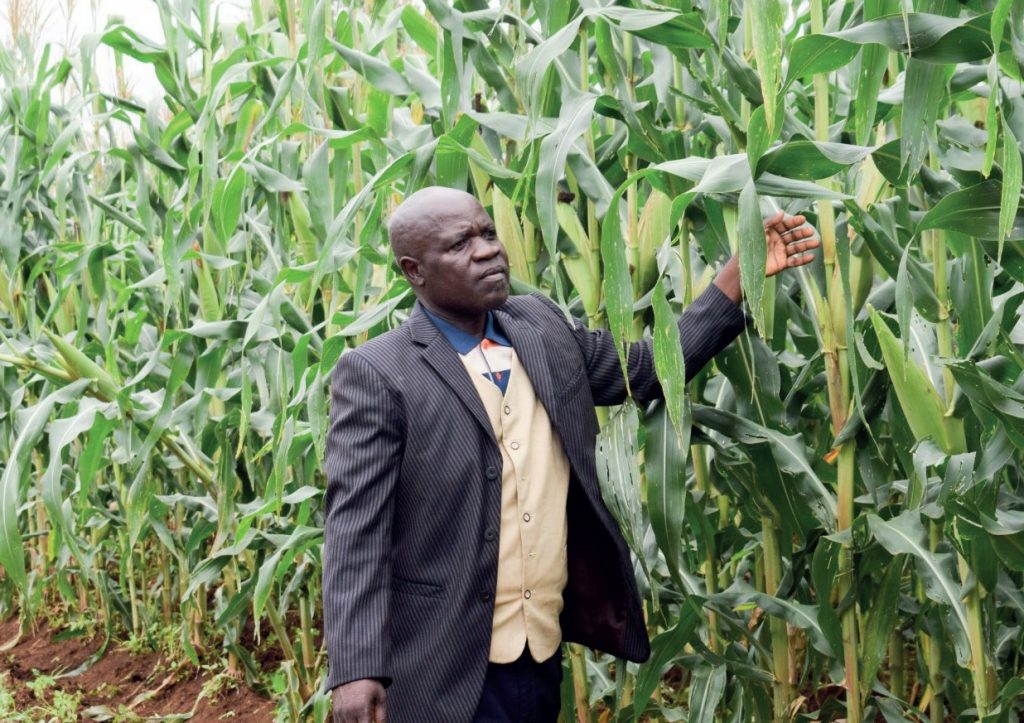
Consequently, the farmer-to-extension-worker ratio has ballooned to an alarming 1:4 500, with the Central and Southern Regions worst affected.
The policy brief, titled ‘Insights for Agri-food Systems Transformation’, and focusing on the 2026/27 agriculture sector’s allocation, also faults the Constituency Development Fund (CDF) for failing to bridge the funding gap.
“The CDF presents a further missed opportunity; there is near-zero allocation for agricultural software extension services, market sheds and technical support as communities and politicians consistently prioritise physical structures such as school blocks and clinics,” reads part of the policy brief.
In the current agriculture budget, major allocations include the Shire Valley Transformation Programme (SVT), Farm Input Subsidy Programme [Fisp], Strategic Grain Reserves procurement, Agricultural Development Corporation (Admarc) purchases and the National Irrigation Development Programme.
Further investments target agriculture commercialisation and value chain development through the Transforming Agriculture through Diversification and Entrepreneurship (Trade) Programme, contract farming, Financial Access for Rural Markets, Smallholders and Enterprises (Farmse) and mega farms.
Compounding the situation is a decline in the sector’s budget from 15.8 percent in the 2022/23 fiscal year to 8.5 percent in the current fiscal year. The policy brief attributes the situation to the overall government expenditure that has expanded more rapidly than agricultural investment.
Analysis of the sector shows the most significant reduction occurred between the 2022/23 and 2024/24 fiscal years when the agriculture budget fell to 8.3 percent despite increased nominal funding.
The decline means Malawi is failing to meet the 10 percent benchmark of the Kampala Comprehensive Africa Agriculture Development Programme (Caadp).
Under the 10-year Caadp continental plan adopted by the African Union in 2025 to transform Africa’s agri-food systems and ensure food security, member States, including Malawi, committed to allocating at least 10 percent of public expenditure to agri-food systems.
Lilongwe University of Agriculture and Natural Resource agriculture economist Horace Phiri said in an interview on Friday the situation has been a long-standing issue, coupled with high farmer-extension worker ratio.
“The service operates at suboptimal levels. The country is faced with two major challenges; low productivity levels and climatic shocks,” he said. “To make headway in these, we need an effective extension service that would support technology transfer for productivity and adaptation to shocks.”
But agricultural policy expert Tamani Nkhono Mvula in a separate interview on Friday said between the 1990s and early 2000, a lot of change occurred in the provision of extension services due to structural and policy changes.
He said this brought about plurality in regards to provision of extension services, which entailed that extension services have to be demand driven with non-governmental organisations also taking part, including the private sector.
“We can talk about funding going down, but we also need to look at it broadly on how extension is supposed to be provided, who must demand for the services and what kind of resources are those people demanding are also contributing,” he said.
He said the other thing we also need to look at is that from the early 2000, there has also been a shift in how extension services are provided, including electronic devices, mainly radio, messages and lead farmers.
Nkhono Mvula said extension services provision is, therefore, not only the domain of government, but numerous other stakeholders involved in supporting farmers to be able to get information.
Meanwhile, this year’s Fisp is set to roll out early September and, according to Ministry of Agriculture, Irrigation and Water Development spokesperson Salome Gangire, the initial planning phase has been completed.
In an interview on Thursday, Gangire said the Smallholder Farmers Fertiliser Revolving Fund of Malawi will be the main supplier for the farming season, adding that contracting for supplementary suppliers is in progress and that award notifications will be issued shortly.
But she said a decision whether the government will purchase fertiliser directly from suppliers is yet to be made.
“Government is awaiting guidance from the Public Procurement and Disposal of Assets Authority,” she said.
Beneficiaries of the subsidy programme will be required to produce Mbeya fertiliser to complement the two bags of inorganic fertiliser they will receive with technical guidance provided by extension staff from the Department of Agricultural Extension Services.