MCP’s politburo is divided over the future of its leadership ahead of the 2030 General Election, with former president Lazarus Chakwera facing a challenge from senior figures, including his former chief of staff Prince Kapondamgaga.
While Chakwera’s allies are pushing for him to contest the Malawi Congress Party (MCP) presidency again, opponents argue that his tenure has ended under the party’s Constitution and that the grouping must turn to new leadership after its defeat in the September 2025 election, multiple sources told Nation on Sunday.

The emerging succession battle is expected to intensify as MCP prepares to hold elections for regional, district, constituency, ward and area committees across the country before May 8 2027.
Inside sources say Chakwera’s allies are already campaigning for preferred candidates in the party’s grassroots structures. Other presidential hopefuls—including Kapondamgaga, former secretary general Eisenhower Mkaka and declared contender Alex Major—are also mobilising support ahead of the internal elections.
The party’s secretary general Richard Chimwendo Banda announced the elections in a memorandum released on September 19 2026.
According to the memorandum, the decision follows a May 8 2026 judgment of the High Court of Malawi directing MCP to conduct elections for its district and regional committees.
The elections will cover all regional and district committees, including newly demarcated political regions and districts, following a National Executive Committee (NEC) meeting held on September 9 2026.
The party will also hold elections for constituency, ward and area committees nationwide.
The grassroots polls have, therefore, become central to the wider succession contest, with competing factions seeking to influence the delegates who will attend the elective convention.
Interviews with multiple NEC members, district chairpersons, including one who recently led a pro-Chakwera strategy session in Kasungu, and Major, indicate that the party is facing a bitter internal struggle over its future direction.
The dispute centres on whether Chakwera can legally seek another term as MCP president and whether the party should amend its Constitution to accommodate him.
Chakwera’s critics cite Article 31 of the MCP Constitution, which limits the tenure of the party president to two terms.
Article 31(3) provides that members of the NEC “shall be elected by the Convention of the party every five years except the president who shall hold such office for two terms only if elected for a second term.”
The Constitution also makes an exception for a party president who is serving as State President in his second term—allowing him to contest again.
Chakwera’s defeat in the 2025 presidential election, however, has closed that route, according to his opponents.
He first took over the leadership of MCP at the Natural Resources College convention in Lilongwe in August 2013. He has since led the party for 13 years—three years longer than veteran politician John Tembo, who served as MCP president from 2003 to 2013.
If he remains in control through the 2030 electoral cycle, Chakwera could become the longest-serving MCP leader since the party’s founder, the late Hastings Kamuzu Banda.
MCP NEC member and legislator, said the legal issue was set out in a formal legal opinion presented to Chakwera more than four months ago.
The document concluded that Chakwera’s return to the MCP presidency was blocked unless the party amended its Constitution, the sources said.
“Any attempt by Chakwera to bypass Article 31 without a lawful amendment would be instantly vulnerable to a fatal legal challenge,” said the parliamentarian who requested anonymity to avoid a direct confrontation with the party leadership.
The constitutional dispute has split the NEC and produced competing views about whether Chakwera remains an electoral asset or has become a liability.
“With Chakwera the party will have stability. To bring in a new leader may simply divide the party. This is the same reason DPP retained APM [Arthur Peter Mutharika]. It is about stability,” said one NEC member and MP, speaking off the record.
But political scientist Clemence Alfazema argued that stability alone may not translate into votes. According to him, MCP faces a structural ceiling of approximately 33 percent based on Afrobarometer data and historical election records, with its core support hovering around 20 percent.
In 2020, he noted, MCP’s success was driven by partnerships within the Tonse Alliance and the charismatic appeal of Saulos Chilima as running mate— coalition mathematics that propelled the alliance to a 59 percent victory, demonstrating that MCP requires a significant “push factor” to pull a surprise in any election demanding 50 percent plus one.
On whether Chakwera holds an incumbency advantage, Alfazema said the evidence suggests otherwise.
“This is a gamble, as Chakwera is now a tested leader whose performance in office is well-documented and, in the eyes of many voters, disappointing. The fact that he lost elections also signals that Malawians are willing to reject him when presented with alternatives. In fact he lost when he had the incumbency advantage that would have allowed MCP to tap into the ‘swing’ vote,” he said.
Another senior NEC figure and former cabinet minister in Chakwera’s administration agreed with Alfazema, saying retaining him could damage MCP’s chances in the next election.
“Maintaining Chakwera would dim the party’s opportunities to win the next elections,” said the NEC member. At the same time, he said, challenging him will be hard, with contenders viewed as deviants in a playing field that is already not level.
Financial considerations are also deepening the divisions.
On September 5, 2026, constituency chairpersons, secretaries and representatives of women’s groups gathered in Kasungu to discuss a strategy for Chakwera’s return.
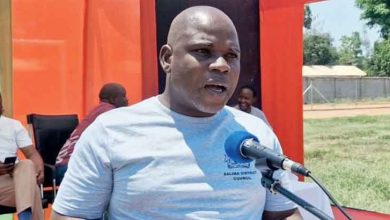
Confirming the resolutions of the meeting, MCP Kasungu District chairperson Chisomo Mbembeza said Malawi’s laws allow Chakwera to contest, although the MCP Constitution did not.
“Malawi laws allow Chakwera to contest, but not the MCP Constitution. So, we are saying, can’t we amend the [party] constitution so that Chakwera is allowed to contest at the MCP convention and represent the party in 2030?” Mbembeza said.
“Chakwera did well, and those who want to compete for the presidency are the ones who misled him, leading to failure in the 2025 elections. He performed well for the country and we will plan to see him and ask him to contest,” he said.
Critics view the proposed constitutional changes as an attempt to personalise the party and weaken its democratic institutions.
“Ideally, his term ended in 2023, but was extended because he was the State President. Changing the Constitution to suit individual interest is quite undemocratic,” said a senior NEC member who requested anonymity.
“Assuming Chakwera goes through at the convention, it means he will run until 2034—that is 21 years in power. Totally against the spirit of democracy adopted in 1993 when Malawians rejected life presidency,” the member said.
Alfazema said while MCP’s recent move to apologise for past wrongs is both timely and politically astute, what matters most is the kind of leader the party fields.
“Bringing in a candidate capable of tapping into swing votes would significantly strengthen MCP’s position. Otherwise, all attempts to amend the constitution to accommodate Chakwera’s continued leadership may prove an exercise in futility,” he said.
He also cautioned against the assumption that Malawians voted for Mutharika in 2025 despite rejecting him in 2020, so they could do the same for Chakwera if Mutharika fails to deliver.
Major, a long time MCP presidential aspirant, has publicly led the counter-campaign, calling for an emergency convention to rebuild the party.
He said he had appeared before what he described as a mysterious parallel vetting committee within MCP that was attempting to screen presidential contenders.
“Those close to him [Chakwera] are ill-advising him on this matter. His signal to contest is ill-timed because the constitution does not allow him to stand. Legally, he is not eligible to contest; hence, there is nothing to worry about. No life president in MCP after Kamuzu Banda,” he said.
Kapondamgaga’s emergence adds another layer to the succession contest.
As Chakwera’s former State House chief of staff, he is reportedly attracting support from some NEC members and is among the figures being discussed as a possible alternative to the former president.
Other names circulating within the party include Mkaka, John Paul and ICT specialist Daudi Suleman, the former director general of the Malawi Communications Regulatory Authority and McBride Nkhalamba, the Lilongwe born governance and public policy expert working for the African union who has also been attracting attention among the political class lately.
We reached out to Kapondamgaga, Suleman and Nkhalamba, but no one was willing to confirm save for Major who has publicly expressed interest.
Mkaka said there was no convention yet to drag him into such matters.