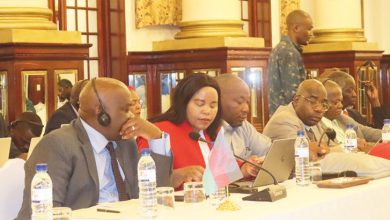
Preliminary data from the Women’s Manifesto Movement shows that fewer women will contest in the September 16 General Election compared to 2019, with funding constraints emerging as the main barrier to women’s participation.
The data sourced by The Nation shows that 270 female candidates have submitted nominations for parliamentary elections although this is before Malawi Electoral Commission (MEC)’s vetting, which could reduce the final figure.
The 270 is a reduction from 295 that contested for parliamentary seats in the 2019 elections, before the number of constituencies was increased from 193 to 229 in the 2025 elections.
At local government level, according to the Women Manifesto Movement data, 426 have submitted nomination papers to the MEC, down from over 600 that contested in 2019.
At presidential level, only one woman, former president Joyce Banda, presented her nomination papers and is the only female contender out of 17 aspirants that have been given a go-ahead by MEC.
Stakeholders have since bemoaned the development, saying it threatens efforts to increase women’s participation in elected offices.

Women Manifesto Movement coordinator Margaret Kathewera-Banda attributed the development to funding challenges, saying some women found the nomination fees to be high despite that women were paying half the amount.
At risk of women’s poor participation in political leadership are targets set in the National Strategy on Political Empowerment of Women that government launched last year.
The strategy aims to have at least 35 percent of parliamentary and local government seats in 2025 elections won by women, with the hope of increasing to 50 percent of the seats in 2030.
Kathewera-Banda said besides nomination fees, women also face challenges of resources for the campaign, leading many to not submit nomination papers for lack of assurance of support.
However, she said the movement is still hopeful that the targets can be met.
Said Kathewera-Banda: “There are still attitudes where people feel women cannot make it. We need to change the attitudes and support women.
“Political parties also need to seriously support female candidates although they, too, are also facing funding challenges.”
Kathewera-Banda, who is also NGO-Gender Coordination Network chairperson, called on well-wishers to support female candidates with campaign materials such as T-shirts, wrappers (zitenje), and posters to help increase their visibility.
“Government also needs to start supporting the National Women Empowerment Strategy implementation by ensuring that there are adequate resources for implementation,” she said.
The decrease in women’s participation also reflects concerns that a group of 100 female independent aspirants made in Lilongwe recently, calling on well-wishers to support them with finances for nomination fees or materials to run the campaign.
In an interview yesterday, chairperson of independent female aspirants group Pilirani Buleya said out of the 100 aspirants, only 36 managed to pay nomination fees.
The group said it was collectively looking for K500 million to finance the nomination fees and campaign rallies.
Said Buleya: “But we only managed to raise K200 000, which Sana supported us with. It has been very difficult to raise the money, as such, the majority of the members failed to pay their nomination fees.
“In Malawi it will take time to increase the numbers of women in elected positions because of lack of support. We talk about empowering women, but there are no resources to support the cause.”
She also feared that even those that have paid nomination fees may also be hampered by the funding challenges during the campaign period.
“There are many costs that are incurred when seeking political office. Apart from campaign, we also need to look into resources for engaging monitors,” said Buleya.
Political analyst Nandin Patel has since said the key to achieving 50-50 gender representation target is having a law that will promote gender quotas for parliamentary and local government seats.
She said the move needs to be taken soon after a new government is in place to show seriousness in promoting women empowerment, arguing women continue to face financial, cultural, and other barriers in political participation.
Said Patel: “Much as we discuss the problems, we are not taking concrete measures either in terms of considering alternative system like reservation of seats.
“Such measures need to be considered. There is need to take a bold step forward, otherwise, we will just be repeating the same issues and same challenges.”
Another political analyst Chrispin Mphande said few women will make it this year, saying most females do not have the financial capacity to embark on effective campaigns.
He said even the political parties have not provided the needed resources for women to effectively participate; hence, the challenge.
“Currently, there is no remedy. We will have to wait for the next election, but there will be need to put proper measures to promote women participation,” said Mphande.
Women have been underrepresented in politics, in particular parliamentary seats and local government positions.
The 2009 General Election saw 42 females winning as members of Parliament (MPs), representing 22 percent female representation.
In 2014, the representation dropped to 32 women or 16 percent, while in 2019, 45 women were elected as MPs, representing 23 percent of 193 parliamentary seats.