The morning sunrays spill gently across vast maize fields and grasslands of Mwala Wanyenje, Traditional Authority Mwase in Kasungu, expelling a shimmer of dew into the air.
Amid the daybreak humming of waking birds and rustle of leaves, a silhouette moves steadily across the field, her walking stick digging softly into the dusty soil, one measured step after another.

Aged 59, Nice Lanjeni cuts a sturdy figure of an unyielding, living proof of the human spirit can defy even the harshest of odds.
She has only one functional leg. The other, paralysed and deformed by polio when she was just two years old, never fully recovered.
That was before 1992 when the World Health Organisation declared Malawi free from wild polio, 30 years before the crippling virus was detected in Lilongwe in February 2022. The country has since been declared polio-free again.
For decades, Lanjeni has tilled her fields, planted and harvested enough to feed herself and grandchildren in this northern corner of Malawi.
Her measured strides appear slow but purposeful. Her determination is unwavering.
“I’ve lived like this since I was a little girl,” she says with pride and fortitude, leaning lightly on her stick. “My father was a clinician at Santhe Health Centre in KAsungu when I fell sick. Three of us had polio and I was the only child who could walk properly.”
Lanjeni recalls walking to town and back, but some pain in her legs.
“Then, I didn’t use a walking stick, but now I do because the pain is worse as I grow older.”
To her, disability is not inability.
Even when the rains are late or the sun is unforgiving, she is out in her field.
She bends to plant maize and groundnuts, balancing herself on one leg, hoping for bumper yields.
“The walking stick has never held me back,” Lanjeni says. “I do my farm work using my leg and stick. Sometimes I ask for help or hire people, but I ensure the work gets done.”
She has defied the odds to safeguard her livelihood, dignity and well-being.
Years ago, her husband walked away, leaving her to raise their daughter singlehandedly. Many would have crumbled, but Lanjeni soldiered on.
“It was not easy, but I told myself that my daughter must go to school. I didn’t want her to suffer the way I did,” she says.
Through proceeds of vegetable sales and farming amid frequent drought and hunger, Lanjeni saved enough money to bring her daughter up and send her to Mzuzu University.
The girl has graduated to become a police officer—a feat which delights her mother.
“When I see her in a police uniform, I feel my struggles were not in vain,” Lanjeni says smilingly. “I am happy and proud that she is now self-reliant.”
Lanjeni is a farmer to watch under the Transform project implemented by Total Land Care with support from Norwegian Church Aids and Danish Church Aid.
In her village, Lanjeni’s legend is an epic a woman who farms on one leg, raised a graduate and refused to be defined by pity.
She has become a quiet teacher in her own right, especially to others living with disabilities who often feel left behind.
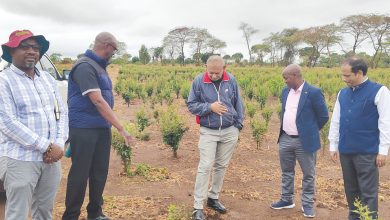
Her neighbour Mercy Banda, an agriculture extension worker for 22 villages in Mwala Wanyenje zone, says Lanjeni’s triumph over adversity is shattering deep-rooted myths and misconceptions about disability.
“In the past, people with disabilities were overlooked as beggars and rarely included in trainings or farming activities. But things are changing. These days, with the Transform Project, we ensure everyone has access to knowledge and support.”
Mwala Wanyenje has nine registered farmers with disabilities, including mobility and hearing challenges.
“When we conduct demonstrations, everyone participates and we use people like Lanjeni as farmers to emulate,” says Banda.
“If it’s a child, we involve their parents. If it’s an older person like Nice, we work with her neighbours to assist her. The goal is to ensure everyone is seen and supported.”
And it is working. The fields in Kasungu are now dotted with signs of inclusion— crutches leaning against maize stalks, wheelchairs parked beside ridges and neighbours giving each other a hand up in solidarity.
Still, stigma and discrimination remain. For many people with disabilities in Malawi, societal attitudes—not physical limitations — are the greatest barriers. But Lanjeni is dismantling those barriers one season at a time.
She dreams of building a better house one day, of having more farm tools and a successful business.
But for now, she counts her blessings — a good harvest, a successful daughter and the respect of her community.
“Many people thought I couldn’t do anything, but I’ve shown them that I can. I walk slowly, but I’ll get where I want to go.”
As the sun dips behind the hills, Gogo Lanjeni gathers her tools, leans on her walking stick and makes her way home step by steady step. Her silhouette fades into the orange dusk, but her resilience persists—and it is all takes to triumph where her doubters fear to tread.