Minister of Finance, Economic Planning and Decentralisation Joseph Mwanamvekha says Malawi Government is hoping for a win-win Extended Credit Facility (ECF) deal with International Monetary Fund (IMF) when negotiations start next month.
In an interview yesterday from Brazzaville, Republic of the Congo where he is attending the 2026 African Development Bank (AfDB) Group annual meetings, the minister said Malawi’s focus is on economic productivity while protecting the livelihoods of the poor.
The IMF mission is expected to hold engagements with Malawi Government officials from June 9 to 18 2026 after collapse of the the four-year $175 million (about K306 billion) ECF programme approved on November 14 2023 to support the country’s efforts to restore macroeconomic stability and achieve a sustainable, poverty reducing growth.
Mwanamvekha said while it is still too early to outline specific measures Malawi and the IMF will agree on, the government will not endorse any reforms that would harm the very people whose economic status it wants to uplift.

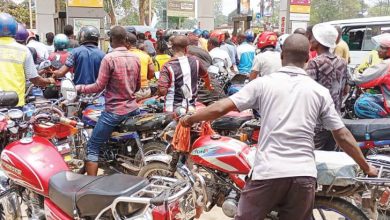
consider the poor man. | Nation
He said: “Government’s expectations will be to agree with the IMF only on those measures and reforms that will help to stabilise our economy, ensure fiscal discipline and consolidation, economic recovery and growth, employment and reduction of poverty as espoused in the Economic Recovery Plan.
“We will not accept any reforms that will harm the very people we want to protect. We will first consider the poor man and woman in the village and the many unemployed youth who are struggling day and night to find a job.”
Malawi secured the IMF deal to stabilise the economy by unlocking direct budget support from multilateral institutions such as the European Union (EU), the World Bank and the AfDB. The government implemented a series of reforms that Capital Hill said were tough, but necessary to convince development partners that it was committed to reforms to revitalise the ailing economy, including raising the policy rate and devaluing the kwacha.
Reform efforts under the suspended ECF focused on bringing back the country to a sustainable fiscal path, rebuilding external buffers, restoring debt sustainability and external viability while mitigating the effects of El Nino-induced shocks.
At the time of termination of the ECF in May 2025, economic challenges, including high inflation rate currently at 30.7 percent and foreign exchange shortages remain.
In a statement issued on Tuesday, Mwanamvekha said the IMF mission’s visit follows its ongoing engagements with government on a new economic reform programme to restore macroeconomic stability and rebuild confidence in the economy.
“Discussions will focus on macroeconomic stabilisation, fiscal policy and structural reforms to support sustainable and inclusive growth,” he said.
In a separate interview yesterday, Centre for Social Concern economic governance officer Agness Nyirongo observed that one of the biggest weaknesses of the collapsed ECF was the tendency to overload the programme with ambitious reforms that government institutions lacked the capacity or political will to implement.
This time around, she said, Malawi should pursue a simpler and more focused programme built around a few realistic priorities, adding that a programme built on achievable reforms stands a far greater chance of succeeding than one overloaded with promises that cannot be fulfilled.
Said Nyirongo: “Government must restore foreign exchange availability, rein in unnecessary public expenditure, clear domestic arrears owed to suppliers and contractors.
“Protect the poor, not privilege. Perhaps the greatest criticism of the previous IMF programme was the perception that austerity punished ordinary citizens while protecting the political elite.”
Economics Association of Malawi president Bertha Bangara-Chikadza described the planned IMF mission as an important development considering Malawi’s current macroeconomic difficulties.
She said: “For Malawi, the key issue this time will be implementation of these reforms, as the country has previously faced challenges in sustaining reforms consistently. The success of the engagement will depend not only on reaching an agreement, but also on government’s commitment to implementing the agreed reforms in a credible and consistent manner.”
On his part, Centre for Social Accountability and Transparency executive director Willy Kambwandira welcomed the engagement but raised concerns over transparency in IMF-government negotiations.
IMF resident representative Nelnan Koumtingue, in a brief interview last evening, said the fund remained fully committed to supporting Malawi’s reform efforts through constructive, solutions‑oriented policy dialogue.
Major obstacles to clinching ECF—at least in the context of the fund’s 2025 Article IV consultation with Malawi—included the exchange rate policy.
The other sticky point is how authorities will restore public debt sustainability, with IMF stating as a prerequisite the completion of external debt restructuring and steps to bring down an elevated domestic interest bill.
Malawi Government data show that the current public debt stock levels stand at K23.9 trillion, which is 90.9 percent of gross domestic product as of December 2025. Of this amount, 65 percent is domestic debt, translating to K16 trillion.
ECF is a medium-term IMF lending arrangement designed for low-income countries facing prolonged balance of payments difficulties. The programme typically provides concessional financial support alongside policy reforms aimed at strengthening fiscal discipline, improving public financial management and restoring economic stability.