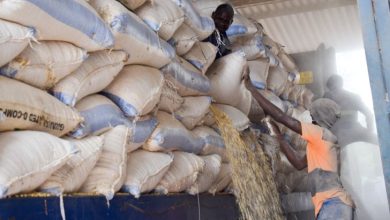
In response to a deepening cement shortage and surging construction costs, government has rolled out emergency measures designed to steady supply and rein in retail prices.
According to a statement from the Ministry of Trade and Industry released on Friday, the package includes allocating foreign exchange to major cement importers, lifting import surcharges and enforcing a price cap on cement bags at wholesale and retail levels.

Trade and Industry Minister Vitumbiko Mumba first acknowledged the crisis at a Wednesday press briefing, noting it had stalled infrastructure projects and squeezed local builders.
While consumers stand to benefit immediately, industry analysts warn these fixes could distort the market over time.
The ministry announced in the statement that forex allocations had been made to selected large importers and distributors, who are expected to start importing cement from Zambia starting August 16.
According to the ministry, this move aims to inject imported cement into the market to ensure cement availability at reduced prices.
It also announced the removal of a 10 percent surcharge on cement imports, a decision gazetted on August 15, along with the elimination of the guided value imposition, further lowering the cost of imported cement.
Following the move, government estimates that after accounting for markups, the retail price of a 50kg bag of imported cement should not exceed K26 000.
To enforce this, it warned traders and distributors against hoarding or overpricing, citing the Competition and Fair-Trading Act, which sanctions excessive pricing with penalties of up to 10 percent of annual gross turnover.
In the statement, the ministry, in collaboration with the Competition and Fair-Trading Commission, has committed to ongoing market surveillance until stability is restored.
However, the measures have sparked debate among industry stakeholders and economic experts.
Ministry of Trade and Industry Principal Secretary Christina Zakeyo declined to disclose details of traders benefiting from forex allocations or the criteria used to select them.
She also refrained from commenting on the sustainability of such arrangements.
Competition and Fair-Trading Commission’s spokesperson Innocent Helema redirected inquiries to the ministry’s public relations officer Patrick Botha who had not responded to our questionnaire by the time we went to press.
Consumer rights advocate John Kapito expressed optimism about the intervention.
“It’s encouraging that some traders have been granted permits and forex to bring in cement and we hope they won’t exploit the situation by inflating prices further,” he said.
But he questioned government allocation of forex to large importers from Zambia instead of supporting local cement producers.
“If forex scarcity is the cause of the shortages, why not provide such support to local manufacturers?” he wondered National Construction Industry Council of Malawi corporate affairs officer Lyford Gideon also welcomed the measures, emphasising the importance of cement availability for ongoing infrastructure projects.
“Cement is a critical input in construction. Its availability and affordability impacts the industry. The removal of surcharges and facilitation of imports can help stabilise the market y,” he said.
Economic experts view government’s response as a necessary, but temporary fix.
Velli Nyirongo described it as “short-term strategies” aimed at containing soaring construction costs.
“The retail price of MK45 000 per 50kg bag was unsustainable for the economy as it would have forced significant revisions of project budgets and triggered inflationary pressures,” he explained.
Nyirongo cautioned that relying on a small group of large traders to import cement raises questions about market sustainability and competition.
“While economies of scale may enable these traders to import at lower costs, favouring them could reinforce monopoly and marginalise smaller players. Over time, this could weaken market resilience and undermine the principles of fair competition,” he warned.
Economic analyst Brian Kampanje said the measures are designed to address market failures.
“This is a firefighting approach to contain skyrocketing construction costs and prevent the collapse of infrastructure projects,” he said.
Kampanje noted that the price of cement had previously soared to K45 000 per 50kg bag, making it impossible for many to continue with ongoing projects.
He suggested that actual foreign currency might not be in place and lines of credit may be used to expedite imports.
“The priority seems to be getting cement into the country as quickly as possible, even if it means relying on credit arrangements rather than actual forex reserves,” he said.
He further highlighted the importance of proactive policymaking, advocating for strategies that anticipate market challenges rather than react to crises with costly ad hoc measures.