The lorry pulls out of Mzuzu at 1pm and crawls towards Lunjika, Eswazini and Bulala in Mzimba, carrying dozens of bodies and twice as many burdens.
The two-tonne truck groans under sacks of maize, crates of chickens, bundles of clothes and the pressed-in weight of people who must ride or be stranded.
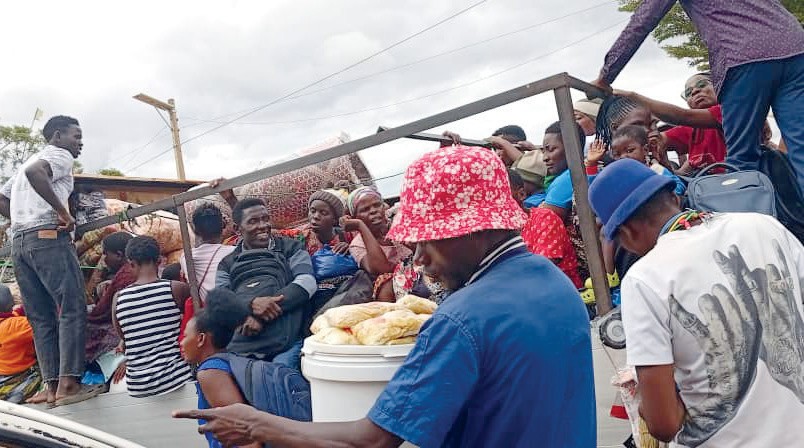
Women cling to metal bars meant for holding a sheet in the rainy season, their hands slick with sweat as the vehicle shudders over potholes.
A young mother grips her child to her chest while the load shifts around her, each sway threatening to knock her off balance.
For many women here, this isn’t travel. It is survival.
There are no buses or minibuses over the 50-kilometre mountain stretch where public transport ends and necessity begins.
Yet the journey exacts a price that rarely enters public debate.
Harassment rides in the cramped space like an unwelcome passenger, with stray hands brushing women’s bodies and men pressing too close. Seducing comments slip through the noise, assuming silence.
Many women ride with their hearts caged between fear and resignation.
“To say the least, the situation isn’t pleasant,” says 63-year-old Jane Sibande, who has travelled this road for decades. “You’re shoved next to a man who keeps pressing against you. There’s nothing you can do. The vehicle won’t wait for you if you complain.”
She pauses before offering a story she carries like a bruise.
“I know a woman who was squeezed on a man’s lap the whole way. People reported it to her husband, her marriage was shaken because of something she couldn’t avoid.”
These aren’t outliers but a daily pattern—normalized, unreported, and invisible to anyone who doesn’t ride these trucks across the country.
Drivers often describe the experience differently. Route driver Duncan Kamanga insists he treats men and women equally.
“Everyone finds his or her place,” he says.
Harassment doesn’t register in his mind because he is, as he puts it, “busy driving,” though he admits such things “can happen anywhere, even at a funeral.”
Another driver, Mackson Zgambo, links the problem to scarcity.
“There’s only one vehicle for many areas,” he says. “You’re forced to carry everyone.”
Scarcity shapes power in the vehicle, as men claim space with ease while women shrink and endure, knowing that missing a trip means missing a clinic visit, a market day, a family duty, or their livelihood.
On long routes, nightfall breakdowns become risky and a heavier burden for women.
Says Zgambo: “We hide our anger. We hide our fear.
“If we complain, people say we’re exaggerating.”
This quiet endurance mirrors broader patterns of gender-based violence. Men control the vehicle and the rules, while women navigate a world that demands they swallow discomfort as normal.
Malawi Human Rights Resource Centre executive director Emma Kaliya says this normalisation threatens more than dignity.
“We’ve talked about this for years,” she says. “Just last month we cautioned political parties about ferrying people in lorries. Malawi has normalised something dangerous.”
She says motorists dismiss concerns by accusing critics of “acting privileged because they have cars”.
And many women echo that dismissal, internalising the belief that unsafe transport is simply the way things are.
“That’s the danger,” Kaliya says. “When the affected person doesn’t see it as a problem, that’s a serious concern. Desperation forces women to board. And we keep quiet. Even Members of Parliament avoid confronting it.”
Kaliya sees both a gender issue and a public-transport failure.
“We’re in trouble,” she says. “There’s no will to change the system.”
Legally, the rules exist on paper but falter in practice. The Road Traffic Act allows passengers in goods vehicles only if the cargo area is safely enclosed and they remain seated.
However, carrying paying passengers in the cargo area on public roads is strictly prohibited.
The Gender Equality Act adds another layer, prohibiting sexual harassment—unwanted verbal, non-verbal, or physical conduct that a reasonable person would find offensive or intimidating—and bans any unfair treatment that disproportionately affects one sex.
Yet in the back of a lorry, the law rarely reaches the vulnerable women.
National police deputy spokesperson Alfred Chimthere says the police, working with the Road Traffic Directorate, are mandated to enforce traffic laws.
He explains that officers consistently remind motorists about the requirements of the law and act when those standards aren’t met.
“We impound vehicles that violate regulations,” he says. “But some passengers claim they’re going to a wedding or a church, to which we advise not to use open vehicles.”
Chimthere acknowledges that some rural areas have no alternative means of transport, and in such situations an officer may use discretion where no alternative transport exists.
He calls for a multisectoral response because the transport challenges in those areas aren’t created by the police but shaped by broader social and infrastructural realities.
Mzimba North principal social welfare officer Hellen Simwaka says the consequences follow women long after they leave the lorry.
“When women face daily harassment, it affects their mental health, confidence and economic participation,” she says.
On her part, gender activist Lingalireni Mihowa calls the situation a form of “silent gender-based violence.”
She concedes: “We’ve ignored the transport sector for a long time and I think it is time the Ministry of Gender provided the guidance to the Ministry of Transport on this issue”.
She calls for structured engagement that sensitizes drivers, owners, call boys, passengers, and enforcement officers in strategic places such as bus depots.
Mihowa says timing campaigns with the 16 Days of Activism will ensure the message reaches those who board, drive, and enforce the rules by teaching what is acceptable and what violates dignity.
“This has been ignored for too long,” she says. “Women board these vehicles because they have no choice. Even as their dignity is violated, they stay silent. It’s a wake-up call.”