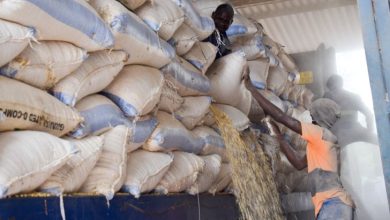
Malawi’s year-on-year inflation rate has climbed for the second consecutive month, rising by 0.9 percentage points to 28.2 percent in August 2025, driven largely by food price pressures.
The Reserve Bank of Malawi (RBM) has since urged authorities to expedite maize imports as a critical measure
to help stabilise prices and mitigate inflationary pressures.
With food inflation reaching 33.7 percent during this period, concerns about affordability and economic strain on households are evident, according to analysts.
Maize prices continued to increase, driving food inflation to 33.7 percent in August although non-food inflation remained at 19.5 percent due to relatively stable utility tariffs and fuel prices.
The current inflationary pressure as indicated in the National Statistical Office (NSO) Stats Flash risks making the country miss the 28.5 percent average annual inflation rate target.
Reads the NSO Stats Flash: “Food inflation increased to 33.7 percent compared to 32.4 percent in July 2025 while non-food inflation stood at 19.5 percent from 19.3 percent over the same period.”
Writing on his Facebook page, Reserve Bank of Malawi (RBM) Deputy Governor for economic services and regulation Kisu Simwaka said prices are increasing at the fastest rate since April, calling for urgent maize imports to stabilise supply.
He said: “The inflation increase is largely due to the scarcity of key food staples on the market, particularly maize, which accounts for a sizable share of the ordinary Malawian household’s diet.
“Inflation is expected to rise slightly
into the end of the year, due to seasonal food dynamics followed by a decline beginning early next year at the onset of crop harvest.”
Simwaka also said the situation calls for continued tight monetary policy stance and aligning fiscal policy with monetary policy efforts by investing in irrigation, among others.
Earlier this month, Admarc Limited announced plans to import 200 000 metric tonnes of maize to stabilise the staple grain’s prices on the market.
Meanwhile, economic analysts say although non-food inflation remains relatively low, foreign exchange scarcity-induced fuel shortages still exert pressure on transportation costs, a situation that is likely to prompt authorities to maintain high interest rates to cool off inflation pressure.
In an interview yesterday, Economics Association of Malawi president Bertha Bangara-Chikadza said inflation trends highlight the country’s underlying food pressures that need to be addressed by either importation of maize or an instant winter cropping initiative.
She said: “We have observed a notable increase in food prices, which has significantly influenced overall inflation.
“While non-food inflation has remained relatively stable, the persistently high headline inflation trends suggest that the country must address the underlying food pressures.”
Bangara-Chikadza said a critical intervention for long term stability is to strengthen winter cropping initiatives.
In a separate interview, Centre for Social Concern programme officer for economic governance Agnes Nyirongo observed that although non-food inflation is stable, transport costs have been volatile because of foreign exchange scarcity; hence, stifling business growth.
“High inflation is not only squeezing households, but also stifling business growth. Rising production and transport costs are being passed on to consumers, further fuelling inflation in a vicious cycles,” she said.
Business Partners Malawi International country manager Bond Mtembezeka said it is still possible to reduce inflation in the second half provided monetary policy remains tight and food supply is improved.
The Monetary Policy Committee of the RBM maintained at 26 percent the policy rate, leaving commercial banks’ lending rates as high as 36 percent, due to inflationary pressures